Duke University Math 219
Professor Bray · Duke University · 20 lectures with notes
Students in this class: ask your lecturer for the class code, and these lectures will already be in your library when you sign up.
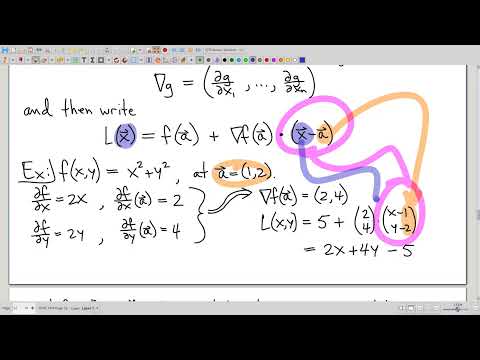
2026 09 16 Math219 03
The multivariable derivative is a matrix that linearly maps changes in the input to changes in the output.
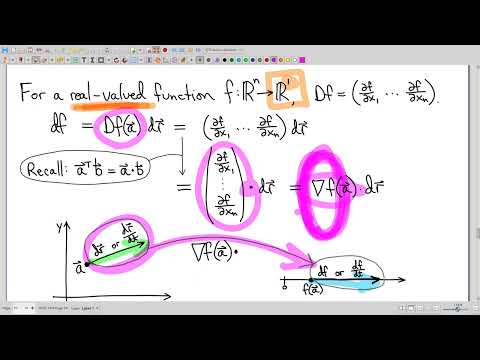
2026 09 18 Math219 03
A derivative maps input changes to output changes; along a parametric curve, that map gives velocity.
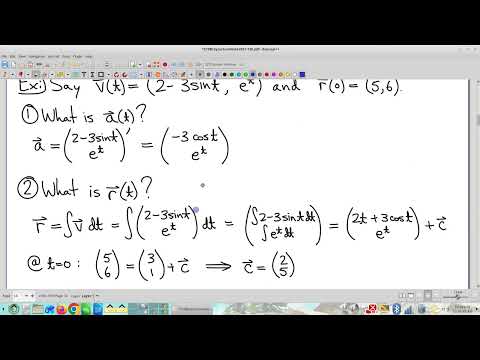
2026 09 18 Math219 01
A parametric curve’s derivative is its velocity vector, and the chain rule composes derivative factors through matrix multiplication.
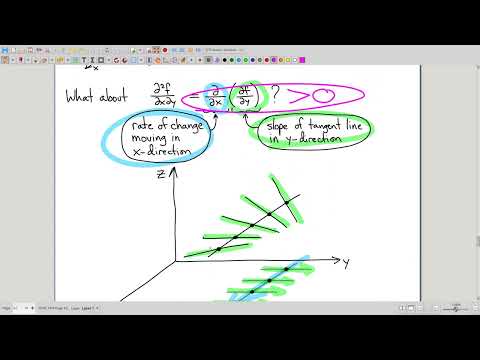
2026 09 18 Math219 02
Mixed partials describe surface twist, while Jacobian matrices compose as factors to produce the multivariable chain rule.
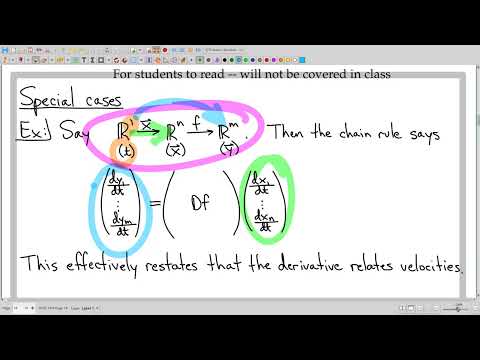
2026 09 21 Math219 02
Compute multivariable chain-rule derivatives by tracing paths through intermediate variables and keeping each function’s inputs distinct.
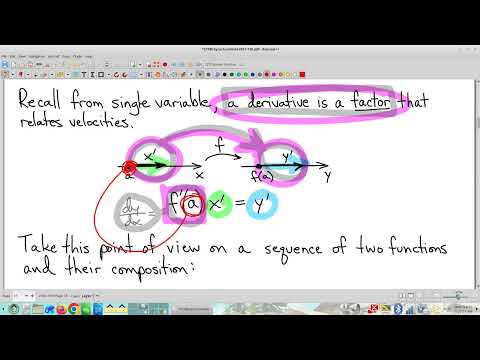
2026 09 21 Math219 03
For a composition, multiply derivative matrices in acting order; for one partial derivative, sum the contributions along each intermediate-variable path.
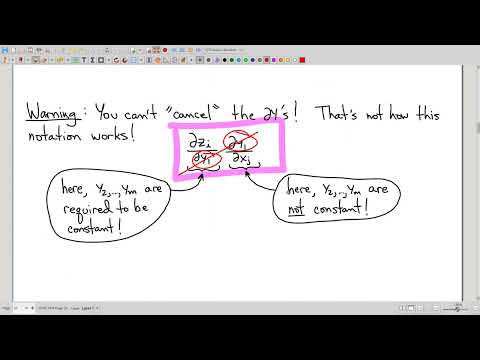
2026 09 21 Math219 01
Use dependency diagrams to apply the multivariable chain rule correctly, including when computing second derivatives.
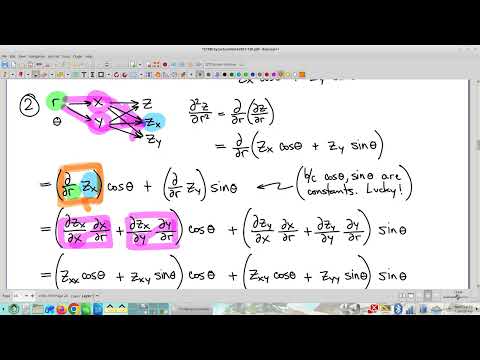
2026 09 23 Math219 02
Dependency diagrams clarify second-order chain rules, while coordinate choice and vector-based reasoning simplify multivariable derivatives.
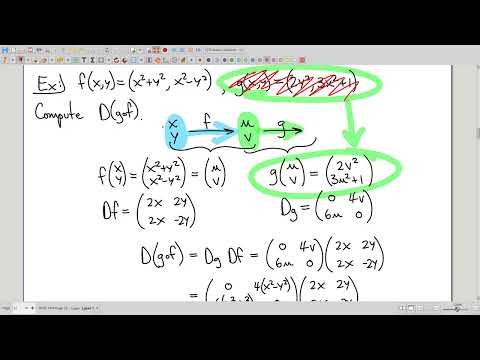
2026 09 23 Math219 03
Dependency diagrams prevent variable confusion and reveal when coordinate changes make difficult derivatives simple.
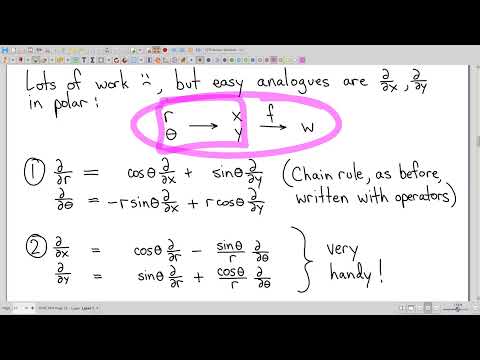
2026 09 23 Math219 01
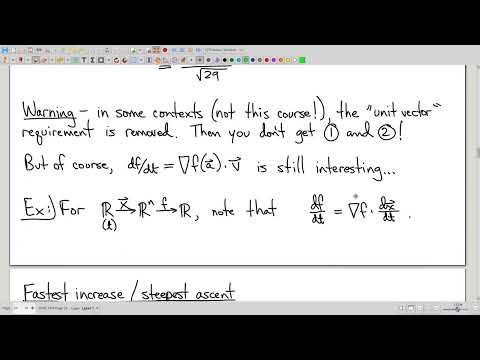
A unit-vector directional derivative is a coordinate-independent rate of change, computed as the gradient dotted with the direction.
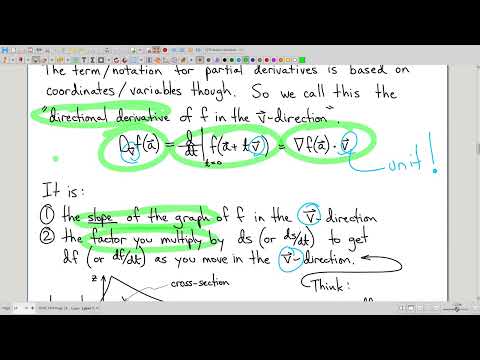
2026 09 28 Math219 03
For a differentiable scalar function, the gradient points toward fastest increase, and its magnitude is the maximum directional derivative.
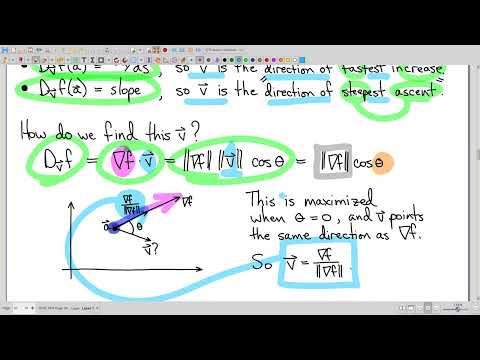
2026 09 28 Math219 01
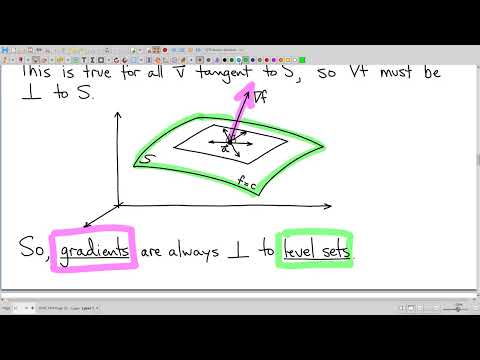
The gradient gives both the direction of fastest increase and a normal vector to a level set.
2026 09 28 Math219 02
The gradient points toward fastest increase, measures its rate, and is normal to the function’s level sets.
2026 09 30 Math219 01
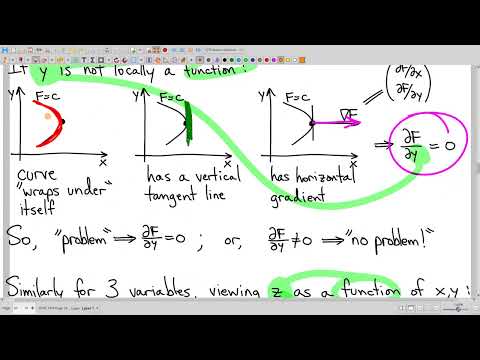
Use the implicit function theorem to justify implicit derivatives, then build parametric-curve and vector-field foundations for vector calculus.
2026 09 30 Math219 02
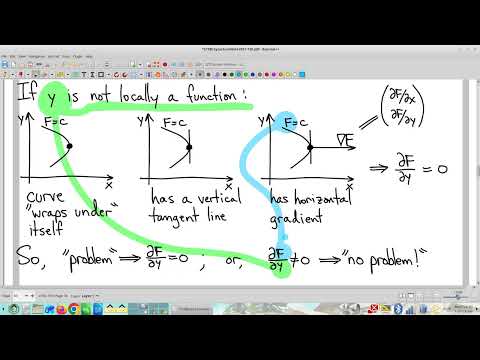
A nonzero partial derivative justifies local implicit differentiation; parametric curves and vector fields set up later vector calculus.
2026 09 30 Math219 03
A nonzero partial derivative guarantees a local implicit function, and its derivative formula carries an essential minus sign.
2026 10 02 Math219 02
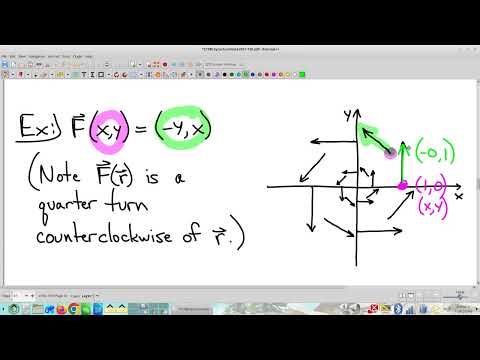
Vector fields connect geometric direction-and-magnitude pictures to flux, particle paths, and divergence.
2026 10 02 Math219 03
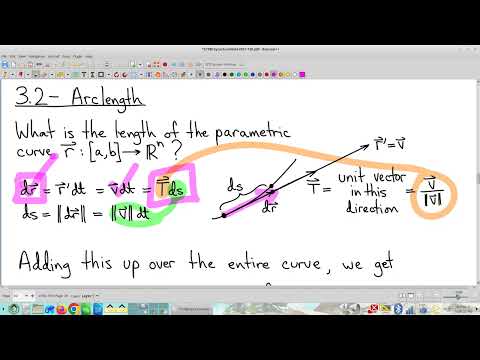
Parametric curve geometry and vector-field flux are built from local motion, direction, and magnitude.
2026 10 02 Math219 01
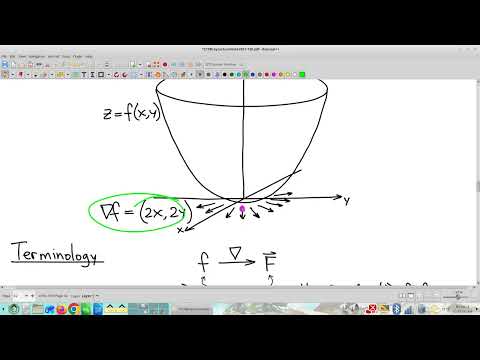
Vector fields encode pointwise direction and magnitude, enabling concepts such as flux, flow lines, and divergence.
2026 10 05 Math219 03
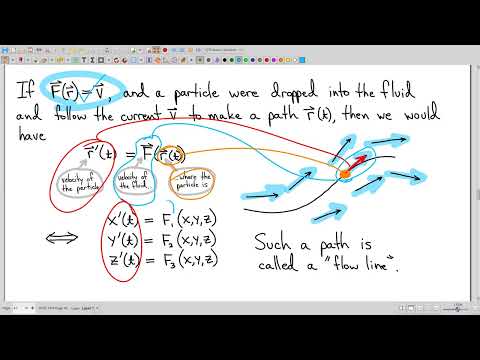
Clark Bray Math connects flux, flow lines, divergence, and curl through fluid-flow interpretations and previews their role in vector calculus.