ACCT 417 (Fall 2026) - Chapters 14 and 15 Lecture
Overview
Michael Barnes reviews audit approaches for prepaid expenses, property, plant and equipment, long-term debt, stockholders’ equity, dividends, and related income statement accounts. He emphasizes using fixed-asset roll-forwards and substantive testing when transactions are infrequent, matching procedures to assertions such as completeness and valuation, and testing income statement balances indirectly through balance sheet work and analytical procedures.
Key takeaways
- For continuing PP&E audits, a roll-forward can verify the ending balance by testing current-year additions and disposals against a previously audited opening balance.
- Audit direction determines the assertion: vouching recorded transactions to supporting documents generally tests occurrence, while tracing source records into the ledger generally tests completeness.
- Long-term debt and equity transactions are often infrequent, so testing individual transactions may be more efficient than extensive controls testing; debt controls still emphasize authorization and recording.
- Liabilities and equity generally make completeness a primary audit focus, while asset testing commonly emphasizes existence or occurrence.
- Every dividend declared and paid requires audit attention; procedures should cover completeness and the accuracy of amounts authorized and disbursed.
- Testing related balance sheet accounts can support income statement assurance, with analytical procedures especially useful for expenses such as interest when auditors can calculate an expected amount.
Chapters
- Professional interaction write-ups are due Friday and must follow the requirements in the syllabus and be submitted through Brightspace.
- Exam three is scheduled for Wednesday; Friday attendance is optional, and group presentations take place during the final week.
- Michael Barnes evaluates presentations using department guidelines and his rubric, including balanced speaking time and concise slides that support rather than replace presenters.
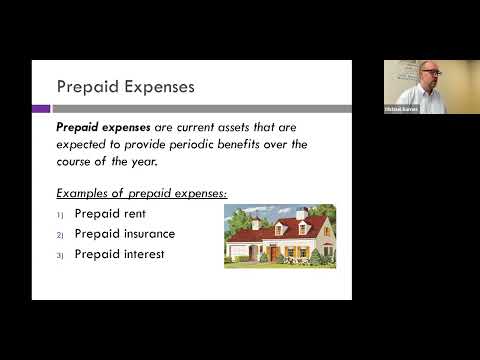
- Prepaid rent, insurance, and mortgage interest are current assets representing unexpired costs that become expenses as benefits are consumed.
- Control testing focuses on authorization and recording because landlords, insurers, or other providers generally have custody of the prepaid value.
- Trend comparisons, ratios, and estimates based on policy terms can provide effective analytical evidence about prepaid balances.
- Auditors can test valuation by determining the unexpired portion, and classification by checking whether costs belong in manufacturing overhead or selling, general, and administrative expense.
- For a new engagement, auditors must verify the assets making up the PP&E balance; on a continuing engagement, previously audited opening balances provide a reliable starting point.
- A fixed-asset roll-forward tests additions and disposals during the year to support the ending balance, rather than repeating work on assets verified in the prior audit.
- The main PP&E transaction categories are acquisitions, disposals, depreciation, and leases; leases can create accounting assets even when the organization does not own the underlying property.
- Risk depends on transaction complexity and valuation, while controls commonly cover documentation, asset identification and security, and capitalization and depreciation policies.
- Trend analysis and depreciation estimates can support substantive analytical procedures for PP&E and depreciation expense.
- Reviewing purchases and disposals around year-end tests cutoff; recomputing depreciation tests valuation, allocation, and accuracy.
- Vouching recorded PP&E purchases to receiving reports and vendor invoices tests occurrence, while tracing asset schedules to the general ledger tests completeness.
- Inspecting assets for unrecorded retirements tests existence because an asset still on the books may no longer exist; title documents support rights and obligations.
- Long-term debt includes notes, bonds, debentures, certificates, mortgages, leases, and other agreements with terms longer than one year.
- Auditors examine both debt instruments and related interest expense; notes and bonds are common, comparatively straightforward examples.
- Inherent risk depends on instrument complexity: convertible bonds require separate valuation of debt and conversion features, making measurement more difficult.
- Because debt transactions are usually infrequent, a substantive strategy can be more efficient than extensive controls testing; controls work generally emphasizes authorization and recording.
- Inspecting new note or bond agreements and board minutes supports evidence that debt exists and was approved; reviewing activity around year-end tests cutoff.
- Recomputing interest or amortization tests valuation, allocation, and accuracy, while examining due dates tests current-versus-long-term classification.
- Tracing cash receipts and payments to source documents and the general ledger can test completeness when the records and documentation are followed in the appropriate direction.
- For liabilities such as notes and bonds payable, completeness is the primary assertion; creditor or bank confirmations can also provide evidence about the debt balance.
- Auditors focus on stock issuance, repurchases through treasury stock or retirement, and dividend payments; treasury stock is a contra-equity account.
- Equity risk depends on instrument complexity, including hybrid or convertible instruments, while low transaction volume often favors substantive testing.
- Equity controls should segregate authorization, recording, and custody: certificate handling should be separate from accounting, and stock-record maintenance should be separate from cash handling.
- Dividend preparation and recording, check authorization, and mailing should be separated; when staffing prevents this, management review is a compensating control.
- Confirming authorized, issued, and outstanding shares with the stock transfer agent primarily supports completeness; recomputing stock transaction values supports valuation and accuracy.
- Vouching recorded stock transactions to board minutes supports occurrence, while identifying restrictions on retained earnings tests classification.
- Auditors must examine every dividend declared and paid because dividends may violate corporate bylaws or debt covenants.
- With an independent dividend-disbursing agent, confirm the amount paid and agree it to board authorization; without one, recompute authorized dividends and trace cash disbursements to dividends payable.
- Dividend procedures address both completeness and valuation, allocation, and accuracy.
- Barnes explains that auditors often test income statement accounts through related balance sheet accounts rather than treating each expense or revenue account as a separate primary focus.
- Testing accounts receivable supports sales-related work; testing PP&E and accumulated depreciation supports depreciation expense and asset gains or losses.
- Prepaid insurance connects to insurance expense, while long-term debt and accrued interest payable connect to interest expense.
- Analytical procedures, including trends, ratios, common-size comparisons, and expectations based on debt terms, can provide efficient assurance for related income statement balances.
Transcript excerpt
0:02 Hello everyone. Well, congratulations. We've made it to their final week of lectures. We've got uh today, we got Wednesday, and then we are done with learning new stuff for the semester, at least formally. I'm assuming that everybody will informally learn things throughout the rest of their lives. So, uh before we get started, um let's go through announcements. So, on Friday, professional interactions are due. Please make sure you get those submitted to Brightpace. I think over half the class has already submitted those. If you are one who is not, please make sure you get that done and submitted by Friday. Uh details for the professional interaction of what needs to be written up are provided on the syllabus. So please make sure you view those in your write up. Uh everybody know what happens a week from Wednesday? >> Exam three, midterm exam three. So time
0:52 flies like it seems like it was only a couple weeks ago we had the last exam and that's actually true. It was only a couple weeks ago. Yes. >> When Wednesday or Friday? >> It is Wednesday. >> Friday. >> What do you want to go on Friday? So, uh Friday basically uh will be an optional attendance class. If you would like to attend, you can. I will be here. I I can talk about life, the universe, and everything, but you are not required to be here. Yeah. Um Yeah. So, that's what's coming up. Uh and then uh we got some group presentations coming up in the final week. So that's going to be on Wednesday and Friday, the final week. Group number four, uh you still owe me a topic and so uh please let me know by end of day today what your topic would
This is the start of the transcript. Save this video free for the whole transcript, searchable and time-coded.
In this course
Related notes
Summary, takeaways, and chapters were generated by AI from the video's transcript and may contain errors. The video belongs to its creator, Michael Barnes.