EAS4200 Aerospace Structures, Lecture 1, 2026 Fall
Overview
Ting Dong introduces EAS4200 Aerospace Structures, explaining course policies and connecting the curriculum to aircraft structural health monitoring, materials, and structural design. The technical overview traces aircraft materials from wood and steel to aluminum and composites, including the Boeing 787's roughly 50% composite structure and the SR-71's roughly 93% titanium, then explains why sandwich panels and semi-monocoque construction efficiently carry aircraft loads.
Key takeaways
- Aircraft structural health monitoring aims to use sensors and crack-growth prediction to schedule repairs before damage reaches unstable propagation, potentially reducing the long downtime associated with manual inspections and C checks.
- A sandwich panel is efficient in bending because its strong skins carry the highest tensile and compressive stresses, while the lightweight core separates and supports them.
- Semi-monocoque aircraft structures reduce weight by combining relatively thin skin with frames, bulkheads, and stringers instead of requiring a thick skin to carry loads alone.
- Aircraft material selection depends on operating conditions: the SR-71 used about 93% titanium for Mach 3.2 heating, while stainless steel suits Starship's combination of high heat and cryogenic propellant temperatures.
- The course combines firm submission and integrity rules with a one-homework drop, three attendance drops, and possible exam curving to make grading consistent while maintaining responsibility.
Chapters
- Ting Dong asks students to use her University of Florida email rather than Canvas messages, where attachments can disappear during forwarding.
- Scheduled office hours are Monday and Wednesday after class, at 12:35 p.m. in MAC 105; students can email to arrange additional help or a Zoom meeting.
- Her research in aircraft structural prognostics and health management uses sensors and data to monitor crack growth and predict when maintenance is needed.
- Current airline inspections can require grounding an aircraft for about a month during a C check, removing interior components, and manually inspecting the structure.
- Mechanics of materials is a prerequisite; students should review bending, torsion, and shear because EAS4200 builds directly on those concepts.
- Ting Dong recommends revisiting mechanics of materials early, before exams and quizzes create additional pressure.
- The department requires Aerospace Structures class time to focus on structures, so mechanics questions are best addressed during office hours.
- A textbook is recommended but not essential if students attend class, take effective notes, and study the homework.
- The course expects about nine homework assignments, though the number may change while the total workload remains similar; one homework score is dropped.
- There are three quizzes, normally 15 minutes at the beginning of class, and three exams scheduled from 8:20 to 10:20 a.m.
- The second exam date is tentative because classroom confirmation is pending; proposed dates are October 21, October 26, or October 23.
- Late submissions are not accepted; students are responsible for uploading the correct assignment before the deadline, and a second missed homework earns a zero.
- Ting Dong and the TAs will provide solutions and grading rubrics after homework, quizzes, and exams; students can request a correction when a score conflicts with the rubric.
- Grading awards credit for sound steps and limits penalties for isolated arithmetic mistakes; later work is not repeatedly penalized for an earlier carried-through error.
- Quiz and exam averages below 80 may be curved to 80, with homework averages calculated from submitted work rather than missing assignments.
- Letter-grade thresholds may be lowered if needed; Ting Dong describes aiming for about 40% of students to receive an A while emphasizing that students still need to demonstrate learning.
- Attendance is optional but can earn up to three bonus points; after the add/drop deadline, the policy allows three missed classes without reducing the maximum bonus.
- The attendance drops also cover documented and other absences, so Ting Dong does not grant extra exceptions beyond the three drops.
- Ting Dong describes a COVID-era exam case in which Chegg postings and viewed solutions led to an investigation and honor-code reports.
- She also found students using iClicker outside the classroom to claim attendance, and warns that academic-integrity violations can create a permanent transcript record.
- Students can share feedback during the semester by email, after class, or in office hours so adjustments can improve the experience for the current class.
- The first exam includes a required five-point feedback component, giving students an early opportunity to suggest changes.
- Ting Dong urges students to contact her if course workload or exam difficulty becomes unreasonable and to reach out when they or classmates are struggling.
- UF's You Matter, We Care program is identified as a free support resource for students who need professional help.
- Early aircraft used fabric mainly for aerodynamic shape while wooden members carried structural loads; steel structures followed.
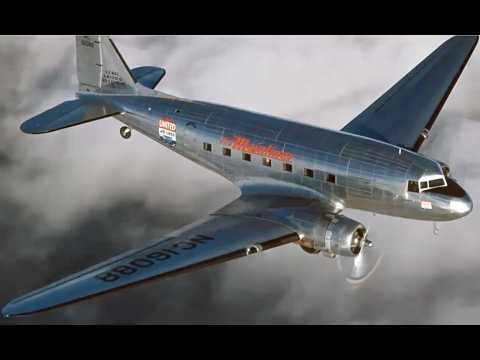
- Duralumin and later aluminum alloys enabled lightweight aircraft construction; the DC-3 used Alclad, with a strong aluminum-alloy core and pure aluminum cladding for corrosion resistance.
- World War II aircraft demonstrated that wood construction remained viable when metal availability was limited.
- Modern commercial aircraft commonly use high-strength aluminum alloys such as 2024-T3 and 7075-series alloys.
- The Boeing 787 uses about 50% composite structure, and the Airbus A350 uses more than half composites; carbon fiber is a major but not exclusive composite material.
- Sandwich panels place strong top and bottom skins around a lightweight honeycomb core, positioning material near the outer surfaces where bending stresses are highest.
- Floor panels use sandwich construction to provide bending stiffness with low weight and to reduce vibration and noise; fiberglass is also useful in radar-transparent structures.
- The SR-71 is about 93% titanium to withstand heating at speeds up to Mach 3.2, while the slower F-35 uses a smaller titanium share; stainless steel is discussed for Starship's high-temperature and cryogenic demands.
- A truss structure uses two-force members that carry tension or compression, but its exposed framework is not aerodynamically streamlined.
- Monocoque construction improves aerodynamic shaping and relies on the skin as the primary load-carrying structure, which can require heavy, thick skin.
- Semi-monocoque construction reduces skin thickness by sharing loads among the skin and internal components such as frames, bulkheads, and stringers.
- Aircraft frames and stringers support loads in different directions, while the assembled structure carries torsion, bending, tension, compression, and shear.
Transcript excerpt
0:00 I know you guys has a lot to talk about but let's wait about four or five minutes. Uh we can discuss continue discussion of the class. Um so for student in the back can you hear me? Okay great great. So if anytime because there's always some microphone problem in this classroom specifically uh so if anytime students in the back you cannot hear me just raise your hand. I will try to figure out what the problem is. Um so welcome to our aerospace structure class. Um the section might be wrong. Uh pictures took um introduction of myself. I'm Tindong.
0:55 Uh so I have my UFFL email here. Uh for the housemaster, I encourage you guys to always use my UFFL email. Uh for the canvas message, I'm not sure if you guys can experience it, but I did have some experience like if some students attach a document and then I need to forward document to TA or something and attachment always gone. So I keep communicating back and forth to make it happen. So it's not just waste time me, it's also waste time you. So uh for the whole semester, I encourage you guys only use my UFA email, not the Canvas message. Not canvas message. Um lecture time this period in this in this room so that should be fine. Office hour is right on class on Monday and Wednesday. Um so right uh 12:35 so it's basically right after class and 2 p.m. in my office MAC 105. Um and of course this is a schedule office hour. If anytime uh
1:44 during the semester if you need extra help or let's say if you have time complete with my schedule office hour you can always email me and we can schedule a uh individual zoom meeting or
This is the start of the transcript. Save this video free for the whole transcript, searchable and time-coded.
In this course
Related notes
Summary, takeaways, and chapters were generated by AI from the video's transcript and may contain errors. The video belongs to its creator, Ting Dong.