CE351 lec1 Intro to the course
Overview
Yiyan Li introduces CE351 as a hands-on embedded-systems course that prioritizes a substantial microcontroller-and-PCB project over a high-weight final: the final is 10%, while quizzes and exams together account for roughly 60 to 70%. Students work toward building and programming a Skyboard, learning C bitwise operations, signed number representations, soldering, PCB design, and embedded peripherals, with course resources and lab support provided along the way.
Key takeaways
- CE351 reserves only 10% of the grade for the final so students can devote substantial effort to a practical microcontroller and PCB project.
- Frequent closed-book quizzes are intended to verify individual understanding of homework, and quizzes plus exams account for roughly 60 to 70% of the course grade.
- The Skyboard project teaches an end-to-end embedded workflow: choose peripherals, program a microcontroller, assemble a PCB, and test functions such as audio, infrared control, and PWM lighting.
- For two's-complement addition, signed overflow is identified by adding operands with the same sign and getting a result with the opposite sign; carry-out alone does not establish signed overflow.
- Bitwise masks let C programs selectively clear or set hardware bits, such as using 0xFF00 with AND to clear a lower byte while preserving an upper byte.
- Testing the code on a working Mega board before transplanting chips, soldering delicate components last, and inspecting fine-pitch pins with a microscope can reduce Skyboard assembly failures.
Chapters
- Yiyan Li sets the final exam at 10% so students can spend more time on the course project.
- Closed-book, closed-notes quizzes usually occur once or twice a week; quizzes and exams together make up roughly 60 to 70% of the grade.
- Li argues that quizzes test whether students understand homework material independently, despite the growing availability of AI tools.
- The project asks students to select and program a microcontroller, add sensors, design a PCB, and work toward a product-like system.
- Li points to employment examples at XRF, Sandia, and Los Alamos to illustrate demand for embedded systems and FPGA skills.
- Course schedules, tutorials, recorded lectures, notes, the syllabus, and the Skyboard schematic are available at yelectronics.com.
- The Skyboard schematic and board layout serve as references for learning component selection and PCB trace routing.
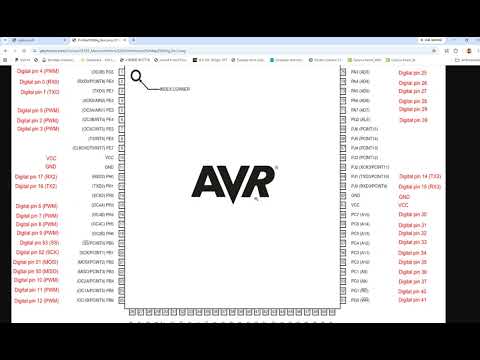
- The course uses an ATmega2560-based Arduino platform because the inexpensive Arduino boards lack required peripherals.
- The ATmega2560 costs about $17, but offers the needed serial interfaces, memory, and ports for the course system.
- Li expects to introduce a lower-cost 32-bit microcontroller later in the semester, with a stated chip cost of roughly $2 to 3.
- Week one covers number systems, complements, and bit shifts used in C programming for microcontrollers.
- Homework one is due Thursday at midnight, followed by a quiz Friday morning; homework two covers assembling and soldering the board.
- The target is to have a working Skyboard by Monday of week three, with lab 610 and Li's office hours available for soldering help.
- In-class exercises are graded for credit and used to support participation and attendance; Kai will work on tutorial tasks instead of soldering a board.
- Digital logic values correspond to electrical levels; in a 5-volt system, logic 1 represents about 5 volts and logic 0 represents ground.
- Two's complement represents negative integers by inverting the bits of a positive value and adding one; for example, 0101 represents 5 and 1011 represents -5 in four bits.
- Hexadecimal is a compact grouping of four binary bits, so the bit pattern stays the same even when its signed interpretation changes.
- The sign bit determines whether a fixed-width two's-complement value is interpreted as positive or negative.
- Li defines signed overflow by sign changes: adding two positive values that produces a negative result, or two negative values that produces a positive result.
- A carry-out is not, by itself, the same thing as signed overflow; the sign bits must be checked.
- Three-bit addition examples illustrate how fixed-width representations can produce results that require an overflow check.
- The lecture connects arithmetic behavior to digital hardware registers and explains that the result occupies a defined number of bits.
- The bitwise AND operator (&) acts on each bit, unlike logical AND (&&), which evaluates truth values.
- To clear the lower byte of a 16-bit value while preserving the upper byte, use an AND mask such as 0xFF00.
- To set the upper byte while leaving the lower byte unchanged, use bitwise OR with a mask such as 0xFF00.
- Bitwise NOT flips individual bits; masks let embedded code update selected LEDs or port bits without changing others.
- The Skyboard includes an SD card holder and a USB port used to program the board, similar to the USB connection on the Arduino Mega.
- Li recommends testing code on the known-working Mega board before transferring its ATmega-related chips to the Skyboard.
- Two surface-mount chips should be among the last components soldered because overheating their fine pins can damage the board.
- A digital microscope can help inspect neighboring chip pins for solder bridges and other faults.
- Most Skyboard resistors and capacitors use the 1206 footprint, approximately 0.12 by 0.06 inches; smaller 0603 parts are harder to handle.
- Components with the same physical package can be different chips, so students should verify drawer labels and part descriptions before installation.
- Solder push buttons with a soldering-iron tip and flux, not a hot-air gun, which can damage the rubber mechanism underneath.
- The RGB LED also has a plastic cover, so Li advises soldering its pins with an iron rather than directing hot air at the component.
- The board's microphone and audio amplifier support recording and playback through a speaker, with audio data stored on an SD card.
- An infrared emitter and receiver let students generate and capture PWM signals to build a custom remote, such as one that controls a TV.
- The RGB LED uses PWM to produce different colors.
- Li recommends first completing the provided working board, then experimenting with new chips or writing replacement firmware.
Transcript excerpt
0:00 % and final is 10%. So recently I realized that a lot of faculty members are changing their final tool like 90% because the AI is everywhere. People are thinking you guys are cheating during homework assignments. Uh I I I I don't believe it happens a lot during the 300 400 level classes because students are here for learning. So most of the time I mean people are getting help from AI but most of the time they're working on assignments by themselves. I I I uh believe in that. So the way I can test it is using quizzes. So it's not like just hey he's class so easy because it's only one final only taking 10%. It's not the case. Um we have almost uh it's not daily quizzes but usually twice or at least once a week for quizzes right so it's a close book closed notes. If you
0:49 didn't do a homework assignments by yourself you wouldn't be able to do well on quizzes and that's a lot quizzes throughout the semester. So usually if you take the quizzes into account into all these exams or quizzes stuff it's probably 60 to 70%. Okay. So still have to do some close close book handwriting on the paper. And the reason I want to uh keep the final at 10% uh is because I really want you guys to spend more time on the on the project. That's because that's where you can learn a lot of things and to get a job. So uh the major component of the project is to design your own mic controllers and program it and put on your own PCB. So there will be like one or two weeks uh towards the end of semester you guys have to learn how to
This is the start of the transcript. Save this video free for the whole transcript, searchable and time-coded.
In this course
Related notes
Summary, takeaways, and chapters were generated by AI from the video's transcript and may contain errors. The video belongs to its creator, Yiyan Li.