Williams College Math 317
Professor Miller · Williams College · 15 lectures with notes
Every lecture with its full transcript and chapters, and one search across all 15 lectures.
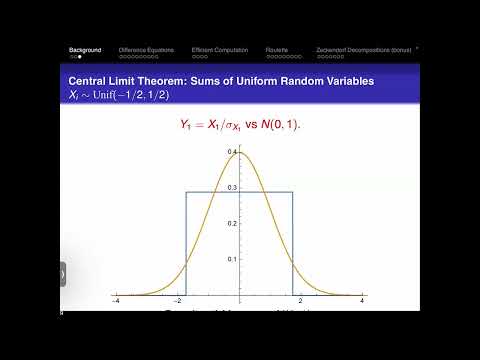
Math317Fa26 Lec23 MathematicalModelingDiscrete Roulette
A roulette betting system that seems guaranteed to win fails in practice because table limits make losing streaks costly and likely.
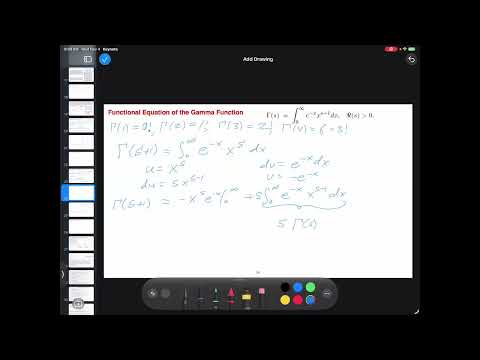
Math317Fa26 Lec22 GammaFnNewtonMethod
Newton’s method finds √3 with rapidly increasing accuracy, while contraction maps explain when repeated iteration converges.

Math317Fa26 Lec21
The deferred acceptance procedure efficiently finds a stable matching, with the proposing side receiving its best stable outcome.

Math317Fa26 Lec19 BattleshipChomp
Battleship margins, pooled COVID tests, and Chomp illustrate optimization, integer programming, and non-constructive proof.
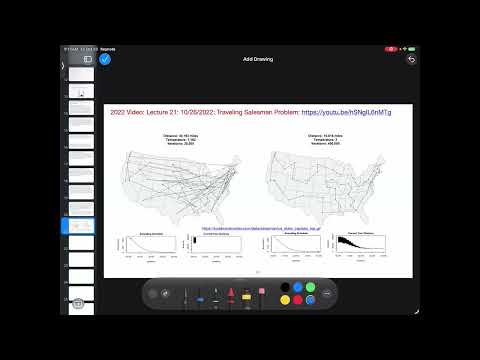
Math317Fa26 Lec17 StatErrors TSP Linearizing
Verify AI-generated data against sources, then use binary decision variables to model routing and linearize integer polynomial objectives.
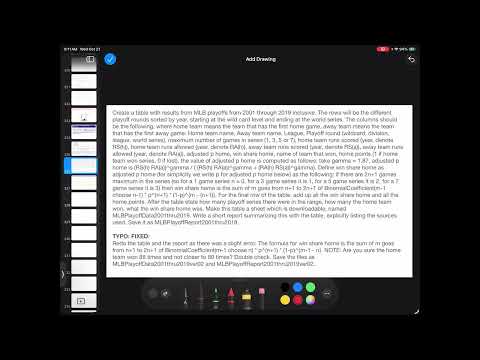
Math317Fa26 Lec16 BaseballMultiObjFixedPoints
Weighted objectives handle competing priorities, while fixed-point iteration can turn existence results into practical algorithms.

Math317Fa26 Lec14 IntProgFreeFlow
Model Flow Free puzzles with local neighbor constraints, and choose formulations that avoid impossible brute-force searches.
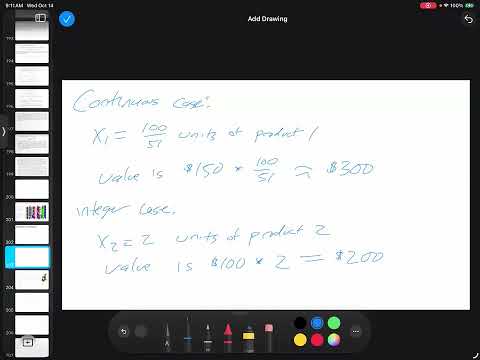
Math317Fa26 Lec13 IntegerProgramming
Integer programming encodes discrete choices and logical rules, but its best solutions can differ substantially from continuous relaxations.
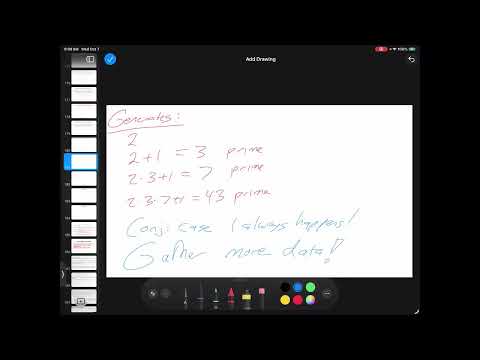
Math317Fa26 Lec12 SimplexMethod
The simplex method turns feasibility and optimization into two linked procedures built around basic feasible solutions.
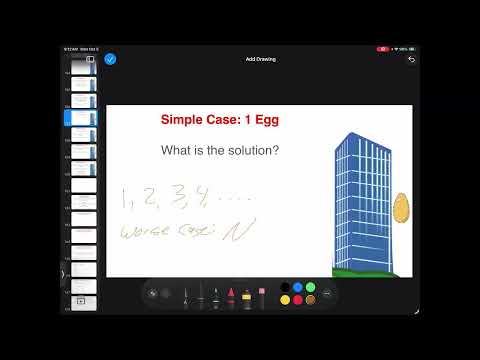
Math317Fa26 Lec11 EggDropMath
The egg-drop problem shows how adding eggs changes the worst-case search cost from linear growth toward roughly n^(1/k).
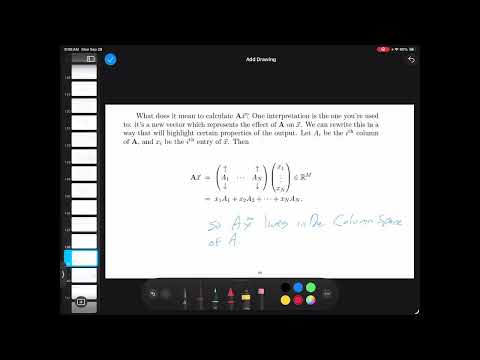
Math317Fa26 Lec08 BasicFeasibleOptimal
Basic feasible solutions reduce linear programs to finitely many candidates, and every feasible problem has at least one.
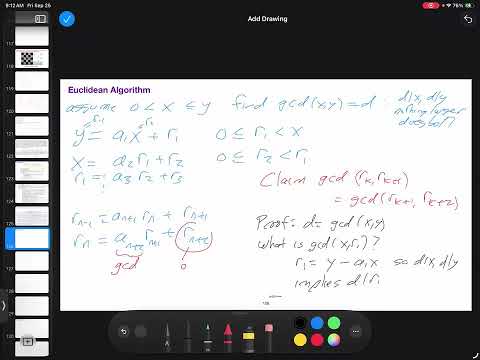
Math317Fa26 Lec7 EuclideanAlgorithmFundamentalTheoremOfCalculus
The Euclidean algorithm and the Fundamental Theorem of Calculus demonstrate how shrinking bounds establish efficiency and exact results.
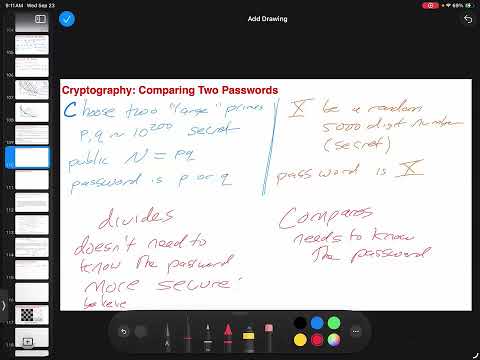
Math317Fa26 Lec06 Duality
A feasible dual solution gives a lower bound on a linear program, and matching primal and dual values certify optimality.
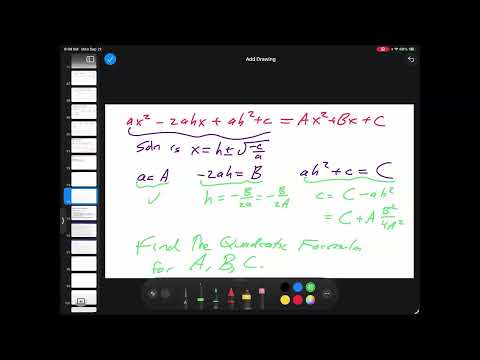
Math317Fa26 Lec05 SolvingPolyMatrixForms CanonicalLinProgProblem
Canonical linear programming reduces optimization over many feasible solutions to checking the vertices of a feasible region.

Math317Fa26 Lec04 DimCalcIntroLinProg
Linear programming chooses the best feasible solution by optimizing a linear objective under explicit constraints.