Respiratory Diseases 1of2
Overview
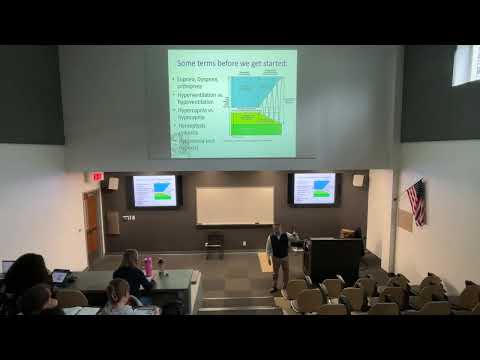
Robert Kellar explains how respiratory diseases alter airflow, lung expansion, and gas exchange, focusing on atelectasis and chronic obstructive conditions including emphysema, chronic bronchitis, asthma, and bronchiectasis. He connects disease mechanisms to clinical signs and tests, including emphysema's loss of alveolar surface area, EVALI findings in vaping-related lung injury, and spirometry's FEV1 measurement.
Key takeaways
- Emphysema reduces gas exchange by enlarging and merging alveolar spaces, which destroys the folded surface area needed for efficient oxygen transfer.
- Alpha-1 antitrypsin normally restrains elastase; deficiency can increase susceptibility to panacinar emphysema, while smoking-related centriacinar emphysema is more common.
- Chronic bronchitis is defined by a productive cough lasting at least three months in each of two consecutive years, and damaged cilia make mucus clearance and infection control harder.
- Asthma is characterized by airway bronchospasm that can often be relieved with bronchodilators, while corticosteroids help control airway inflammation over time.
- FEV1 measures how much air a patient can forcibly exhale in the first second, helping quantify obstructive airflow limitation.
- EVALI findings discussed include bilateral CT opacities and foamy macrophages in lung samples, illustrating that repeated vaping aerosol exposure can be associated with severe lung injury.
Chapters
- Robert Kellar opens with jokes and reminds students that the pre-quiz is due that day and the post-quiz is scheduled for Thursday or Friday.
- The lecture covers atelectasis, obstructive pulmonary diseases, and pulmonary infections, with restrictive diseases and COVID planned for the next class.
- Kellar reviews an approximate total lung capacity of 6 liters, noting that height and thoracic size influence capacity.
- Tidal volume at rest is about 500 mL, while expiratory reserve is about 1 to 1.2 liters and inspiratory reserve about 3 to 3.3 liters.
- Residual volume remains in the lungs after exhalation, preventing complete emptying and collapse.
- Eupnea means normal breathing; dyspnea is abnormal or disproportionate shortness of breath, and orthopnea is breathlessness when lying down.
- Hyperventilation and hypercapnia describe, respectively, excessive ventilation and elevated blood carbon dioxide; hypoventilation and hypocapnia indicate the opposites.
- Hemoptysis means coughing up blood, cyanosis is bluish skin or nail-bed coloration, and hypoxemia refers to low arterial oxygen while hypoxia refers to low tissue oxygen.
- Ischemia means inadequate blood flow, which can cause tissue hypoxia.
- Atelectasis is lung collapse that reduces expansion and compromises gas exchange.
- Compression atelectasis can follow pneumothorax or pressure from fluid; Kellar also links pleural fluid accumulation with congestive heart failure.
- Absorption atelectasis occurs when an obstruction, such as inhaled food, blocks airflow and causes distal alveoli to collapse.
- Contraction atelectasis follows fibrotic lung changes that reduce elastin and the lungs' ability to recoil and expand.
- Chronic obstructive pulmonary disease is a family of conditions, with emphysema and chronic bronchitis as the main chronic forms discussed.
- Asthma is obstructive but often episodic: symptoms can ease with treatment, unlike the persistent airflow limitation described for chronic bronchitis and emphysema.
- Obstructive disease especially impairs forced expiration, which clinicians assess with spirometry.
- The acinus includes respiratory bronchioles, alveolar ducts, and alveoli, the structures involved in gas exchange.
- Centriacinar emphysema affects the central acinus and is commonly associated with cigarette smoking; panacinar emphysema affects the acinus more uniformly and can be linked to alpha-1 antitrypsin deficiency.
- Enlarged, blown-out air spaces lose the folds that provide surface area, reducing the membrane available for oxygen and carbon dioxide exchange.
- Patients with emphysema may develop dyspnea and barrel chest as they rely on inspiratory reserve rather than relaxed tidal breathing.
- Kellar demonstrates shallow breathing at the upper chest to illustrate the increased effort required to move air.
- The sustained work of breathing can increase energy expenditure and contribute to weight loss; Kellar contrasts this with cyanosis in chronic bronchitis.
- The clinical definition given is a persistent cough for at least three consecutive months in each of two consecutive years; Kellar says about 90% of patients are smokers.
- Simple chronic bronchitis produces mucus and a productive cough without obstructed airflow.
- Chronic asthmatic bronchitis combines mucus with intermittent bronchospasm, while chronic obstructive bronchitis features thick mucus that blocks airways and is difficult to clear.
- Tobacco smoke and other pollutants can stimulate mucin production and enlarge mucus-secreting submucosal glands.
- Damage to ciliated respiratory epithelium disrupts the mucociliary escalator, making it harder to move trapped particles and mucus out of the airways.
- Mucus retention can trap bacteria and promote recurrent respiratory infections, unlike emphysema's primary damage to gas-exchanging structures.
- EVALI stands for e-cigarette or vaping product use-associated lung injury; the lecture describes heating a solution to aerosolize nicotine, THC, CBD, or flavoring compounds.
- Kellar warns that an aerosol plume can contain particles even when it is not visibly thick, and repeated exposure may sustain lung inflammation.
- He cites testing that found toxic chemicals and carcinogens in vaping products, often at lower levels than cigarettes, while cautioning that lower exposure does not make chronic use safe.
- Kellar describes a reported 17-year-old patient who required a bilateral lung transplant after vaping-associated injury.
- CT examples show bilateral opacities, consolidation, ground-glass changes, and septal thickening compared with darker, clearer normal lung tissue.
- Biopsy and lavage examples show foamy macrophages and inflammatory cells in lung air spaces; the lecture cites about 2,800 cases and 68 deaths in figures available at the time.
- Asthma primarily involves reversible constriction of the airways, rather than the alveolar destruction or persistent structural changes emphasized for emphysema and chronic bronchitis.
- A bronchodilator can relax constricted airways during an attack, while corticosteroids help control airway inflammation over time.
- Extrinsic triggers include allergens, ozone, smoke, and irritants; intrinsic triggers include cold air, exercise, and stress.
- For cold-air-triggered symptoms, Kellar recommends inhaling through the nose to warm and filter incoming air.
- Spirometry measures FEV1, the forced expiratory volume in the first second after a full inhalation and forceful exhalation.
- Kellar gives 80% of expected air expelled in the first second as a reference, with 60 to 79% described as mild obstruction, 40 to 59% moderate, and below 40% severe.
- Asthma tissue examples show mucus in the airway lumen and eosinophils, an inflammatory pattern Kellar distinguishes from the macrophage-heavy changes discussed in EVALI.
- Bronchiectasis is permanent dilation of bronchi following persistent obstruction, cystic fibrosis-related damage, or necrotizing infection.
- Chronic inflammation and retained mucus and cellular debris can lead to copious, foul-smelling sputum, cough, shortness of breath, fever, and increased bacterial infection risk.
- Kellar connects progressive bronchiectasis and recurrent lung infections with cystic fibrosis, then previews restrictive pulmonary diseases and COVID for Thursday.
Transcript excerpt
0:02 What goes up and never comes down, your age. [snorts] Someday you'll think more about your age than today. But what does a nosy pepper do? gets jalapeno business. Nicely done with a mic drop of the pencil. I like that. How did the lumberjack know how many trees they cut that day? Relevant to our mascot. They kept the log.
0:52 You like that one? All right. [clears throat] Okay, just schedule check. Pre-quiz due today. There's actually quite a few of you that hadn't taken it yet um when I looked today. So, don't forget. I don't know if the rainy weather is slowing people down. And then post quiz on Friday or Thursday. And so, we'll have lecture today and Thursday. And then next week we have no plans, right? Turkey stuffing, cranberry sauce. How many guys are cranberry sauce people? A couple. Yeah. Oh, somebody is really cranberry sauce in the back. I saw the ham go up aggressively. All right. Um,
1:40 turkey or ham? What are we turkey or ham? Turkey. Ham is is that Christmas time? Ham. Easter. Christmas. Okay. Um, what other traditions do you guys have next week? Is everybody going home? Be with family. Have people here? Uh, f uh friendsgiving. Is that what I I've heard? Friendsgiving. Got some old students that are in town for Friendsgiving. I I just learned about that. Okay. So, [clears throat] our task today is to talk a little bit about respiratory disease. We're going to get I think decently far. So, we don't have as much to do on Thursday. Um, and [clears throat] I think I think today is going to be kind of interesting. I I think the respiratory
2:27 section, the cardiovascular section, we kind of wrap up the semester. Uh, I
This is the start of the transcript. Save this video free for the whole transcript, searchable and time-coded.
In this course
Related notes
Summary, takeaways, and chapters were generated by AI from the video's transcript and may contain errors. The video belongs to its creator, Robert Kellar, Ph.D..