Liver Diseases
Overview
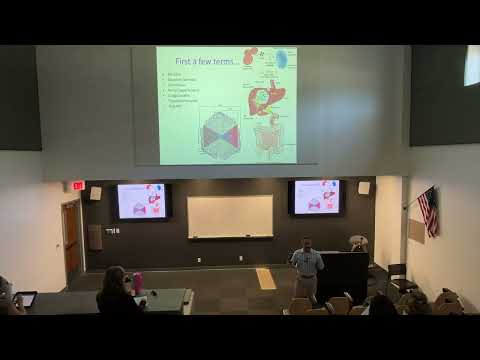
Robert Kellar, Ph.D., explains how the liver’s functions in blood processing, bile production, protein synthesis, and clotting are affected by disease, then traces liver injury from fatty change and hepatitis to irreversible cirrhosis. Using alcohol-related disease as the main example, he connects acetaldehyde toxicity and chronic inflammation to stellate-cell scarring, and explains clinical signs including jaundice, edema, ascites, and elevated liver enzymes.
Key takeaways
- The liver makes albumin, which helps maintain blood oncotic pressure; reduced albumin can shift fluid into tissues and the abdominal cavity, contributing to edema and ascites.
- Portal hypertension can affect more than the liver because the stomach, intestines, spleen, and portions of the esophagus drain through the portal venous system.
- Alcohol metabolism produces NADH, which suppresses fat breakdown and promotes hepatic fat accumulation, while acetaldehyde can directly injure hepatocytes.
- Repeated inflammatory injury activates stellate cells to lay down collagen; extensive fibrosis replaces functional tissue and marks the transition to poorly reversible cirrhosis.
- GGT, AST, and ALT provide complementary clues: GGT is sensitive but not alcohol-specific, AST can rise after muscle injury, and ALT is more liver-specific.
- Early fatty liver and some inflammatory injury may improve when the cause is removed, but established cirrhotic scarring can permanently impair bile production, protein synthesis, and blood processing.
Chapters
- The class begins the liver-disease unit, with respiratory physiology planned for the following week and Thanksgiving week off.
- At about 6:53, Kellar introduces a quiz on liver functions to establish the organ’s broad role in physiology.
- The liver manufactures proteins including albumin, stores glycogen and fats, detoxifies blood, and produces bile.
- Hepatocytes are the liver’s principal cells; bile flows through ducts into the duodenum.
- The liver produces bile, while the gallbladder stores and concentrates it.
- Liver lobules contain three zones organized around a central vein, with hepatocytes performing much of the organ’s processing work.
- The liver receives nutrient-rich venous blood through the portal circulation, including blood from the digestive organs.
- Kellar contrasts this venous processing with the kidneys’ filtration of blood on the arterial side.
- Bilirubin is produced as heme from aging red blood cells is broken down and processed by the liver; impaired handling can cause jaundice and yellowing of the eyes.
- Newborn jaundice can occur when an infant’s liver is not yet fully active; phototherapy helps break down bilirubin while liver function matures.
- Cholestasis means reduced bile flow, causing biliary pigments to accumulate; impaired bile delivery can also interfere with fat digestion.
- Gallstones or blocked bile ducts can trigger upper abdominal pain, often made worse after a fatty meal.
- Portal hypertension can arise when resistance to blood flow through a damaged liver increases pressure in the portal venous system.
- Right-sided heart failure can raise venous pressure and back pressure on the liver; prolonged left-sided failure may contribute by progressing to right-sided strain.
- The liver produces most clotting proteins, so severe liver dysfunction can impair coagulation and increase bleeding risk.
- Low albumin reduces oncotic pressure in the bloodstream, making it harder to retain fluid in vessels and increasing tissue edema.
- The stomach, small intestine, spleen, and portions of the esophagus connect to the liver through the portal venous system.
- Portal hypertension and low albumin contribute to complications including distended veins called varices and fluid accumulation in the abdomen called ascites.
- Fluid shifting out of the bloodstream can lower circulating volume and activate the renin-angiotensin system, which retains water and can worsen fluid accumulation.
- Severe protein deficiency can cause a swollen abdomen through low oncotic pressure, as in kwashiorkor.
- Kellar outlines a progression from steatosis, or fatty liver, to inflammatory hepatitis and then cirrhosis with extensive fibrosis.
- Removing the cause of injury can allow earlier-stage fatty change and some hepatitis to improve, but advanced scarring does not readily reverse.
- In cirrhosis, collagen scar tissue replaces functional liver tissue, reducing the liver’s ability to make albumin and bile and process blood.
- Repeated injury, including alcohol exposure or viral hepatitis, can drive chronic inflammation, cell death, and liver remodeling.
- Genetic differences affect how people process alcohol and medications such as acetaminophen, changing susceptibility to liver toxicity.
- Kellar describes more than four drinks on an occasion as a risky pattern and discusses weekly thresholds of over seven drinks for women and over fourteen for men.
- Tolerance can conceal harm: a person may feel fewer immediate effects while continuing repeated exposure over years.
- The lecture attributes alcohol-related injury partly to acetaldehyde, a toxic intermediate that can damage hepatocytes when alcohol is consumed faster than the liver can process it.
- Gamma-glutamyl transferase, or GGT, is presented as a sensitive marker that may rise after sustained heavy drinking, but obesity, diabetes, and smoking can also elevate it.
- AST can rise with liver injury but is also found in muscle and heart, so strenuous exercise can complicate interpretation.
- ALT is more liver-specific; elevation can point toward fatty liver or viral hepatitis and may warrant further evaluation.
- Interpreting GGT, AST, and ALT together gives clinicians more context than relying on one enzyme result.
- Steatosis commonly features an enlarged, soft, fatty liver and impaired bile flow; alcoholic hepatitis can include swollen hepatocytes, cell death, inflammatory cells, and Mallory-Denk bodies.
- Cirrhotic liver tissue develops fibrosis and regenerative micronodules, and the organ may shrink as functional tissue is lost.
- Alcohol dehydrogenase converts ethanol into acetaldehyde while producing NADH; excess NADH inhibits lipolysis and favors fat accumulation in the liver.
- Acetaldehyde is the toxic intermediate linked to hepatocyte injury, while early fatty change may improve if the damaging exposure stops before substantial fibrosis develops.
- Acetaldehyde-related hepatocyte injury activates Kupffer cells, which release inflammatory mediators including TNF-alpha.
- Repeated injury activates hepatic stellate cells, which multiply and deposit collagen; continued stimulation produces fibrosis and can make cirrhosis irreversible.
- Steatosis may involve an enlarged liver and elevated bilirubin; hepatitis can add malaise, weight loss, liver tenderness, and jaundice.
- Advanced cirrhosis can produce portal hypertension, ascites, peripheral edema, weakness, weight loss, and jaundice.
Transcript excerpt
0:38 I >> [snorts] [snorts]
1:49 >> I will say Maybe bless you are
2:52 good. I will I will shout for you. Hallelujah. life
3:57 the oppos. forward. Good. How's everyone's week going?
5:02 [clears throat] Pretty good. All right. Uh, so today we're talking about liver diseases. The next week we'll be into respiratory and we'll take Thanksgiving week off, believe it or not. That's the following week, which is kind of crazy. It's already here. But I like to tell you that ahead of time. I mean, theoretically, you knew that the beginning of the semester because if you're looking to go home and planning flights, you know, students are always wondering like, "Wait, are we having class like ours would be the Tuesday before Thanksgiving, but uh we're not having class that whole week. No assignments." Okay? So, if you want to fly home Friday before Thanksgiving, uh after our Thursday lecture, that's fine with me. [laughter]
5:49 spend as much time with your family as uh as you'd like. Um, okay. [clears throat] So, how do you have a successful solar system party? You plan it. It's pretty good, I think. Why was six afraid of seven? 789. That's the OG 67 joke, right? Where do cats wait to pay their bills in the feline? No, it's not registering. I know we talk
6:38 about human physiology, not other mamalian physiology, but if you're having trouble with that one, ask a neighbor. Group work, ask your neighbor. [clears throat] Okay, let's get started. Which of these is not a function of the liver? Which one of these does the liver not do? >> [clears throat] >> Any guesses? [snorts] A well, it does do protein manufacturing.
7:25 In fact, a really important protein that it makes is albamin. We'll talk about that today.
This is the start of the transcript. Save this video free for the whole transcript, searchable and time-coded.
In this course
Related notes
Summary, takeaways, and chapters were generated by AI from the video's transcript and may contain errors. The video belongs to its creator, Robert Kellar, Ph.D..