Cell Injury & Death 1of2 Fall 2026
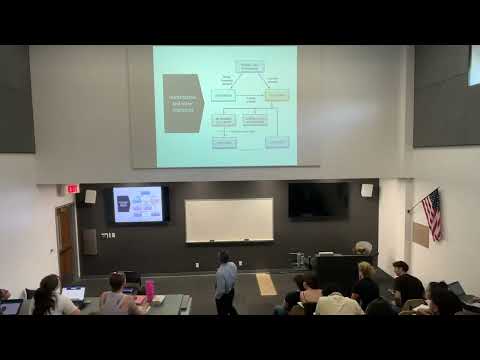 Watch on YouTube →
Overview
Robert Kellar, Ph.D., connects cellular biology to clinical pathology by explaining how stressors trigger adaptation, reversible injury, or irreversible cell death. He contrasts necrosis, with swelling, membrane rupture, and inflammation, against apoptosis, an orderly process that preserves membrane integrity, and illustrates the concepts with Barrett esophagus, smoking-related metaplasia, myocardial ischemia, kidney injury, and fatty liver.
Key takeaways
- Cellular injury can remain reversible while cells retain repair capacity; membrane rupture and nuclear degeneration mark irreversible necrosis.
- Necrosis causes swelling, membrane failure, and inflammation, whereas apoptosis packages cell contents into membrane-bound bodies that can be cleared without the same inflammatory response.
- Barrett esophagus and smoking-related airway changes are both metaplasia, but the epithelial shift differs: squamous to columnar in Barrett esophagus and ciliated columnar to squamous in smokers.
- Disrupted sodium and potassium gradients draw water into cells by osmosis, producing cellular swelling during reversible injury.
- Fatty change in the liver can be reversible, while progression to fibrosis and scarring compromises liver function irreversibly.
- Apoptosis is used in normal development and immune function, including removal of tissue between embryonic digits and elimination of self-reactive T cells in the thymus.
Chapters
- The first pre-quiz is due at 11:59 p.m.; pre- and post-quizzes are open book and open notes.
- Tuesday and Thursday lectures and Monday office hours establish a weekly study cadence; students can also email Robert Kellar or arrange another time.
- The lowest pre-quiz and post-quiz scores are dropped, and recorded lectures will be organized in a semester YouTube folder.
- Kellar frames pathology as both the study of disease causes and a bridge between basic science and clinical practice.
- Cellular stressors include UV radiation, air pollution, chemicals, food contaminants, and other environmental exposures.
- Pathology applies concepts such as DNA-to-mRNA-to-protein, inflammation, intracellular signaling, and mitochondria to clinical conditions.
- Cells first attempt to adapt to increased stress; if adaptation fails, injury may follow.
- Some injury is reversible, with changes such as lipid accumulation, inflammation, reactive oxygen species, and altered subcellular structures.
- A point of irreversibility marks the transition toward cell death, while successful repair can restore homeostasis.
- Physiologic adaptations include puberty, the menstrual cycle, bone development, sensory adaptation, and neural pathways reinforced through learning.
- Atrophy is decreased cell size; hypertrophy is increased cell size; hyperplasia is increased cell number; metaplasia is a change from one cell type to another.
- Acute inflammation supports healing, while Kellar distinguishes persistent chronic inflammation as potentially pathogenic.
- Atrophy means loss of cell size; the comparison of an older brain with a younger adult brain illustrates age-associated shrinkage.
- Kellar links brain atrophy with declining memory and increased confusion, noting that Alzheimer disease is one of several dementia-related conditions.
- The heart depends on continuous oxygen-rich blood flow; coronary narrowing can cause ischemic cellular injury and myocardial infarction.
- Pregnancy produces physiologic uterine hypertrophy, with enlarged smooth muscle cells, and hyperplasia, with increased endometrial cell numbers.
- In Barrett esophagus, chronic gastroesophageal reflux can replace the esophagus's stratified squamous epithelium with mucus-producing columnar epithelium containing goblet cells.
- Smoking-related airway metaplasia can replace ciliated columnar epithelium with squamous epithelium, reducing the airway's cilia-based debris clearance.
- Hypoxia deprives tissue of oxygen, while excess oxygen can produce reactive oxygen species and damaging free radicals.
- Antioxidants, including those found in blueberries, can act as free-radical scavengers.
- Other injury causes include chemicals, infections, immune reactions, genetic defects, nutritional imbalances such as iron deficiency, physical trauma, and aging.
- Cellular swelling can follow disruption of sodium and potassium gradients; water moves by osmosis toward areas of higher solute concentration.
- Hypoxia and metabolic injury can also produce fatty change within cells.
- In necrosis, swelling of the endoplasmic reticulum and mitochondria progresses to membrane rupture, loss of ion balance, and recruitment of inflammatory cells.
- Apoptosis is programmed cell death: cells shrink, chromatin condenses, and membrane blebs package cell contents into apoptotic bodies.
- The plasma membrane remains intact, preventing cell contents from spilling into surrounding tissue and avoiding the inflammatory response typical of necrosis.
- Neighboring cells or macrophages can engulf apoptotic bodies and reuse their contents.
- During embryonic development, apoptosis removes tissue between digits; incomplete removal can leave webbed toes.
- Programmed neuronal death removes neural pathways that are not needed during development.
- In the thymus, apoptosis eliminates self-reactive T cells; Kellar notes that only a small fraction of generated T cells are retained.
- Renal tubules show a progression from normal cells to swollen, damaged cells and then irreversible injury in a kidney infarction.
- The liver can accumulate lipid vacuoles in fatty change, which may be associated with alcohol use, high cholesterol, hepatitis, or other conditions.
- Fatty change can be reversible, but fibrosis and scarring compromise liver function and are not reversible.
- Students compare apoptosis and necrosis in a table, using cell-level features to identify each process.
- Necrosis involves swelling and a compromised or ruptured membrane; apoptosis is identified by organized fragmentation and membrane-contained apoptotic bodies.
- Kellar uses membrane integrity as the clearest clue in the image exercise, identifying image A as apoptosis and image B as necrosis.
- Once necrosis compromises the cell membrane, the injury is irreversible and nuclear material degenerates and disappears.
- Kellar previews region-specific types of necrosis and additional mechanistic pathways for the next lecture.
- Students are reminded to complete the pre-quiz by 11:59 p.m. and review the slide deck before Thursday.
Transcript excerpt
0:02 What kind of animal would you never play video games with? A cheetah. Nicely done. Wow. Didn't take you guys long to fall into this. Why are frogs so happy? >> They're jumpy. I like that. Anything else? They eat whatever bugs them. No. Okay. All right. What type of dance do teachers like best? I'm not going to demonstrate. Don't don't get scared. Attend dance. Nicely done. Okay. They're not any better than last week, right? But you'll you'll wear down. I I promise you'll wear down. And then if
0:50 you watch the videos throughout this semester, you'll start to realize like, wow, I just started laughing at those and they weren't actually any funnier. So, okay. So, last week, let's do a litmus test. How how did things flow for you? Any questions, operational questions or organizational questions on how the how the class works, where to find stuff? So, your your first assignment is actually due this evening. You all know that. Okay. So, it's due tonight by 11:59 p.m. Plenty of time. wouldn't be a horrible idea to to maybe wait until after lecture and take it this afternoon. Not a big deal unless you have a busy evening or you work on Tuesdays. You just don't want to miss
1:36 them. We'll drop your lowest pre and post quiz so everyone gets like a freebie. I know we all have bad weeks. We forget stuff. Um but the sooner you can get into a cadence, I think the better it'll be for you for the semester as far as like uh schedule. Just create a schedule. So, Tuesdays and Thursdays we have lecture. I'm having office hours on Monday afternoons. You guys saw that posting. If that doesn't work for you, like that's not the end of the world.
This is the start of the transcript. Save this video free for the whole transcript, searchable and time-coded.
Related notes
Summary, takeaways, and chapters were generated by AI from the video's transcript and may contain errors. The video belongs to its creator, Robert Kellar, Ph.D..