From Ideas to Impact: Choosing Projects & Building Teams | WFED 119 | Sep 17, 2026
Overview
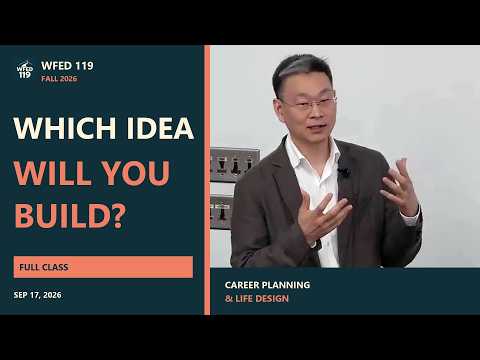
WFED 119 students narrowed 30 class-generated project ideas to 12 through comments and votes, then ranked preferred projects and organized into project teams. The class also formed four teams of nine using Enneagram-type considerations, brainstormed project concepts such as a campus bonfire, encouragement wall, wellness bingo, caffeine survey, and career-fair matching tool, and discussed using AI tools without sharing personal information.
Key takeaways
- A structured voting process can turn 30 student-generated concepts into 12 viable project options: allow comments for improvement, cap each student's votes at three, and then collect ranked preferences.
- Project success should be defined with observable measures; for the campus encouragement tree, proposed measures included how many people used it, how it was promoted, and what impact it had.
- Campus projects involving fire or public facilities need early operational research: the bonfire group was encouraged to contact Penn State Harrisburg organizers and check applicable Penn State policies.
- A project can be made more useful by designing for broad participation: the wellness bingo group considered recurring activities at the HUB, while the encouragement-wall group explored a high-traffic indoor location.
- AI can support project planning and student-designed tools, but the class was explicitly advised not to enter personal information into paid AI services.
- The course's next personal-planning activities distinguish terminal, instrumental, and work values, then use those priorities to create a one-sentence mission statement.
Chapters
- Students were directed through Canvas to the Week Three Google Doc containing the class project ideas.
- The class activity centered on evaluating and improving ideas before assigning teams.
- Students could add comments explaining how to improve any of the 30 proposed projects.
- Each student could cast up to three votes by adding slash marks, with the goal of selecting 12 projects.
- The instructor said AI had been used to incorporate perspectives from different Enneagram types and strengthen the draft ideas.
- The instructor highlighted highly voted proposals and counted support across the document.
- A campus bonfire idea prompted questions about finding a permitted off-campus site, such as a campsite.
- The class reached 12 selected ideas and prepared to rank project preferences.
- Students were asked to rank their first, second, third, and fourth project choices.
- The instructor planned to use the rankings when assigning students to projects and urged everyone to respond.
- Project selection would balance vote totals with diversity across the chosen ideas.
- Students explored possible venues for an anonymous reflection project, including an art museum, local library, and outdoor spaces.
- The campus encouragement tree was described as feasible within a week, with success measured by usage, promotion, and impact.
- The bonfire proposal raised practical questions about reserving an approved location.
- Students submitted their remaining preferences using numbered responses and timed prompts.
- Interest in a Syria food drive was checked through a show of hands.
- Participation responses were also used for administrative and course-participation tracking.
- Students interested in leading a selected project could add their first name, with an initial if needed to distinguish common names.
- Leadership volunteers already assigned to the four preformed teams of nine would not be moved into another team.
- The instructor noted that multiple students could volunteer to lead the same project.
- The instructor announced four teams of nine, considering student preferences and Enneagram personality types.
- Students were directed to sit in designated areas for Teams One through Four.
- Some assignments were checked or corrected aloud, while absent students were assigned to teams.
- Students outside the four preformed teams were to be assigned to one of the 12 selected projects.
- The four preformed teams had no assigned project and were invited to develop their own concept.
- Teams were given time to introduce themselves and discuss ideas; a shared document briefly appeared to be deleted before access was restored.
- Hussein described Penn State Harrisburg's annual October bonfire, with food, games, a DJ, and campus police support.
- The proposed bonfire team could contact Harrisburg organizers to learn how the event meets Penn State policies and explore campus partnerships.
- Another group proposed an indoor wall of post-it notes with positive messages or drawings, potentially at the HUB or IM Building, and discussed partnering with campus recreation.
- One team proposed reusable wellness bingo boards with activities such as drinking water, sleeping eight hours, completing assignments, and meeting someone new.
- The group considered a recurring activity open to anyone who signs up, rather than a single small event.
- The HUB was suggested as a venue to reach more students; teams were asked to choose a leader through group agreement.
- A team proposed surveying students about coffee, tea, and other caffeine use, stress, and potentially Enneagram type.
- The class discussed whether the survey should include alcohol use, but no decision to include it was reported.
- Another group proposed a web form that matches students' interests, availability, and time commitments with relevant clubs and opportunities for the career fair.
- The instructor suggested contacting Penn State Career Services to explore pilot testing and promotion.
- The instructor pointed students to Penn State's AI Studio as a tool available to students, staff, and faculty.
- Paid AI services could support project work, provided students did not share personal information.
- The instructor proposed asking which students had paid AI subscriptions and considering access when forming teams so each team could benefit where possible.
- The next class would prioritize terminal, instrumental, and work values using an AI system or a manual alternative.
- Students would also draft a one-sentence personal mission statement.
- The instructor said project decisions would be made over the weekend and announced early the following week.
Transcript excerpt
0:41 [cough] [clears throat] [cough and clears throat] Okay, let me close this.
1:56 >> Are you done? Only 65. Okay. [snorts] And what if you're done uh please go to canvas. All right. And then go to uh here the the same link that we used which is about team project ideas. It's under yeah week three. So, I want you to open the same Google doc. So I what I want you to do
2:52 okay I'm going to end it because I want you to come early so this will affect your uh attendance also. All right. So here um go to Google doc right and then uh there are 30 different ideas based on uh the ideas that you generated and go through all these and um you can put like you can provide comments about how you could make make this project idea better from your p
3:39 perspective and then you have three v three votes. So how you put it is uh to put this slash mark. So you can use up to three slash marks uh for the project that you really want to work on. All right. And then the goal is to narrow these 30 project ideas down to 12. All right. those ideas that got the highest number of votes um will be selected and if you feel that the ones that you voted is not going to uh be selected then you can move your vote around but uh please limit your vote to three make sense. So take some time to go through uh the project ideas and make comments or so. So that will
4:29 help um the project to be better once if uh the project gets chosen. And what I did was to uh give uh your ideas uh to AI and asked uh to
This is the start of the transcript. Save this video free for the whole transcript, searchable and time-coded.
In this course
Related notes
Summary, takeaways, and chapters were generated by AI from the video's transcript and may contain errors. The video belongs to its creator, Career Planning and Life Design.