EVEG 4156: Waste & Sanitation - Latrines
 Watch on YouTube →
Overview
Samuel Snow explains how latrines and wastewater systems interrupt fecal-oral disease transmission by separating human waste from people, food, and water while managing pathogens, biological oxygen demand (BOD), solids, and odor. He compares basic pit latrines with pour-flush and ventilated improved pit (VIP) designs, discusses graywater and nutrient recovery, and highlights practical safety, privacy, and maintenance considerations.
Key takeaways
- Sanitation and water supply must be designed together: running water can improve hygiene while producing wastewater volumes that a conventional pit latrine cannot safely accommodate.
- Controlling BOD protects aquatic ecosystems because microbial growth fueled by untreated waste can deplete dissolved oxygen, kill fish, and create hydrogen-sulfide odors.
- Urine is a substantial recoverable nutrient stream: the lecture estimates 400 liters and about 4 kilograms of nitrogen per adult per year, compared with 0.55 kilograms of nitrogen in feces.
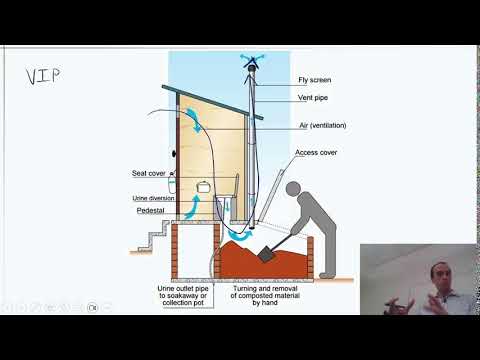
- A pour-flush toilet's P-trap uses standing water to block odors and insects, while a VIP latrine uses passive airflow and screened ventilation to reduce odor and fly escape.
- Basic pit-latrine improvements should address both public-health and physical-safety risks, including groundwater proximity, dirty surfaces, hookworms, and structurally weak slabs.
- Privacy, cleanliness, and user dignity are core sanitation requirements, not optional extras; facilities that are unpleasant or exposed may be poorly accepted even if they contain waste.
Chapters
- Thesis introduction paragraphs and preliminary group-project presentations are due Thursday.
- Samuel Snow plans optional Monday-afternoon training on the DelAgua system for water testing.
- Waste handling and sanitation interrupt the fecal-oral route, complementing safe drinking, cooking, and handwashing water.
- Water supply and sanitation improvements are interdependent: running water can improve bathrooms but overwhelm a conventional pit latrine.
- A safe, sustainable disposal system must control pathogens, BOD, and odor.
- WHO classifications discussed include sewer connections, septic systems, pour-flush toilets, VIP latrines, and basic pit latrines as improved options under the cited definitions.
- Fecal hazards include bacteria, protozoa such as Giardia and Cryptosporidium, helminth worms, and viruses.
- Physical separation from waste reduces exposure, especially where handwashing knowledge or access may be limited.
- Even without a wastewater-treatment plant, systems must keep waste from contaminating wells, rivers, and other water sources.
- Key treatment functions are separating solids and managing biological processes that break down waste.
- Flies can carry fecal matter out of a latrine, so designs should restrict their access and movement.
- High BOD means microbes consume oxygen while digesting waste; discharge into lakes or rivers can deplete oxygen, harm fish, and produce hydrogen-sulfide odors.
- Total suspended solids track particulate matter; aerated treatment systems intentionally grow bacteria, while septic tanks settle solids for slow digestion.
- Treatment monitoring can include pH and fecal coliforms, while oil and grease control protects waterways.
- The Cuyahoga River fires illustrated the danger of oil pollution; a 2015 Moscow River fire followed a pipeline rupture.
- Blackwater is toilet sewage; graywater comes from bathing, washing, and cooking and generally contains fewer pathogens and less BOD.
- Lightly treated graywater may be reused for toilet flushing or irrigation, but it is not automatically safe to drink.
- A person may produce roughly 40 to 90 liters of fecal waste per year; actual pit accumulation varies because microbes digest some solids.
- Urine can be separated from other waste, though collection requires suitable fixtures and user practices.
- An adult produces about 25 to 50 kilograms of feces and 400 liters of urine annually; the cited estimates put urine at about 4 kilograms of nitrogen and 0.4 kilograms of phosphorus.
- Feces contain about 0.55 kilograms of nitrogen and 0.18 kilograms of phosphorus per year, making urine a valuable potential fertilizer feedstock.
- Bio-solids rules govern treatment and agricultural use; crop contact and possible heavy-metal buildup affect where and how much may be applied.
- Privacy, clean surroundings, odor, and flies shape whether sanitation facilities are acceptable and dignified to use.
- A basic pit latrine confines waste underground; liquid can seep through permeable sides while solids accumulate and eventually require a new pit.
- After a pit is closed and covered, decomposition can improve soil; planting a tree at the old pit is one possible reuse approach.
- Common drawbacks include odor, flies, hookworm exposure around dirty surfaces, and groundwater contamination risks.
- A weak or unreinforced slab can collapse into a deep pit, creating a serious injury or fatality hazard.
- Site assessments should check sludge depth, distance from water supplies, and potential contamination before deciding whether to relocate or replace a pit.
- Raised foot areas, cleaning materials, and a slab that can be rinsed into the pit can improve hygiene and reduce exposure to hookworms.
- A pour-flush toilet uses a bucket of water and a P-trap water seal to block sewer odors and insects from entering the bathroom.
- A dried floor-drain trap can let odors escape; adding water restores the seal.
- The Amigos bathroom example contrasts improved facilities with structures assembled from locally available materials around a basic pit.
- Modern bathrooms can improve privacy and sanitation, but running-water systems may require a pit-latrine upgrade to handle increased flow.
- Local availability, comfort, maintenance, and community needs all affect whether a proposed facility is practical.
- A ventilated improved pit latrine uses a pipe extending from the pit to above the structure; rising warm air helps draw odors upward.
- Mesh on the ventilation outlet limits fly movement, while a simple cap can keep rain out; a roof and walls also improve privacy.
- A seat cover offers a practical way to close the toilet opening without requiring users to handle a separate pit lid.
- More advanced designs may separate urine for nutrient recovery and direct solids to composting, which Snow reserves for the next lecture.
Transcript excerpt
0:18 All right, good morning. How you guys doing? I realized I had the uh wrong slides prepared, so I needed to touch up something real quick and then post them to Moodle. So, they are up there if you wanted to follow along. And this There we go. Okay, so those are those are up in case you're going to follow along there. Um, quick note here. Uh, I I was just double- checking our timeline for our thesis statement and things. Um, so two reminders. One is Thursday, two days from now. Um, we'll have both the intro paragraphs due for your thesis statements. Um, perhaps you already
1:05 submitted your thesis statement itself, but I'd like it within the context of a a first paragraph. I'll give you feedback on that. If you needed feedback on your topic, I didn't get there yet. So, tell me if you need if if you wanted specific feedback on that, but um it's also fine if I if I give it to you with that. But there there's the formal deadline for that. Also on Thursday, I'd like for you to each um each group to present uh a few slides as we discussed on, hey, here's how the project is going. Here's where it's going. Here's the questions we need we uh have and need to have answered. Uh so that'll be that'll be Thursday. Does that make sense? Any issues with that?
1:52 Okay. Yeah. Yes. Yeah. So Thursday is kind of two two deadlines. One for the group project and one for the your your individual projects. Okay. Don't forget those intro paragraph and kind of that preliminary presentation for your for your group projects both on on Thursday. Okay. [clears throat] And I may I may also email the class,
This is the start of the transcript. Save this video free for the whole transcript, searchable and time-coded.
Related notes
Summary, takeaways, and chapters were generated by AI from the video's transcript and may contain errors. The video belongs to its creator, Samuel Snow.