EVEG 4156: Granular Filtration
 Watch on YouTube →
Overview
Samuel Snow uses the class session to organize group-project progress updates and give students practice refining research questions; the planned granular-filtration lecture is postponed. Student topics include sanitation and graywater in Nicaragua, arsenic electrocoagulation, water treatment and storage, and infrastructure constraints, while feedback focuses on clarity, project scope, and resource availability.
Key takeaways
- The session prioritizes research-project development and presentation practice; the granular-filtration lecture itself is deferred to the following Tuesday.
- For project updates, Snow recommends brief individual contributions within a shared group slide deck, with students reporting findings, next steps, and field-trip information needs.
- In Nicaragua, high wet-season water levels or clay soils can disable septic systems, making separate consideration of blackwater and less-contaminated graywater relevant to sanitation research.
- Arsenic electrocoagulation research should examine whether removal depends on redox-driven changes in arsenic state, precipitation, and groundwater chemistry.
- Water storage and chlorination can affect downstream chemistry, so treatment questions may need to account for conditions inside storage tanks as well as at the treatment stage.
- Technology feasibility depends on local power and infrastructure; project framing can focus on resource scarcity in either developing or developed settings.
Chapters
0:00
Moodle Progress Reports and October 15 Project Updates
- Samuel Snow describes a Moodle assignment for short group-project progress presentations, with each student sharing what they have learned and what they will investigate next.
- Students are asked to identify information they hope to collect on the field trip and bring forward uncertainties or questions.
- The progress presentations are planned for October 15, alongside thesis-statement and paragraph milestones.
6:50
Presentation Practice and Nicaragua Sanitation Research
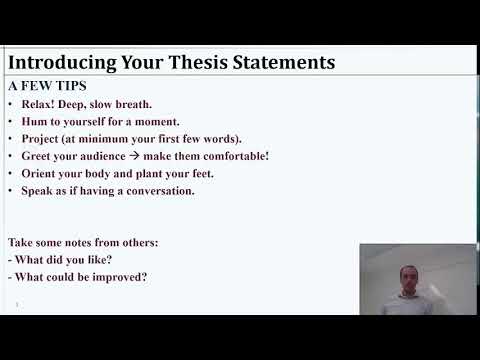
- Snow recommends preparing physically, accepting some nervousness, speaking audibly, and treating a short presentation as a conversation.
- Students are encouraged to refine research purpose and scope through peer questions and feedback on clarity and presentation effectiveness.
- Matthew discusses sanitation in Nicaragua, where clay soils or high wet-season water levels can make septic systems unusable.
- The discussion distinguishes relatively small blackwater flows from less contaminated graywater and raises graywater handling as a possible research angle.
11:50
Arsenic Electrocoagulation and Groundwater Chemistry
- London presents a project involving water access and treatment, with arsenic electrocoagulation as a key technology.
- Snow asks whether arsenic removal involves a redox reaction that changes arsenic’s electronic state or another precipitation mechanism.
- The exchange points toward groundwater redox conditions and differences between groundwater and surface-water chemistry as useful lines of inquiry.
17:00
Student Presentation Rehearsal and Topic Refinement
- A student works through an early-stage project idea in a short presentation; much of the topic detail is unclear in the transcript.
- Snow encourages the student to develop the story behind the research question and offers another chance to present after narrowing the focus.
- The class is invited to ask questions and provide feedback rather than treating the practice presentation as a final assessment.
21:20
Water Treatment as an Alternative Remediation Approach
- Another student presents a water-related research idea, though the transcript does not preserve enough detail to identify its specific setting or contaminant.
- The discussion raises treatment of water as a possible alternative or complementary remediation effort.
- Snow thanks the student for presenting without slides, reinforcing that early project updates need not depend on polished visual materials.
27:00
Water Storage, Chlorination, and Infrastructure Constraints
- A student discusses treatment of water in storage; the exchange raises chlorination and how tank conditions can affect downstream water chemistry.
- A later presentation considers technology deployment where electricity and other resources may be scarce, although much of the specific project detail is indistinct.
- Snow suggests examining the practical context of resource availability and infrastructure rather than assuming a technology can be installed as designed.
- He broadens the course framing from developing countries to places experiencing infrastructure scarcity or degradation, including developed-country settings.
35:40
Anonymous Feedback and Group Work Instead of the Lecture
- Students are asked to submit feedback anonymously, including written comments that Snow will sort and redistribute.
- With about 30 minutes remaining, Snow postpones the granular-filtration lecture until the following Tuesday.
- Groups are given the remaining class time to meet, compare project progress, and prepare questions, with roughly 15–20 minutes suggested for discussion.
Summary, takeaways, and chapters were generated by AI from the video's transcript and may contain errors. The video belongs to its creator, Samuel Snow.