EVEG 4156: Calculus of Opportunity
Overview
Samuel Snow connects development engineering to a broader model of prosperity: prosperity grows when people save time and gain opportunities they can use, while water and sanitation help protect their ability to act on those opportunities. He examines the costs and ethics of healthcare and human rights, reviews development organizations and SDG 6 indicators, and uses Matt Ridley’s ideas about specialization and accumulated knowledge alongside Bjørn Lomborg’s benefit-cost analysis to show how opportunity and effective investment can compound.
Key takeaways
- Prosperity can be understood as time saved: technologies from phones and calendars to powered lawn mowers let people devote more time to relationships, work, and other goals.
- Specialization and accumulated knowledge enable communities to produce goods that no individual could easily make alone, as shown by the many skills required to manufacture a standard pencil.
- Opportunity can compound: an internship may lead to a job, more skills, and additional choices, while illness or harmful decisions can reduce a person’s ability to benefit from opportunities.
- Water and sanitation are development infrastructure because preventing diarrheal disease helps people remain healthy enough to work, learn, and pursue opportunities.
- Water-access statistics require careful interpretation: an “improved” source may still be contaminated, such as a protected shallow well located beside a pit latrine.
- Benefit-to-cost analysis can reveal less obvious priorities: the cited development table assigns e-procurement a ratio of 125, compared with 46 for tuberculosis interventions.
Chapters
- Samuel Snow recommends Jonathan Haidt’s commencement speech as a way to understand how people can pursue good outcomes from different moral foundations.
- Engineering decisions about water must account for community values, not only engineers’ priorities, and require clear communication.
- Snow offers to discuss safety concerns with families considering the Nicaragua study-abroad trip and says assignment guidance is planned for Thursday.
- Snow contrasts global health with international health and questions whether narrow definitions can distract from the goals of engineering.
- Environmental engineers protect people from environmental hazards while also preventing human contamination from harming the environment.
- Clean water supports essential health needs as well as broader benefits such as recreation and safe swimming.
- Snow distinguishes equal healthcare outcomes from fair access, noting that equity can mean avoiding disparities by age, sex, or other characteristics.
- Healthcare costs vary widely: a $20,000 plastic surgery procedure is not equivalent to a life-saving hip replacement.
- Treating healthcare like a utility is difficult because medical needs and prices are less uniform than electricity or water use.
- A positive right implies an entitlement to receive something, such as a bandage or healthcare; a negative right protects people from having something taken away.
- Snow uses the U.S. founding ideals of life, liberty, and the pursuit of happiness to explain rights that others must not violate.
- Providing food, water, or healthcare to everyone requires resources and governance, so positive-right commitments involve trade-offs and opportunity costs.
- The World Health Organization helped establish the Millennium Development Goals and Sustainable Development Goals; SDG 6 focuses on water and sanitation.
- Snow names USAID, the Carter Foundation, and the Gates Foundation as development actors, and points to the Gates Foundation’s Reinvent the Toilet challenge.
- He describes the Copenhagen Consensus Center, founded by economist Bjørn Lomborg, as an organization that analyzes how to maximize impact per dollar.
- Charity Navigator provides reports on nonprofit finances, revenue sources, and how organizations allocate funds.
- Snow demonstrates the tool with Capital Area United Way, which receives a 97 rating, and notes a displayed audit-oversight score of 0%.
- He cites The Muse for Christ, active in Georgia and Nicaragua, with a 99 rating, and recommends checking organizations before donating.
- A 2012 report put improved water access at 89% and basic sanitation at 64%, but an improved source could still be contaminated by a nearby pit latrine.
- Snow cites later figures of 74% for safely managed drinking water, 54% for sanitation, and 56% for wastewater.
- The reported share of monitored water bodies with good ambient water quality was 72%; water-use efficiency rose from $19 to about $21.50 per cubic meter between the cited reports.
- Snow draws on Matt Ridley’s The Rational Optimist, which frames prosperity in terms of time saved.
- A phone exercise asks students to identify apps that save time, apps that consume it, memorable photos, and technologies captured in those photos.
- A dog collar illustrates how an ordinary object can embody useful design and save effort in everyday tasks.
- Students identify phones and social media as ways to stay connected with family and friends, while recognizing that apps can also draw them into unwanted leisure.
- Calendars, timers, productivity apps, and computers help organize work and save time.
- A pencil prompts students to consider its supply chain, from wood and graphite to rubber erasers and the metal ferrule.
- Snow compares isolated communities of 1,000 and 10,000 people, noting that population size can affect available skills, governance, and resource use.
- Making a standard pencil requires specialized work in wood processing, graphite refinement, rubber production, and assembly.
- A small population may have fewer people available for specialized tasks, limiting its ability to produce complex goods and combine expertise.
- Snow cites Adam Ferguson’s account of human progress: each generation builds on foundations laid by earlier generations.
- The Rational Optimist’s phrase “when ideas have sex” describes how contact between ideas can generate new ideas and cultural progress.
- A computer mouse and a Neanderthal stone axe illustrate how technologies build on accumulated knowledge, from electricity to screens and input devices.
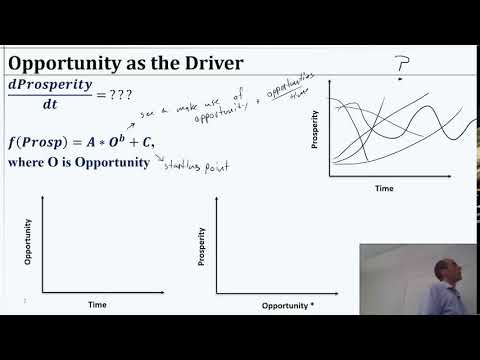
- Snow presents opportunity as a driver of prosperity, while emphasizing that making use of an opportunity usually requires effort.
- A quote attributed to Thomas Edison imagines motors replacing tiring human chores, connecting technology with reduced labor.
- Comparing a powered lawn mower with hand tools shows how machinery can save substantial time while allowing people to choose how much effort to contribute.
- Snow describes the benefit-to-cost ratio as a way to compare development investments, especially when evaluating the use of public or charitable funds.
- In the cited table, e-procurement has a benefit-to-cost ratio of 125, while tuberculosis interventions have a ratio of 46 and are estimated to save just over half a million lives for about $6 billion.
- Childhood immunization, trade, and maternal and newborn health also appear as high-impact areas; nutrition and chronic-disease interventions have lower ratios but remain positive investments in the table.
- Snow proposes modeling prosperity over time, asking how its rate of change might depend on the number of opportunities and people’s ability to recognize and use them.
- A person’s starting point matters: someone born into poverty begins with different resources and options than someone born into a wealthy family.
- Internships can lead to jobs and further choices, while harmful choices such as drug use can create negative opportunities and move a person away from prosperity.
- Water and sanitation support opportunity by reducing illness; diarrheal disease can prevent someone from working or using an available opportunity.
Transcript excerpt
0:02 All right. Good morning. Traffic was uh kind of bad again today. Yeah. Have Have the parking they started like enforcing because I know there's a lot of people parking without permits. Parking in the wrong places. >> Oh, really? Okay. >> Yeah. I haven't noticed it much yet, but I I know there's uh there's people parking in places that are that I'm paying for that they're not. That's what I know, right? Um okay. Uh just a couple quick announcements uh and reminders. So for Thursday, remember to please watch this video. Um this is it
0:52 kind of gets a little bit to ethics, kind of gets a little bit to how people value things in the world. Uh kind of helps provide better perspective for things that might feel contentious to to recognize that people, you know, whatever whatever viewpoint somebody has. Um there may be good moral foundations that you simply didn't realize people people took as a moral foundation. the Jonathan Heights um I think it was a um graduation ceremony and a speech or something like that. Commencement, that's the word. Um so that's that's a great lesson. Uh he's done some great great work. Um I think anybody could appreciate that. So please listen listen
1:39 to that and it's a a good way to kind of think about or or prompt us to think about how to navigate situations where you know we think something would be good to do in a particular context but they might have other values. We we might from our engineering perspective think that water is the very most important thing but you know sometimes that's not necessarily the case. Um and if we talk about that's maybe controversial or something. It's a good way to recognize that some people are
This is the start of the transcript. Save this video free for the whole transcript, searchable and time-coded.
In this course
Related notes
Summary, takeaways, and chapters were generated by AI from the video's transcript and may contain errors. The video belongs to its creator, Samuel Snow.