BIO105 Introductory Biology, Mond., Nov., 9th, David Champlin, USM
Overview
David Champlin connects cell signaling, the cell cycle, and molecular genetics through a rare skin cancer caused by a chromosome 17/22 translocation that places PDGFB under skin-collagen gene regulation. The lecture also reviews how genes control where, when, and how much protein is produced, how platelets normally release PDGF during wound healing, and how receptor tyrosine kinase and G-protein-coupled pathways transmit signals.
Key takeaways
- A chromosome 17/22 translocation can place PDGFB under skin-collagen regulatory control, causing skin cells to produce PDGF where it is normally absent.
- Normally, bone-marrow megakaryocytes package PDGF into platelets, which release it near an injury to stimulate skin-cell division through receptor tyrosine kinases.
- Autocrine PDGF signaling makes a cancer cell respond to its own growth signal, effectively sustaining a wound-healing response and continued cell division.
- Most cells contain the same genome, but gene regulatory regions determine where, when, and how much each gene is expressed.
- Comparing a tumor-cell karyotype with a blood-cell karyotype can help distinguish a tumor-only translocation from one present throughout the body.
- In the epinephrine pathway, cyclic AMP amplifies an external signal, and protein-kinase phosphorylation activates an enzyme that breaks glycogen into glucose.
Chapters
- The class quiz covers two short videos about PDGF signaling and a skin cancer case linking Chapters 11 and 12.
- A photosynthesis drawing assignment is due during the week; there is no Wednesday class because USM is closed for Veterans Day.
- The course will move from cell communication and the cell cycle to Chapters 17 and 18 on molecular genetics, then return to classical genetics.
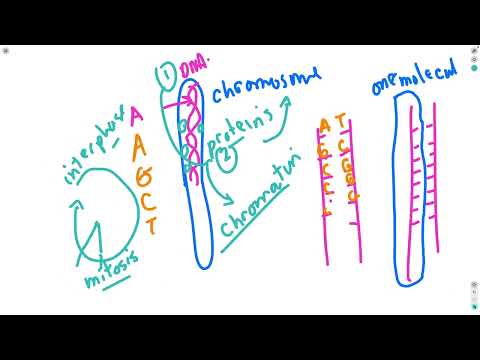
- A chromosome contains a long double-stranded DNA molecule packaged with proteins; together, the DNA and proteins form chromatin.
- DNA strands pair by complementary bases: A with T and G with C, while hydrogen-bond-like noncovalent interactions hold the paired strands together.
- Chromosomes are decondensed and hard to see during interphase, but condense during mitosis, allowing chromosome abnormalities to be examined under a microscope.
- Humans have 46 chromosomes: 22 numbered pairs plus a pair of sex chromosomes, with one chromosome in each pair inherited from each parent.
- Homologous chromosomes carry the same genes in corresponding positions but can have different versions inherited from the mother and father.
- The case involves chromosomes 17 and 22, including the PDGFB gene and a skin-collagen gene, identified in the lecture as the genes affected by the translocation.
- Nearly every cell contains the full inherited genome, even though individual cell types use only selected genes.
- Pancreatic cells make insulin, but skin cells also contain the insulin gene; the difference is whether the gene is expressed.
- PDGFB is normally active in bone marrow megakaryocytes, not in skin cells, while skin-collagen genes are highly expressed in skin.
- Megakaryocytes in bone marrow produce platelets by budding off small, membrane-bound portions of their cytoplasm.
- Platelets are not complete living cells; they carry clotting proteins and PDGF, which they release when needed, such as during injury.
- Released PDGF binds receptors on skin cells and stimulates cell division to support wound healing.
- A translocation can occur when two chromosomes break at once and DNA repair joins the broken pieces to the wrong partners.
- In the case discussed, the rearrangement places PDGFB coding information under regulatory DNA that normally drives strong expression of a skin-collagen gene.
- The altered skin cell produces and releases PDGF, even though healthy skin cells normally receive PDGF from platelets.
- An autocrine signal occurs when a cell releases a signaling molecule that binds to receptors on that same cell.
- The cancerous skin cells respond to their own PDGF as if they were under a scab and needed to divide for wound repair.
- Because the signal is produced continuously, the cell-cycle stimulation does not stop normally; a detached cancer cell can carry this growth signal as it spreads.
- DNA stores more information than a cell uses at one time; the lecture compares the genome to computer storage from which only selected files are opened.
- A gene's transcription unit is the DNA section copied into RNA, and detecting a gene's RNA output indicates that the gene is being expressed.
- The coding region in the transcription unit provides information used by ribosomes to make a protein, such as insulin or collagen.
- A gene includes both a transcription unit and a nearby regulatory region, which is also made of DNA.
- Regulatory DNA controls where a gene is used, when it is used, and how much product it produces.
- The translocation changes gene control by coupling PDGFB's protein-coding information to regulatory instructions for high expression in skin.
- A chromosome translocation can arise in one skin cell at any point in the cell cycle and then be passed to its descendants as the tumor grows.
- A chromosome karyotype can reveal the rearrangement; comparing tumor tissue with blood cells helps determine whether it is limited to the tumor or present throughout the body.
- If the translocation is found in blood cells, it may have been inherited and can indicate increased family risk, although additional mutations and failed checks and balances often contribute to cancer.
- The lecture groups membrane receptors into G-protein-coupled receptors, receptor tyrosine kinases, and ion-channel receptors.
- Epinephrine signaling in the fight-or-flight response is the G-protein-coupled receptor example; PDGF binding to skin cells uses a receptor tyrosine kinase.
- Ion-channel receptors support communication between nerve cells, including signaling involving neurotransmitters.
- Epinephrine, also called adrenaline, activates a G-protein-coupled pathway that helps muscle cells mobilize glucose for ATP production.
- A single epinephrine signal can lead to production of many cyclic AMP molecules, a second messenger that amplifies the signal inside the cell.
- A protein kinase adds phosphate groups to an enzyme involved in glycogen breakdown, switching it on so stored glycogen can be converted into glucose.
Transcript excerpt
0:00 All right, we're going to get started with our class again. And here we are. And um uh this is what we're up to. So we're going to have a quiz at dinner class today. and it's about uh two 10 or 11 minute videos that uh post down right space and uh it's going to be about um that PGF signaling pathway that we talked about some in class and um and this skin cancer patient that uh we'll be learning about as we connect chapter 11 with chapter 12. So chapter 11 is about how cells uh in our body and in all animals and also plants how they communicate with each other and uh then chapter 12 is about the cell cycle and
0:47 uh and this ga example of the skin cancer patient they fit together really well and they also lead us toward the next chapters we're going to deal with after chapter 12. So we have that quiz at the end of class today. Um, I don't think I've really explicitly pointed this out, but the a big point of this uh format is to encourage you to ask questions in class, right? So, we're going to have a quiz at the end of class today. And um and so when you're watching those videos or if you didn't watch the videos yet because you forgot, it's a good time to ask questions, right? Asking questions right before an exam or a quiz or assignment, those are great. And here's part of it is um if you ask a question, I have to answer it. And if I if I try to answer
1:38 it by sort of hiding the question that's on the quiz, that's not fair. So asking questions is really good because you
This is the start of the transcript. Save this video free for the whole transcript, searchable and time-coded.
In this course
Related notes
Summary, takeaways, and chapters were generated by AI from the video's transcript and may contain errors. The video belongs to its creator, The New Evolution for Everyone.