BIO105 Introductory Biology, Mond., Nov., 16th, David Champlin, USM
Overview
David Champlin connects BIO105 material on cell communication and cell-cycle regulation through platelet-derived growth factor (PDGF) signaling in wound healing. He explains how PDGF can induce cyclin D expression to move skin cells through the G1/S start point, contrasts that pathway with other receptor systems and cancer examples, and introduces cell-cycle checkpoints including the G2/M DNA-damage checkpoint controlled by CDK1. The class also reviews exam logistics: the second test is 80 multiple-choice questions, with the final covering the full course.
Key takeaways
- PDGF released by platelets binds a receptor tyrosine kinase on skin cells, triggering a pathway that induces cyclin D and promotes passage through the G1/S start point.
- Cyclin D is rate limiting in the simplified wound-healing model: accelerating other steps will not substantially increase cell-cycle progression if cyclin D remains scarce.
- The mitotic index counts the share of cells observed in M phase and serves as an indirect indicator of how actively a tissue is dividing.
- Receptor location distinguishes signaling strategies: membrane receptors relay signals such as PDGF, while intracellular estrogen and testosterone receptors can directly regulate gene expression.
- Quorum sensing lets bacteria infer local population density from the concentration of a shared signal and coordinate gene-expression changes after a threshold is reached.
- The G2/M DNA-damage checkpoint can hold a cell before mitosis until DNA is repaired, while CDK1 activity permits progression into M phase.
Chapters
- The second exam is scheduled for the following Monday and contains 80 multiple-choice questions.
- Exam coverage includes metabolism, cell signaling, and the cell cycle, with material taught since exam one emphasized.
- The comprehensive final is also multiple choice, and Champlin encourages students to use the remaining study time for both exams.
- Students can email questions, arrange a meeting, and request that earlier quizzes be reposted.
- PDGF, or platelet-derived growth factor, is released by platelets at a wound and binds receptors on nearby skin cells.
- The PDGF receptor is a receptor tyrosine kinase that starts an intracellular signal-transduction pathway.
- The resulting cellular response can stimulate the cell cycle, linking Chapter 11 cell communication with Chapter 12 cell-cycle regulation.
- Chromosomes are decondensed and generally invisible during interphase, then become visible as they condense during mitosis.
- The mitotic index measures the proportion of cells observed in M phase, an approach used to assess biopsy samples.
- A higher mitotic index indirectly suggests that more cells are passing the cell-cycle start point and dividing.
- PDGF signaling induces expression of cyclin D, a protein needed for skin cells to advance through the start point.
- Cyclin D is described as rate limiting: like the slow pickle station in a fairground cheeseburger line, its limited supply constrains the whole process.
- Increasing the speed of other pathway steps would not substantially accelerate cell-cycle progression while cyclin D remains scarce.
- The human body has about 60 receptor tyrosine kinases; the PDGF receptor and insulin receptor are examples in this family.
- The KIT receptor, activated by KIT ligand, is a growth-control example associated with gastrointestinal stromal tumors.
- Different tissues rely on different growth-control pathways, so cancer-associated mutations and tumor behavior vary by tissue.
- Biopsies and removed intestinal polyps can be assessed using mitotic index alongside other indicators of abnormal growth.
- Neurons release neurotransmitters from a source cell, and these local, paracrine signals diffuse across a short synaptic gap.
- Electrical signals travel along a neuron, but neurotransmitters carry the signal across the gap to receptors on the target cell.
- Some neuronal receptors are ion channels that open or close to permit ions to move and help restart electrical signaling.
- Nuclear receptors, a family of about 48 receptor types, are located inside cells rather than on the cell membrane.
- Hydrophobic hormones such as estrogen can diffuse through the membrane and bind intracellular receptors that act as transcription factors.
- Estrogen and testosterone receptors regulate gene expression involved in vertebrate sexual maturation and secondary sex characteristics.
- In some wrasse fish, removal of the dominant male can trigger the largest female to change sex as hormone production shifts from estrogen toward testosterone.
- Cyclic AMP is the featured second messenger in the epinephrine pathway; other examples include DAG, PIP2, IP3, and calcium.
- Second messengers are small molecules used within some signal-transduction pathways to relay signals inside cells.
- Apoptosis is regulated cell death, which occurs naturally in tissues and helps form the spaces between fingers and toes during fetal development.
- Champlin presents apoptosis as a broad concept rather than a detailed exam focus.
- In quorum sensing, bacteria release signaling molecules and monitor their combined concentration to estimate local population density.
- When the signal exceeds a threshold, bacteria can collectively switch gene expression and activate behaviors such as spreading from a local infection.
- This population-level coordination is an ancient example of single-celled organisms communicating as a group.
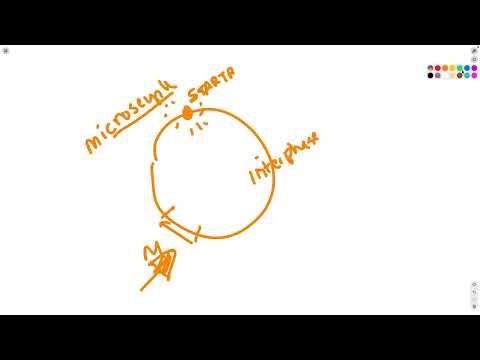
- The PDGF pathway advances the G1/S transition, also called start, by transmitting an external growth signal into the skin cell.
- Kinases use ATP to add phosphate groups to target proteins, often changing a protein from an inactive to an active state.
- Phosphorylation can activate a protein, while in other cases phosphate removal activates it; the outcome depends on the protein.
- The course focuses on three cell-cycle control points: G1/S start, the G2/M transition, and the M-phase spindle checkpoint.
- Cell-cycle regulation is conserved across eukaryotes, and researchers who studied the process in yeast helped establish core mechanisms.
- At the G2/M DNA-damage checkpoint, a cell can pause before mitosis while DNA damage is repaired.
- The checkpoint is an internal inspection, unlike the externally triggered G1/S start control point activated by growth factors.
- At the M-phase spindle checkpoint, faulty chromosome alignment or separation halts division; an unfixable problem can lead to apoptosis.
- A washing machine illustrates the cell cycle: PDGF acts like pressing start, while a raised lid or unbalanced load represents an internal checkpoint stopping progression.
- At the G2/M DNA-damage checkpoint, inactive CDK1 keeps the cell from entering mitosis; activating CDK1 permits the transition.
- Champlin closes by directing students to spread out for the class quiz on mitosis and meiosis.
Transcript excerpt
0:00 All right, we're going to get started again. And so here we are. And what we're up to is we have our test. Our second test is one week from today. And uh we are, you know, just a little bit behind where we want where we hope to be on the syllabus. That's what our um exams going to cover. Uh and um uh so that includes you know we had a little bit of exposure to the uh chapter 8 the bioenergetics metabolism but you got to go back and really understand all that metabolism and then on to what we're talking about now the cell signaling and the cell cycle. So it's a lot of stuff uh on our exam. It's going to be 80 multiple choice questions like before and you can bring your questions to class um and we'll just deal with them like that. And
0:48 uh then after Thanksgiving break. So um you know we won't have class uh we have class next week on Monday for our exam but then we don't have class on Wednesday because of Thanksgiving break. And when we come back we just have two more weeks of classes and we'll cover chapter 1718 and hopefully a little bit of uh traditional uh genetics as well. So that's where we're at. And um we have a quiz at the end of class today on a couple of videos about mitosis and meiosis. Yes. >> Will you be posting the previous quizzes again like you did for the last [snorts] exam? >> Yeah, I can. Especially if you send me a reminder email. Um sure, I'd be happy to do that. Yeah, just in case a person missed the, you know, one or of them or something like that and would like to
This is the start of the transcript. Save this video free for the whole transcript, searchable and time-coded.
In this course
Related notes
Summary, takeaways, and chapters were generated by AI from the video's transcript and may contain errors. The video belongs to its creator, The New Evolution for Everyone.