BIO105 Getting Started, BIO105 Introductory Biology, David Champlin, USM
 Watch on YouTube →
Overview
David Champlin explains how BIO105 at the University of Southern Maine will keep the same syllabus and expectations whether classes are remote or in person: the class meets Wednesdays, on Zoom or in the classroom, and never Mondays. Students work through prerecorded mini-lectures and the textbook, submit weekly notes, and take three 80-question multiple-choice exams; Champlin also outlines attendance alternatives, note-taking methods, and course communication by email rather than Brightspace.
Key takeaways
- BIO105 meets only on Wednesdays, with Zoom used during remote periods and the classroom used when USM resumes in-person instruction; the course workload and syllabus remain unchanged.
- Students prepare with both prerecorded mini-lectures and the textbook, because the three 80-question multiple-choice exams include material from both sources and some lecture-only content.
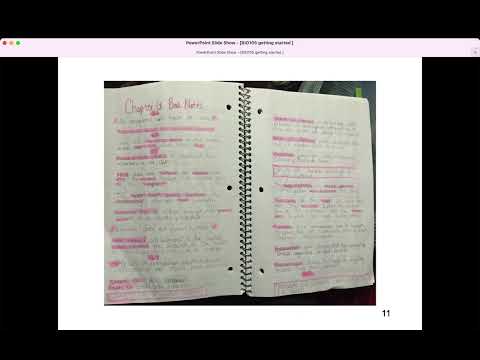
- Weekly notes are central to the course: they demonstrate participation, support learning through writing and drawing, and become each student’s exam study guide.
- Students unable to attend a Wednesday meeting can use Champlin’s private YouTube recording and submit notes within one week to meet the participation requirement.
- Handwritten notes can be scanned into PDFs with a phone app such as SwiftScan and emailed to Champlin; students should label each submission and meet weekly deadlines.
Chapters
- David Champlin says the course requirements will stay constant as the University of Southern Maine shifts from remote to in-person learning; only the meeting format changes.
- The class meets every Wednesday at its regular time, on Zoom while remote and in the classroom when in person; there are no Monday meetings.
- Prerecorded mini-lectures replace Monday class sessions, so students still complete weekly course work rather than receiving a lighter schedule.
- Champlin uses email for course communication, sending messages with BIO105 in the subject line; Brightspace is not a regular course platform.
- Champlin recommends watching the mini-lectures before reading the textbook; exams draw on both sources, including some lecture-only material.
- The lectures use figures from the textbook’s 10th edition, while the course uses the 11th edition; Champlin says the editions are very similar.
- The course has three exams, each with 80 multiple-choice questions, and the final exam covers the full course.
- Weekly notes are required for both lectures and textbook chapters: they document participation, reinforce learning through writing and drawing, and help students build their own study guides.
- Students should note confusing terms or questions while studying and bring them to Wednesday class; USM’s Learning Center and tutoring center are additional resources.
- Champlin encourages handwritten notes with simple labeled drawings, terms, and concepts; neatness matters less than actively working through the material.
- Typing notes or pasting images alone does not demonstrate the same learning effort; students may use flash cards or combine handwritten work with computer-based organization.
- A phone scanning app such as SwiftScan can turn handwritten lecture or textbook notes into a PDF for submission by email.
- Students should identify what they are sending in each email, submit notes by weekly deadlines, and begin mini-lecture notes even if their textbook has not arrived.
- Champlin plans to record Wednesday Zoom and in-person meetings and share private YouTube links with course students.
- Students who cannot attend, including those who are sick or quarantined, must watch the recording and submit notes within a week; they do not need to report their quarantine status to Champlin.
- Attendance and participation are course requirements rather than a separate participation grade, and missing the meeting without completing the alternative can lower a student’s grade.
- Practice quizzes and assignments will be announced ahead of time, and the syllabus calendar includes a required research event outside regular class time.
Transcript excerpt
0:00 uh welcome to our bio 105 course and um i made this uh just going to talk through this fast to try to help everybody everyone in our course be comfortable with how our semester is going to start and how our semester is going to go and one of the most important concepts is our semester is not going to change even though usm is going to change right we're going to start out with some remote learning and then we're hoping to come to some in-class learning when we do that in our course the only shift that's going to happen is when we're remote we'll be meeting on via zoom and when we're in person we'll be meeting in class but all the other requirements are the same we're just going to make that smooth transition whichever way usm wants to do and
0:47 everything else can be the same okay then there's some features of this that we just need to be really confident about in order to just go through smoothly and part of this is that students will be quarantined with covet so when we come back to in class learning you know students will be unquarantined and it's really important to let everybody participate so this is not an online course you know we're trying hard to get to a point where we meet in person but there's going to be a way that's described here for everybody to participate all the time all right so even if you're quarantined or sick with covent so you know we're going to roll forward and and so here we go so the first thing is in red uh our
1:34 course is scheduled to meet every monday and wednesday but we're only going to meet on wednesdays ever
This is the start of the transcript. Save this video free for the whole transcript, searchable and time-coded.
Related notes
Summary, takeaways, and chapters were generated by AI from the video's transcript and may contain errors. The video belongs to its creator, The New Evolution for Everyone.