Salt Lake Community College Gen Chem
Professor Flood · Salt Lake Community College · 11 lectures with notes
Students in this class: ask your lecturer for the class code, and these lectures will already be in your library when you sign up.
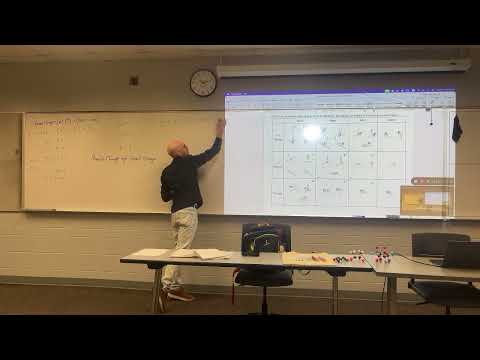
Formal Charges, Lewis Structures, and Resonance Forms
A practical method for drawing Lewis structures and ranking resonance forms using electron counts, octets, formal charge, and electronegativity.
Electronegativity, Polar Bonds, Lewis Symbols and Formal Charges
Electronegativity and Lewis-structure rules explain bond polarity, electron sharing, octets, and formal charges.
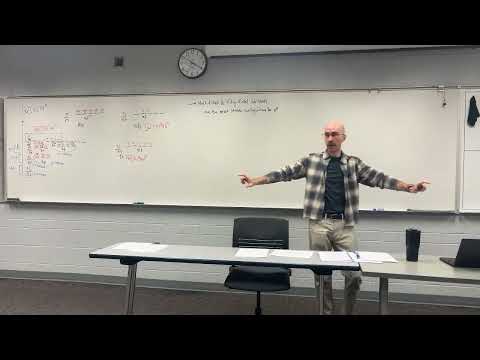
Periodic Trends Atomic Radis, Ionic Radius, Ionization Energy, and Electron Affinity
Effective nuclear charge, shielding, and electron configuration explain how atomic and ionic size and electron-removal energy vary.
Quantum Numbers, Electron Configurations, and Intro to Orbital Diagrams
Quantum numbers specify electron states, while configurations and orbital diagrams show how electrons occupy atomic orbitals.
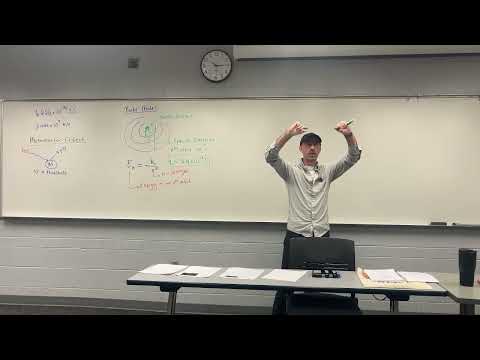
Electron Energies and Intro to Electron Orbtials
Electron energies are quantized, and quantum orbitals describe where electrons are likely to be—not planetary paths.
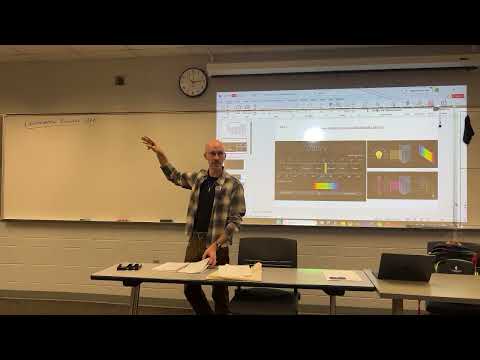
Electromagnetic Radiation and Photon Energies
Use c = λν and E = hν to connect electromagnetic-wave properties with photon energy and solve unit-conversion problems.
Nomenclature of Ionic compounds, Molecular Compounds, Binary and Oxy-acids, and Intro to the Mole
A practical guide to naming ionic, molecular, and acid compounds, followed by an introduction to moles and molar mass.
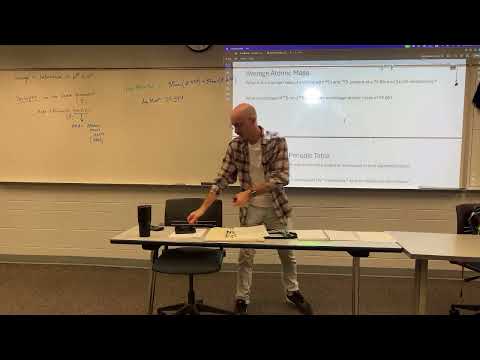
Isotopes, Periodic Trends, and Nomenclature
Use isotope abundances, periodic-table patterns, and ion charges to interpret formulas and name common compounds.
Sig Figs and Atomic Symbols
Rules for reporting measurement precision lead into atomic structure and the notation used to describe isotopes and ions.
Matter, Properties, Scale, and Intro to measurements
A practical foundation for classifying matter, interpreting chemical change, and making measurements with appropriate units and precision.
Syllabus and Fundamental Forces (1210 F26)
Course policies and study tools lead into a chemistry-centered introduction to gravity, nuclear forces, and electromagnetism.