Memorial University of Newfoundland PHYS/OCSC 2300
Professor Joe Fitzgerald · Memorial University of Newfoundland · 8 lectures with notes
Students in this class: ask your lecturer for the class code, and these lectures will already be in your library when you sign up.
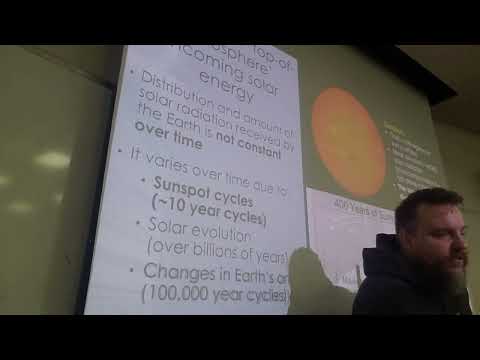
PHYS/OCSC 2300 - Fall 2026 - Midterm 1 Review Lecture
A midterm review linking seawater properties, plate tectonics, and ocean–atmosphere energy transfer to climate.
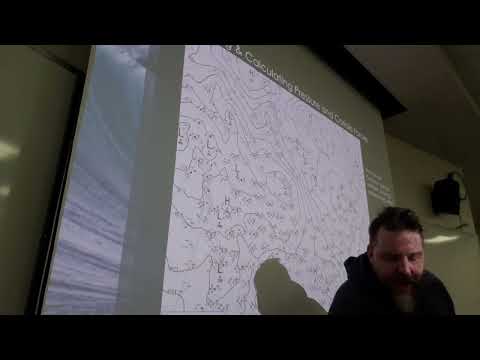
PHYS/OCSC 2300 - Fall 2026 - Lecture 8
A Newfoundland weather-map calculation shows how pressure-gradient and Coriolis forces nearly balance in large-scale atmospheric flow.
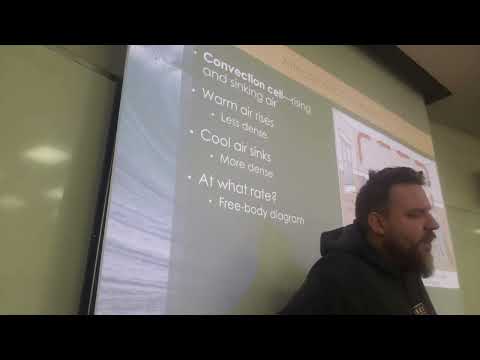
PHYS/OCSC 2300 - Fall 2026 - Lecture 7
Unequal solar heating drives convection, while Earth’s rotation redirects atmospheric flow through the Coriolis effect.
PHYS/OCSC 2300 - Fall 2026 - Lecture 6
Uneven solar heating drives circulation, while ocean heat uptake and atmospheric convection redistribute energy around Earth.
PHYS/OCSC 2300 - Fall 2026 - Lecture 5
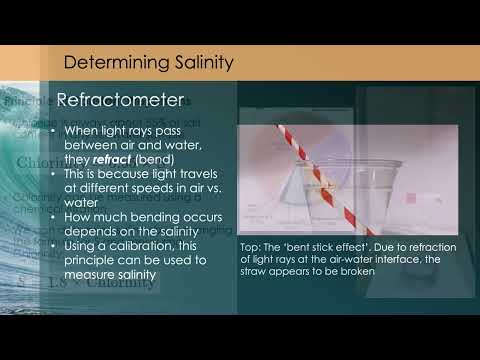
Salinity and temperature control seawater density, producing measurable global patterns, buoyancy effects, and layered ocean structure.
PHYS/OCSC 2300 - Fall 2026 - Lecture 4
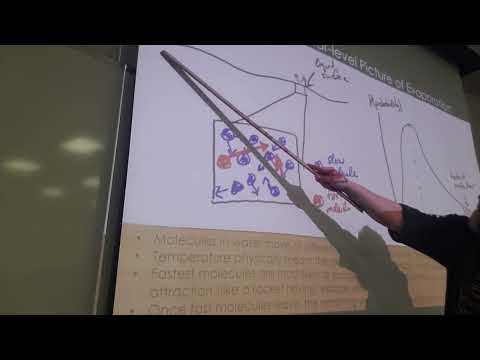
Hydrogen bonding and salinity help explain how water moves energy and drives ocean and climate processes.
PHYS/OCSC 2300 - Fall 2026 - Lecture 3
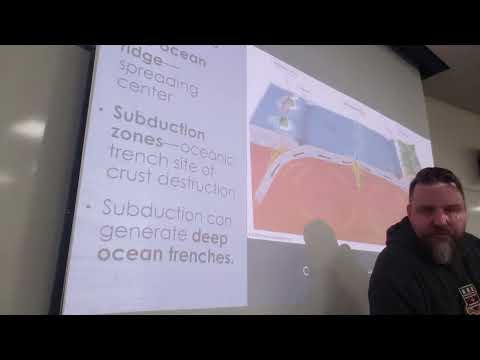
Milankovitch cycles and mantle convection help explain climate history and the moving seafloor; water’s molecular polarity explains many of its distinctive properties.
PHYS/OCSC 2300 - Fall 2026 - Lecture 2
Earth’s oceans formed through volcanic outgassing, while plate motion and climate cycles help explain their changing geography.