Why Data Centres Will Change the World and Bankrupt Their Builders: John Hempton
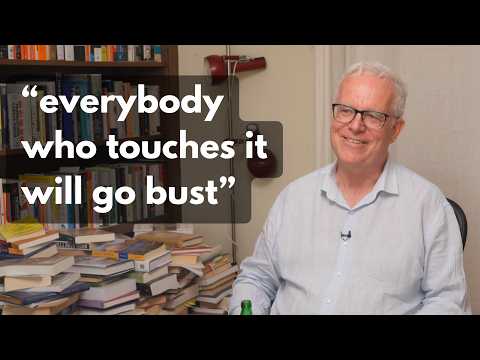 Watch on YouTube →
Overview
John Hempton argues that AI can transform work while data centres and compute providers remain dangerous investments: their enormous capital costs, low marginal costs, competition, and rapid technological improvements resemble the solar-panel and fibre-optic booms. Anthropic’s S-1 surprised him with evidence that Claude was built using far less training compute than he expected, but he still questions whether AI can earn enough to justify a projected $7 trillion of investment by 2030; his advice to Australia is to welcome regional data centres while avoiding subsidies.
Key takeaways
- Bronte Capital’s AI agent could classify bank deposit strategies across institutions with market capitalizations above $100 million for about $30,000, but Hempton could not make an equally reliable agent detect deceptive loan quality.
- Hempton’s core warning is structural: data centres combine high capital costs, low marginal costs, competition, and fast technical improvement, a pattern associated with investor losses in solar panels and fibre optics.
- Anthropic’s S-1 led Hempton to estimate roughly $12 billion in cumulative training compute by the end of July, suggesting its leading model required far less training spend than he expected.
- A projected $7 trillion AI buildout by 2030 could require roughly $2 trillion in annual revenue; Hempton argues that achieving this through business customers would require enormous labour savings.
- AI deployment may be slowed because workers must teach systems their expertise, yet managers may resist doing so if they expect automation to replace their roles.
- Hempton recommends that Australia facilitate regional data-centre development, encourage on-site power generation to protect electricity prices, and avoid taxpayer subsidies.
Chapters
- Hempton fed house plans, materials, and an address into an AI system to estimate heating and cooling loads.
- The system used Sydney Airport weather records, assessed roof angle and solar panels, and produced an engineering diagram for about $100 in tokens.
- Its results came within 5% of an engineering specification, illustrating how AI can compress days of technical work.
- Hempton trained prompts on examples of deposit sources, including ANZ’s branch incumbency, Bank OZK’s high rates, and Silicon Valley Bank’s venture-capital network.
- Other models include Signature Bank’s deposit-gathering bankers and Indonesia’s payroll-linked accounts at Mandiri.
- After testing the prompt against known banks, Bronte Capital could run an agent across banks with market capitalizations above $100 million for about $30,000.
- Hempton could not create a reliable prompt to distinguish failed credit-card lender Metris from successful Capital One using information available before their outcomes.
- Metris extended credit limits to borrowers in trouble, concealing deteriorating loan quality in reported numbers.
- Research into Spanish-language Brazilian online discussions suggested Nubank borrowers may use similar tactics, but Hempton could not quantify the risk.
- He says bank statements, limited access to borrower behavior, and AI safety reluctance to make accusatory judgments constrain automated short research.
- Hempton contrasts standardized US investor-relations meetings with visits to Indonesian offices, where local culture can reveal information absent from corporate presentations.
- He describes the current advantage as a skilled analyst working with AI, similar to the temporary chess advantage of a human-computer “centaur.”
- AI can process sanitized public material, but Hempton still relies on human judgment to notice uncertain or misleading evidence.
- Hempton credits Leopold Aschenbrenner’s 2024 essay, “Situational Awareness,” with taking compute-scaling laws seriously and anticipating trillion-dollar data centres.
- Aschenbrenner’s fund bought perceived AI beneficiaries and shorted software companies, but four-times leverage magnified market volatility and contributed to a rapid collapse.
- Hempton says technology experts entering finance and finance experts entering technology can misjudge each other’s domains.
- He argues that a standard portfolio risk review could have exposed the fund’s vulnerability before it failed.
- Hempton contrasts Novozymes enzymes, which add substantial value to industrial processes, with capital-intensive commodity chemical plants.
- A business with high capital costs, low marginal costs, and competitive output can become unprofitable when capacity exceeds demand.
- Solar panels transformed electricity production, but rapid efficiency improvements and price competition repeatedly hurt manufacturers.
- He invokes Warren Buffett’s decision to leave textiles rather than invest in a more efficient loom that could trigger further overcapacity.
- Global Crossing, Enron, Williams, Qwest, and WorldCom invested heavily in fibre-optic networks before many companies failed.
- Dense wavelength technology enabled far more information to travel over existing cables, leaving large amounts of expensive capacity unused as “dark fibre.”
- Hempton’s lesson is that fibre optics became essential to the modern internet even though much of the investment capital was lost.
- He sees data centres as potentially similar: socially transformative infrastructure can still produce poor returns for builders.
- Hempton says a short seller can lose money shorting stock that rises sharply before collapsing, because position limits may force a cover.
- Shorting WorldCom’s debt could have avoided that path, since junior debt was ultimately wiped out in bankruptcy while the holder collected coupons along the way.
- Reflecting on Aschenbrenner’s fund, Hempton says leverage and portfolio construction, not an unforeseeable event, made its failure predictable.
- He emphasizes that using AI effectively still requires asking finance-specific questions about risk.
- Hempton sees model development as highly capital-intensive while inference can have much lower marginal costs, inviting competition.
- Once built, data-centre compute may be close to a commodity if providers offer comparable reliability and uptime.
- Forward contracts can still differ in delivery risk: Hempton trusts a hyperscaler such as Google more than a less-established provider to deliver future capacity.
- He questions whether compute supplied by SpaceX is fundamentally different from capacity supplied by Amazon, despite different prices.
- Hempton estimates Anthropic had spent roughly $19.5 billion on compute by the end of July, with about $12 billion attributed to model training.
- He estimates OpenAI had spent roughly $45 billion to $60 billion on compute, while Google’s actual compute use may have reached around $60 billion.
- Anthropic’s strongest model appeared to have been produced with low single-digit billions of dollars in training compute, far below Hempton’s expectations.
- He considers several explanations for Anthropic’s apparent efficiency: favourable compute contracts, competitors’ spending choices, a technical edge that rivals may copy, or a durable advantage.
- Hempton argues that GPUs becoming 10 times more efficient per watt could benefit AI labs while damaging owners of installed computer equipment.
- Data-centre shell operators such as Digital Realty may be less exposed than firms that buy and install the chips.
- Anthropic’s plans and disclosures indicate a continued belief in scaling laws, but Hempton questions how often users need models approaching Einstein-level intelligence.
- He notes that many useful tasks, such as estimating a house’s cooling load, require competent technical reasoning rather than superintelligence.
- Hempton says classification depends on how long a model remains useful: a model superseded within six months looks more like operating expense.
- He currently views training as capital expenditure because improving models and reusable agents may provide value for years.
- His own AI agents, he expects, could remain useful for as long as seven years even as the underlying models improve.
- Hempton cites an estimated $7 trillion in AI and data-centre capital spending through 2030 and assumes computer equipment lasts about five years.
- He calculates that the investment could require roughly $1.2 trillion to $1.5 trillion in annual EBITDA, implying around $2 trillion in revenue.
- Consumer subscriptions alone seem insufficient: even $100 per month from 100 million US households would not generate trillions of dollars.
- He argues that businesses would have to fund much of the return through labour savings, potentially requiring about $4 trillion in wage reductions.
- Hempton built a useful bank-deposit analysis agent only after spending days encoding his own knowledge and testing it against examples.
- Managers may resist training AI systems if they expect automation to eliminate their jobs, slowing adoption inside established firms.
- New companies can avoid some incumbent staffing and process barriers, potentially letting them displace older businesses.
- Hempton questions how capitalism and employment would function if AI displaced a large share of work.
- Hempton argues that even modest annual efficiency improvements can trigger overbuilding in capital-intensive industries; solar manufacturers have faced repeated price pressure.
- He sees compute infrastructure as having a shorter economic life than railways or fibre, with chips potentially lasting about five years.
- Older semiconductor fabs found new markets in inexpensive MEMS sensors, including humidity detectors and battery-management systems.
- That repurposing made some old fab equipment more valuable than investors might expect, leading Hempton to leave open the possibility that older data centres could also find uses.
- Hempton would test a technology-focused analyst on scaling laws and practical uses, and a finance-focused analyst on cost structures and regional differences.
- He highlights Queensland’s lower electricity costs and Australia’s solar potential as inputs to data-centre economics.
- He says he cannot confidently forecast whether inference or training compute will grow faster, and Anthropic’s S-1 had already overturned some of his assumptions.
- He calls circular AI financing concerning but says its eventual consequences depend on how much investment is genuinely committed and who controls assets after failures.
- Hempton identifies compute as the clearest risk because it combines high capital costs, low marginal costs, and competitive supply.
- He says Australia may be less exposed to chip obsolescence if foreign hyperscalers own the chips, but excess data-centre capacity could still leave power and solar generation without buyers.
- He recommends placing data centres in regional areas, where land, sunlight, grid connections, and community support may be more available than in Melbourne suburbs.
- He supports requiring operators to generate most of their own power to limit pressure on electricity prices, while opposing government subsidies or attempts to pick winners.
- Hempton distinguishes an investment bubble from a structurally poor business: solar panels and fibre optics changed the world without reliably rewarding their builders.
- He compares data centres to airlines and other capital-intensive industries where competition and low marginal costs can erase returns.
- His policy conclusion is to let private firms build useful infrastructure, especially in suitable regional locations, without putting taxpayer money at risk.
Transcript excerpt
0:00 At long last, I welcome my friend John Hempton back to the podcast. So, John is founder and chief investment officer at Bronty Capital, a Sydney-based global hedge fund. Uh and today we're going to talk about AI from a finance guy's perspective. And uh selfishly for me, John, I think the three questions I personally want to get a better handle on are firstly, if there is a bubble in AI, where exactly is it located or where is it likely to emerge? And then two kind of ancillary questions, which we'll spend less time on than the first one, and they are if there is a bubble, what does this mean for compute? And secondly, what if any of the implications for Australian public policy? But before we get into AI as a business, I want to talk about AI as a technology. Uh what are some of the interesting ways you're using AI
0:52 at the moment, either personally or at work? AI as a tech is freaking amazing. If you haven't decided that this is the most amazing technology of your lifetime, you have not seriously used it at with cutting-edge models. I on a personal basis, I threw all of the plans for a house that we're building through AI. None of the engineering specs, just the plans. And I wanted to work out what the heating and cooling loads were. And so I put this in and it asked me questions about materials. It asked for the address. It then went and got the weather data from Sydney Airport, which is hourly for many years. It worked out what the worst days were, and the worst days are going to be cold days in July and hot days in February. It worked out how many solar panels on my roof. It
This is the start of the transcript. Save this video free for the whole transcript, searchable and time-coded.
Related notes
Summary, takeaways, and chapters were generated by AI from the video's transcript and may contain errors. The video belongs to its creator, Joseph Noel Walker.