Founders: The Startup Stories Documentary
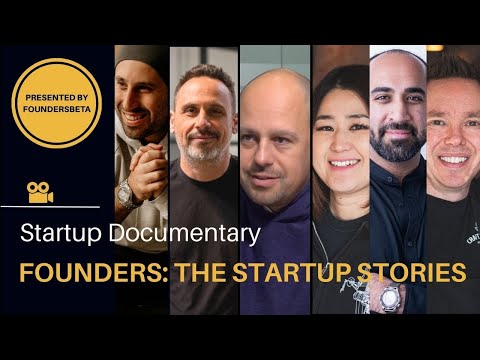 Watch on YouTube →
Overview
Three startup stories center on autonomy, resourcefulness, and building for measurable outcomes: a cofounder pair bootstrapped Contractor Compliance after personal loss, Crafty Ramen turned a restaurant into a frozen ramen-kit business during COVID, and Gambit built AI support tools such as Ask Ellen. Gambit’s products reached users in more than 100 countries and 65 languages, while a two-week NASCAR activation for Ask Amber paired a driver persona with search across a sponsor’s 1,800-product catalog.
Key takeaways
- Contractor Compliance's founders chose bootstrapping to preserve autonomy and avoid putting employee jobs at risk when testing business assumptions.
- The Contractor Compliance founder's sales advice was to optimize for customer renewals and strategic fit, not just the fastest initial revenue.
- Gambit built Ask Ellen around patients' non-medical needs, reaching users in over 100 countries and 65 languages while offering support free to patients.
- Gambit's constrained budget led it to address unsafe AI responses through system architecture rather than spending millions on model fine-tuning.
- Crafty Ramen converted a four-month-old restaurant's COVID shutdown into a frozen ramen-kit business, then built specialized e-commerce fulfillment for perishable food.
- The founders argued that Canadian grants help innovation, but domestic procurement and lending criteria must also support startups with unconventional business models.
Chapters
0:00
Contractor Compliance: Autonomy, CareerBuilder, and a Personal Catalyst
- The unnamed founder spent nearly eight years at CareerBuilder, progressing from entry-level sales to sales leadership and Canada country manager before working in California.
- After joining an early-stage startup with a Croatian development team, he experienced startup growth from the inside and later reconnected with former colleague Jeremy.
- The founder's father died suddenly at 66; Jeremy's father died unexpectedly a week earlier, and the founder's mother was diagnosed with stage 4 brain cancer before dying two months later.
- The losses pushed both founders to leave their jobs and pursue Jeremy's Contractor Compliance concept, choosing autonomy and a goal of raising no outside capital.
5:00
Crafty Ramen's Founders Find Their Way Back to the Kitchen
- One chef traces his interest in cooking to childhood meals and the British television show Ready Steady Cook, then chose kitchen work at 16 to learn how to cook.
- Mickey's family gyoza nights and parties where friends loved her dumplings helped plant the idea of opening a food business.
- Mickey first worked at a ramen shop as a teenager, though she was fired after repeatedly arriving late; at the time, she says, she did not want to work in a ramen shop as an adult.
8:20
Gambit Builds Ask Ellen for Cancer Patients' Everyday Questions
- After ChatGPT launched in November, an encounter with a woman who had breast cancer highlighted the limits of unmoderated Facebook groups for patients at different points in their journeys.
- The founders built Ask Ellen as free, non-medical support for practical and emotional questions, such as how to tell children about a diagnosis or what to bring to chemotherapy.
- Ryan and Chris joined the effort, and the tool grew to serve users in more than 100 countries and 65 languages.
- A lawyer who wanted to apply AI to legal work became Gambit's first customer after agreeing to a price that covered the team's salaries.
11:20
Crafty Ramen's Valentine's Day Opening and Contractor Compliance's Bootstrapping Model
- Jared and Mickey planned a quiet Valentine's Day opening, expecting a small crowd, but customers formed a line around the block and the shop ran out of food within three hours.
- The team had expected to sell about 100 bowls a day and had not hired extra staff; they closed temporarily, recruited from submitted resumes, and increased their preparation.
- The Contractor Compliance founders prioritized employee development and avoided raising money so a mistaken growth bet would not put jobs at risk.
- They argued that bootstrapping requires personal sacrifice and careful use of each dollar, but helps founders retain independence instead of adding investor or board oversight.
16:40
COVID Turns Crafty Ramen's Restaurant Menu into a Frozen Kit Business
- Four months after opening, COVID-19 shut Crafty Ramen's dining room and left the founders looking for a way to pay rent.
- Jared and Mickey packaged the ingredients from their bowls into ramen kits, sold them through social media, and drew on Japan's more complete instant-ramen kits as inspiration.
- The kits initially sold out in about five minutes, but expanding production meant taking increasingly significant risks and recommitting to the business's vision.
- The founders distinguished a short-term sales spike from a sustainable business, emphasizing that expansion required further investment and commitment.
21:00
Recurring Revenue, Customer Fit, and Gambit's AI Safety Architecture
- The Contractor Compliance founder urged revenue teams to prioritize renewals and customers that fit the business, rather than chasing any quick sale.
- Gambit's team tackled AI hallucinations and unsafe answers by designing for a dignified response to any user input instead of trying to enumerate every possible prompt.
- Because Gambit was bootstrapped, it could not spend millions on model fine-tuning; the team developed a different architecture that resisted prompt injection.
- A strategist associated with the FBI tried to break the system for over an hour without success, and the team applied the same safety principles to its other tools.
25:00
Crafty Ramen Scales E-Commerce and Gambit Takes Ask Amber to NASCAR
- Crafty Ramen's e-commerce project needed custom delivery-date and fulfillment systems for frozen food; after an outside developer quit midway, Jared's brother Vannon completed the work and later joined full-time.
- A proposed NASCAR sponsorship evolved into Ask Amber, a driver-based AI experience rather than a conventional logo placement on the car.
- In two weeks, Gambit built Ask Amber and connected it to a co-sponsor's catalog of 1,800 RV parts, returning product details, prices, images, and installation videos.
- The sponsorship used 30% of Gambit's available cash, but the company recouped the amount within 30 days; race-day collisions and a viral driver fanbase stress-tested the AI during live updates.
33:00
Canadian Grants, Lending Barriers, and the Case for Government Procurement
- The founders cited Canadian programs including IRAP, SR&ED, CanExport, wage subsidies, and the Regional Relief and Recovery Fund as useful sources of support.
- Traditional lenders struggled to assess Contractor Compliance despite recurring revenue of $2 million to $4 million, 50% growth, and positive cash flow because the company lacked conventional receivables.
- The founders argued that Canadian public procurement should give domestic startups an early market, allowing government customers to test innovative products even when a trial fails.
- Crafty Ramen used pandemic-era financing to develop Crafty Ramen Market, its manufacturing and consumer-packaged-goods business; one founder noted its first government client was in the United States.
41:00
A Successful Exit, Family Legacy, and Reinvesting in Social Support
- The Contractor Compliance founder kept pictures of his parents above his desk and connected the company's demanding work to honoring their memory and creating security for future generations.
- The successful exit gave financial benefits to employees throughout the organization, including frontline customer-service representatives, and increased families' financial security.
- Gambit's founders want to keep building unexpected products and use profits to fund social programs that expand access to support and services.
- A Crafty Ramen partner described growing his family's Harvey's franchises from two to four before joining Jared and Mickey, who later expanded the group to six locations.
Summary, takeaways, and chapters were generated by AI from the video's transcript and may contain errors. The video belongs to its creator, FoundersBeta.