Passive Investing: The Evidence the Fund Management Industry Would Prefer You Not to See
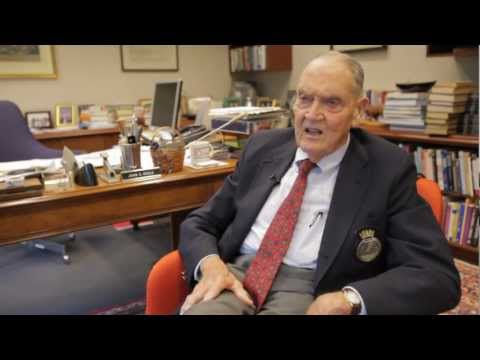 Watch on YouTube →
Overview
The case for passive investing rests on market arithmetic, decades of performance evidence, and lower costs: because active investors collectively make up the market, their average return before fees matches the market, while their fees and trading costs reduce what investors keep. The program contrasts active funds with low-cost, diversified index funds, citing studies of US and UK funds, the work of William Sharpe, Eugene Fama, Kenneth French, and Burton Malkiel, and the growth of Vanguard, while also examining industry incentives, investor overconfidence, stress, and the need to match portfolio risk to personal tolerance.
Key takeaways
- Because active and passive investors collectively own the market, the average active investor earns the market return before fees; active fund expenses and trading costs put the average active investor behind a low-cost index fund after fees.
- Historical performance is a poor way to identify future star managers: the program cites US and UK studies showing few funds sustained exceptional results, and Burton Malkiel found that past index-beating funds generally did not repeat their success in the next period.
- Costs compound over time, and the TER omits charges such as dealing commissions and stamp duty, so investors need to examine costs beyond the headline management fee.
- Broad diversification and preset rebalancing rules reduce dependence on a handful of securities and help prevent emotional buying and selling during market swings.
- Passive investing is not risk-free or guaranteed to produce strong returns; investors still need an asset allocation suited to their goals, time horizon, and tolerance for market declines.
- The program’s argument is shaped by its disclosed funding from a passive-investment company, so its evidence and industry criticisms should be assessed alongside that funding relationship.
Chapters
- UK fund managers oversee more than £4 trillion, yet many produce returns below benchmarks such as the FTSE 100 or S&P 500.
- A US study of 355 funds from 1970 to 2005 found only nine beat the index by at least 2%, and only three sustained outperformance.
- A UK study of 1,200 funds ending in March 2011 found just 1.3% stayed in the top quartile for three consecutive years.
- John Bogle argues that choosing future winners is exceptionally difficult because investors cannot reliably know more than the market.
- Fund expenses include research, trading, marketing, salaries, and bonuses, with some top managers earning about £2 million annually.
- The annual total expense ratio, or TER, does not include dealing commissions, stamp duty, and other turnover costs.
- A 1.4% annual management fee may sound small, but charges compound over a 20-year investment period and reduce investors’ wealth.
- The program says UK fund charges had risen over the preceding decade and cites an industry estimate of about £10 billion in annual profits.
- A FTSE 100 index fund holds shares across the index, while an active manager selects a smaller group based on forecasts.
- Since active and passive investors together own the market, their average pre-fee market return is the same; lower operating costs give passive funds an advantage after fees.
- William Sharpe’s Capital Asset Pricing Model supports broad diversification and distinguishes compensated market risk from risks investors may not be rewarded for taking.
- Eugene Fama and Kenneth French’s efficient-market framework holds that prices incorporate public information quickly, making consistent exploitation of mispricing difficult.
- Index funds can own hundreds or thousands of securities, while a typical actively managed fund may hold about 50.
- Concentrating investments in themes such as technology or commodities can increase portfolio risk compared with holding a broad range of assets.
- Weston Wellington describes diversified exposure, low costs, and rebalancing as central principles for investors.
- Passive index funds also provide access to asset classes such as European equities, commodities, and UK gilts without requiring a manager to select individual holdings.
- Dimensional Fund Advisors focuses on small-company and value exposures, challenging the claim that less-researched markets reliably favor active managers.
- The program cites an emerging-markets value fund among the best-performing diversified equity funds in a ten-year comparison, despite active managers having access to the same securities.
- A passive portfolio can still make gains over long periods even when equities have disappointing stretches, especially when dividends and diversification are included.
- Burton Malkiel argues that individual asset-class returns are difficult to predict year to year, but owning multiple asset classes helps avoid dependence on one market outcome.
- Investment gains can trigger reward-seeking behavior, while losses can produce sharp emotional and personal consequences, including household conflict.
- A diversified allocation helps investors avoid tying their mood to the performance of a few securities or a single market.
- Rebalancing on preset portfolio weights, such as restoring a 40% equity and 60% bond allocation, replaces reactive market timing with a rule.
- The program recommends limiting routine monitoring to an annual review and resisting media-driven urges to buy or sell.
- Active management generates substantial fees, giving fund companies a financial incentive to market stock-picking rather than lower-cost indexing.
- Financial magazines and news outlets have more incentive to feature changing strategies and charismatic fund managers than the repetitive message to stay invested.
- Behavioral research finds that people overestimate their forecasting ability, and many investors dislike passive investing because it can feel like admitting they cannot pick a winner.
- Low public awareness and limited promotion of passive funds add to the confusion, even though the program describes active investing as a negative-sum game after costs.
- Vanguard introduced its first index fund for individual investors in 1976 and had grown to more than $1.5 trillion in assets by the period covered.
- After opening a London office in 2009, Vanguard argued that high UK active-management charges created room for low-cost market exposure.
- The program reports that passive funds already held about 30% of UK institutional portfolios, while passive retail assets were around 7%.
- Advisers, independent websites, and firms including Barnett Ravenscroft are presented as helping individual investors evaluate passive strategies.
- Burton Malkiel’s A Random Walk Down Wall Street argues that share prices are not reliably predictable and that apparent active-manager success may reflect luck.
- Across repeated editions and investment periods, Malkiel found index funds outperformed about two-thirds of actively managed funds.
- The active funds that beat indexes in one period were generally not the same funds that beat them in the next, weakening the case for selecting star managers from past results.
- Warren Buffett recommends low-fee index funds for most investors, while recognizing that company analysis demands substantial time and interest.
- Passive investing does not guarantee high returns; a balanced portfolio should reflect each investor’s time horizon and emotional tolerance for risk.
- The program says clients who receive 12 to 18 months of investment education can better understand portfolio decisions and market fluctuations.
- The Financial Services Authority declined an interview, citing restrictions on appearing to endorse a particular firm.
- The program discloses that a company specializing in passive investing funded it and encourages viewers to investigate costs and performance themselves.
Summary, takeaways, and chapters were generated by AI from the video's transcript and may contain errors. The video belongs to its creator, Sensible Investing.