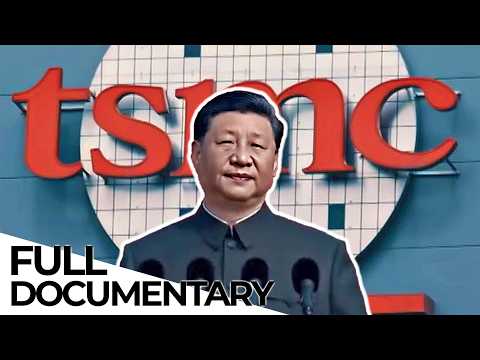
TSMC: The Company That Rules the Global Microchip Market | Trade War | ENDEVR Documentary
 Watch on YouTube →
Overview
TSMC became the central supplier of advanced semiconductors after Morris Chang founded its pure-play foundry model in 1987, leaving Taiwan responsible for roughly 30% of global chip output and 90% of the most advanced processors cited in the documentary. COVID-era shortages exposed the risks of concentrated supply chains, prompting the United States, China, and Europe to subsidize domestic capacity while Taiwan's role in chipmaking intensified geopolitical tensions across the Taiwan Strait.
Key takeaways
- TSMC's pure-play foundry model, established under Morris Chang in 1987, let chip designers outsource manufacturing and helped expand the fabless semiconductor sector.
- Taiwan's concentration of roughly 30% of global chip output and about 90% of the most advanced processors makes disruptions there a risk to industries ranging from cars to data centers.
- COVID-era demand growth of 20% to 25%, combined with capacity constraints, exposed how just-in-time supply chains can transmit chip shortages into factory shutdowns and major financial losses.
- US, EU, and Chinese semiconductor plans rely on public funding because building a competitive fab can cost about $20 billion and leading-edge production requires exceptionally expensive equipment.
- China's reported output of 300 billion chips did not overcome its structural weaknesses: it produced only about 15% of the chips it consumed, while fragmented local investment hindered manufacturing progress.
- ASML's roughly €125 million lithography machines give the Netherlands a critical role in global chip production, even though the leading-edge manufacturers able to use them are concentrated among TSMC, Intel, and Samsung.
Chapters
0:00
Why Taiwan's Chip Capacity Became a Global Strategic Asset
- Semiconductors underpin autos, manufacturing, data centers, and communications, making chip supply a strategic concern comparable to energy.
- Taiwan is described as producing about 30% of the world's chips, creating a major concentration risk for economies dependent on imports.
- The documentary frames chip production as a source of geopolitical leverage, with Taiwan's semiconductor industry sometimes described as a silicon shield.
2:30
From Silicon Wafers to Morris Chang's Foundry Model
- Chipmaking begins with quartz-derived silicon melted at about 1,400°C, cooled, cut into wafers, and etched with electronic circuits.
- While Western firms shifted production to Asia from the 1980s, Taiwan treated semiconductor manufacturing as a strategic industry.
- Morris Chang founded TSMC in 1987 and advanced the pure-play foundry model: TSMC manufactures chips designed by other companies rather than designing its own.
- Government backing helped TSMC expand production, enabling the growth of fabless chip firms from roughly 25 to hundreds over the following decade.
7:10
TSMC's Advanced-Chip Dominance and the COVID Shortage
- TSMC is described as producing about 90% of the most advanced processor chips, including chips for Apple devices and Nvidia-powered data centers.
- During COVID, semiconductor demand rose from roughly 5% to 20% to 25% growth as remote work and online services expanded, while supply chains were disrupted.
- TSMC reported shipping 1.15 trillion chips while operating above full capacity, illustrating how quickly demand could exceed fab limits.
- Chip shortages halted automotive production; the documentary cites about €200 billion in losses for the global auto industry in 2021 and more than $10 billion in losses for Apple across 2021 and 2022.
14:15
Offshoring Exposes the Fragility of Just-in-Time Chip Supply
- Companies moved chip production to East Asia over decades to reduce labor costs, aided by cheaper shipping and improved information technology.
- The COVID crisis exposed the weakness of just-in-time supply chains when a small number of production hubs could not meet surging demand.
- In 2022, the United States, China, and the European Union announced plans to expand domestic semiconductor production.
- The emerging chip conflict involves both company competition for market share and national competition over control of supply-chain segments.
17:20
Nancy Pelosi's Taiwan Visit and the Semiconductor Silicon Shield
- Nancy Pelosi's August 2022 visit to Taiwan included a meeting with TSMC founder Morris Chang and CEO Mark Liu amid rising cross-strait tensions.
- China responded to Pelosi's visit with military drills and a blockade-style exercise around Taiwan, escalating concern over the island's security.
- Taiwan's role in global chip production is presented as a deterrent because conflict could disrupt electronics manufacturing worldwide.
- The documentary links the chip stakes to US-China rivalry and the possibility of US military involvement if Taiwan were attacked.
24:30
TSMC Builds a Phoenix Fab to Expand US Chipmaking
- TSMC's first US mega-factory began in Arizona with a $12 billion first phase, and plans announced at the time envisioned three fabs over 20 years.
- The Phoenix facility was expected to produce 5-nanometer chips, technology then concentrated in Asia.
- Arizona officials projected $38 billion in regional economic impact over 20 years from the fab and its supporting businesses, housing, and services.
- In December 2022, TSMC announced a further $30 billion investment for a second Phoenix fab planned to produce 3-nanometer chips.
30:30
The US CHIPS Act Funds Intel's Domestic Manufacturing Push
- Joe Biden signed the CHIPS and Science Act, allocating $80 billion to industry and research, including $52 billion for semiconductors.
- Intel CEO Pat Gelsinger argued that geographically balanced supply chains require US investment in fabs, not just reliance on overseas production.
- Intel announced a $20 billion chip campus in Licking County, Ohio, with 7,000 construction jobs and plans for advanced manufacturing.
- Gelsinger said chip projects need incentives covering roughly 30% to 40% of investment costs to compete internationally.
35:20
US Export Controls Confront China's Chipmaking Ambitions
- US restrictions barred American companies from working with Chinese firms including Huawei and SMIC, limiting China's access to technology and expertise.
- China's reported production of 300 billion chips did not eliminate its reliance on imports; the documentary says China made only about 15% of the chips it consumed.
- China's stated ambition was to close its technology gap and become self-sufficient by 2025, but advanced manufacturing remained a major weakness.
- Former TSMC executive Chiang said China's semiconductor funding lacked a unified plan, with provincial and local governments competing to build facilities and wasting investment.
42:30
Europe's Chip Act Backs Intel's Fab 34 in Ireland
- Intel's Fab 34 near Dublin was presented as Europe's most modern chip factory, with a €17 billion project and a multiyear construction and equipment ramp-up.
- Fab 34 is owned by US-based Intel, illustrating Europe's dependence on foreign manufacturers even as it seeks technological sovereignty.
- Intel outlined up to €80 billion of European investment over a decade, while the European Chips Act promised more than €43 billion in public investment through 2030.
- The documentary argues that European subsidies risk supporting American companies rather than creating an independent European manufacturing champion.
46:15
ASML's EUV Lithography and the Cost of Reshoring Chips
- Dutch firm ASML supplies advanced ultraviolet lithography machines that transfer chip designs onto wafers, making it indispensable to leading-edge semiconductor production.
- ASML machines cost about €125 million each, and the documentary identifies TSMC, Intel, and Samsung as manufacturers able to afford them.
- TSMC, Samsung, and Intel were each planning investments measured in more than $100 billion, while a single new fab can cost around $20 billion.
- The conclusion calls for governments and manufacturers to share the cost of building capacity, as chip competition exposes the limits of globalization and raises the stakes of US-China rivalry.
Summary, takeaways, and chapters were generated by AI from the video's transcript and may contain errors. The video belongs to its creator, ENDEVR.