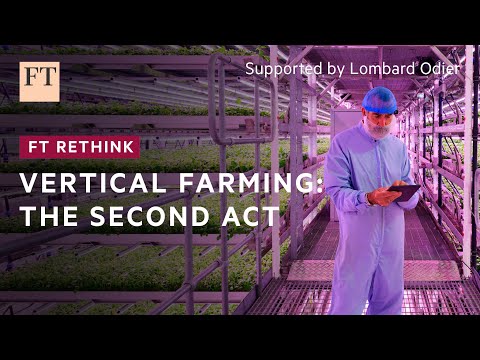
Can vertical farming overcome its growing pains? | FT Rethink
 Watch on YouTube →
Overview
Vertical farming attracted more than $6 billion over the past decade, but high energy and financing costs, labor shortages, and limited knowledge-sharing have contributed to falling investment and company failures. The industry may still grow as food-security and climate pressures increase and AI improves farm efficiency, though its strongest opportunities may be in places such as Singapore and its path beyond a niche market remains uncertain.
Key takeaways
- Vertical-farming investment dropped from more than $2 billion in 2021 to about $280 million last year, despite more than $6 billion invested over the prior decade.
- Energy-intensive LED lighting and ventilation, higher borrowing costs, and skilled-labor shortages have undermined the economics of many vertical farms.
- Secrecy about farming technology has limited the industry’s ability to share lessons and avoid repeating operational mistakes.
- Grand View Research forecasts market growth from about $8 billion last year to $25 billion in 2030, while climate, water, and food-security pressures could support demand.
- AI may improve farm efficiency, but vertical farming’s strongest prospects may be in specific locations such as Singapore, which produces only 6% of its own produce.
Chapters
0:00
Vertical Farming’s Investment Boom Meets High Costs
- Investors put more than $6 billion into vertical-farming startups over the past decade, drawn by promises to reduce emissions, pesticide use, water consumption, pollution, and food miles.
- Funding fell from more than $2 billion in 2021 to about $280 million last year.
- Major failures including Bowery Farming and AppHarvest highlighted the strain of energy-intensive LED lighting and ventilation, higher interest rates, and shortages of skilled labor.
- Companies’ secrecy around technology has made it harder for the industry to learn from mistakes.
1:15
Food Security and AI Could Renew Demand
- Grand View Research projects the global vertical-farming market will rise from about $8 billion last year to roughly $25 billion by 2030.
- Population growth, soil degradation, water scarcity, climate pressures on crops, and land diverted to biofuels strengthen the case for alternative food production.
- Food-security concerns could encourage countries to produce more food close to home, while advances in AI could improve vertical-farm efficiency.
2:25
Singapore and Other Niche Markets May Lead Adoption
- Singapore, which grows only 6% of its own produce, illustrates where vertical farming may have particular value.
- Advocates argue the concept is sound but has so far been implemented inefficiently, with its potential varying by location.
- As a young industry, vertical farming could pass through consolidation before new entrants and mainstream adoption emerge.
- Past mistakes and the possibility of further failures mean there is no guarantee the sector will grow beyond a niche market.
Summary, takeaways, and chapters were generated by AI from the video's transcript and may contain errors. The video belongs to its creator, Financial Times.