Noções Básicas sobre Estrutura Física do Biotério - parte 1
Overview
Angela Oliveira, a veterinarian and technical manager of an animal facility, explains how facility purpose, regulatory requirements, and spatial design shape animal welfare, sanitary control, and staff safety. She contrasts the 2013 and 2022 Brazilian guidelines, distinguishes production, maintenance, and use facilities, and details shared rooms, quarantine rules under CONCEA RN 57, housing systems such as IVC racks, and construction features that support hygiene and controlled workflows.
Key takeaways
- The 2022 DBCA uses instalação animal instead of biotério and explicitly makes species-appropriate welfare part of the facility's infrastructure requirements.
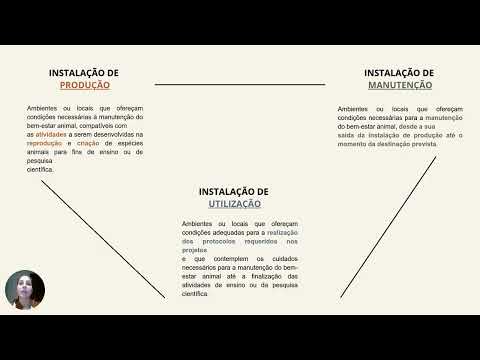
- Production, maintenance, and use facilities have distinct functions, so their room layouts, documentation, and regulatory obligations should be planned around their actual purpose.
- Under CONCEA RN 57, breeding facilities must have a quarantine area; the limited direct-entry exception for maintenance and use facilities requires documented health status compatible with the receiving facility.
- Housing rooms must remain separate from procedures: weighing, marking, dosing, and euthanasia belong in dedicated spaces, while animal rooms are for housing and maintenance.
- IVC racks with HEPA-filtered incoming air and controlled exhaust provide stronger microbiological isolation than open cages, while protected cage-changing stations further limit environmental exposure.
- Rounded, sealed, washable surfaces and separated airflow are operational safeguards: they make cleaning more effective and reduce contamination, animal disturbance, and maintenance-related exposure.
Chapters
- Angela Oliveira frames the course around structural, regulatory, and technical foundations for animal research facilities.
- The planned blocks cover physical structure, facility environments and procedures, and colony management.
- Specialist sessions elsewhere in the course address environmental enrichment and biosafety, avoiding duplication here.
- The 2013 DBCA defines a biotério as a place where animals are bred or kept for teaching and research, with environmental, nutritional, and sanitary controls.
- The 2022 DBCA replaces the term biotério with instalação animal and requires infrastructure suited to environmental, sanitary, and species-specific welfare needs.
- The newer definition includes examples such as rodent and lagomorph facilities, experimental farms, kennels, and pig housing.
- Terms such as Animal Facility, Animal Care Facility, and Animal Research Facility align Brazilian terminology with international guidance, including ARRIVE and PREPARE.
- Instalação animal better describes breeding, housing, quarantine, and experimental procedures than biotério, which historically emphasizes breeding.
- CONCEA classifications such as production, maintenance, and use support specific licensing, inspections, sanitary assessments, and responsibility requirements.
- Production facilities support reproduction and rearing, including appropriate breeding cycles, litter development, and health control.
- Use facilities are where approved teaching or research protocols are performed, with conditions matched to the procedure and animal welfare requirements.
- Maintenance facilities house animals after production and before use or final disposition, including adaptation periods, without focusing on breeding or experiments.
- Facility design is a biosafety and welfare tool because it controls movement of people, animals, materials, and waste.
- Where possible, choose a low-traffic site away from noise, pollution, major environmental variation, and laboratories handling pathogens.
- The location must still support deliveries, equipment access, organized logistics, and safe waste removal.
- The basic layout includes administration, changing rooms and toilets, clean-material storage, animal reception and quarantine, animal rooms, euthanasia procedures, and washing.
- These areas are common across production, maintenance, and use facilities, though their size and complexity vary.
- Planning the building as a route through these spaces makes sanitary separation and daily operations easier to manage.
- The administrative area supports coordination, records, planning, and operations, and should provide a controlled reception point.
- Separate routes for staff, clean supplies, equipment, and waste reduce cross-contamination and improve access control.
- Changing rooms should provide distinct clean and used clothing storage, footwear exchange, and appropriate male and female facilities.
- Uniforms used inside the facility should be laundered on site or by a specialized service, not taken home by staff.
- Food and bedding such as feed and wood shavings need a ventilated, low-humidity, cleanable store with restricted access.
- Use pallets, shelving, or raised platforms to keep supplies off floors and away from walls, allowing inspection and pest control.
- Size stores according to species, animal numbers, replenishment frequency, and facility demand; avoid excessive stack heights that create ergonomic risks.
- Waste areas need identified containers, a protected drainage system, and an exclusive freezer or cold room for carcasses pending compliant disposal.
- New animals should enter through a strategically located reception and quarantine area without passing through other facility zones.
- Quarantine allows temporary housing, adaptation after transport, clinical observation, and sanitary assessment before animals join a colony.
- Prevent mixing species and, preferably, separate different strains and sources to reduce the risk of introducing pathogens.
- If no dedicated quarantine room exists, obtain supplier health documentation and conduct a clinical assessment before introduction, where regulations permit.
- Under CONCEA RN 57 for rodent and lagomorph facilities, direct entry without quarantine is an exception for maintenance and use facilities.
- That exception requires a known health status compatible with or better than the receiving facility's sanitary status.
- Quarantine space is mandatory in breeding facilities, with no exception described in the lecture.
- A quarantine failure can expose the entire colony even when other structural barriers are well designed.
- Plan animal rooms for future as well as current demand, allowing rearrangement of cages, racks, and auxiliary equipment.
- Rooms must be separated by species; where feasible, dedicate each room to one research line, particularly in use facilities.
- Room dimensions depend on species, animal and cage counts, housing type, and the equipment required for breeding or experiments.
- Animal rooms should not have sinks or drains; if a drain is technically necessary, place it outside the room or use a trapped system that prevents gas return and contamination.
- Open polypropylene cages share the room's air, so their sanitary protection depends heavily on the room environment.
- Individually ventilated cage systems filter incoming air through HEPA filters and direct exhaust into controlled tubing, lowering exposure and cross-contamination risk.
- A protected cage-changing station keeps cages closed until animals are inside the controlled workspace.
- The facility prioritizes isolators for foundation-colony animals while using open cages for expansion and stock animals under current equipment limits.
- Procedure rooms should be positioned to limit noise, odors, and traffic near housed animals, and must contain materials for methods approved by the institutional animal ethics committee.
- Euthanasia may occur in an appropriate necropsy or procedure room, with cleaning between activities; it must not take place in the animal housing room.
- Housing rooms are for maintenance, while interventions such as weighing, marking, and substance administration belong in separate procedure spaces.
- Separate blood-related or euthanasia work from behavioral testing where possible, since residual cues can distort behavioral assessments.
- The hygiene area handles washing, disinfection, and sterilization of cages, bottles, equipment, and other routine supplies.
- Plan for sinks or wash tanks, autoclaves, immersion tanks, and cage or bottle washers according to facility workload.
- Autoclaves and cage washers generate substantial heat, steam, and noise, requiring dedicated ventilation and exhaust that does not return air to clean zones.
- Separate the area from animal rooms to reduce animal and staff exposure; genetically modified animal materials may also require biosafety procedures under CTNBio rules.
- Walls should be smooth, non-absorbent, moisture-resistant, and impact-resistant, with rounded wall-to-floor and wall-to-ceiling junctions.
- Keep air ducts, electrical systems, and distribution panels outside controlled rooms where possible to reduce maintenance-related entry.
- Ceilings should be smooth, washable, disinfectant-compatible, and free of cracks or recesses; sealed false ceilings should use impermeable materials.
- Floors should withstand cleaning chemicals, heavy carts, and equipment, with as few joints as possible to limit dirt accumulation.
- External windows in animal rooms can disrupt light cycles, circadian rhythms, estrous cycles, reproduction, and behavior; breeding rooms should not have them.
- Internal observation windows can improve inspection and reduce claustrophobia, but should use unbreakable material and sealed frames; any external window in an animal room requires effective light control.
- Doors should be durable, impermeable, easy to clean, wide enough for cages and racks, and sealed when the floor gap exceeds 3 mm to deter escapes and pests.
- Door vision panels improve safety and reduce unnecessary opening, but require light isolation; experimental facilities may also need surgery, intensive care, radiation, clinical-treatment, or analysis rooms depending on protocol.
Transcript excerpt
0:00 Olá, pessoal! Todos bem? Bom dia, boa tarde ou boa noite, né? Sejam muito bem-vindos aí a mais essa aula, certo? Hoje a gente vai conversar um pouco sobre noções básicas relacionadas à criação e utilização de animais em pesquisa científica. A proposta, pessoal, é apresentar fundamentos para vocês, sejam eles estruturais, normativos ou técnicos, que sustentam a funcionalidade de um biotério, tá? E ao mesmo tempo também garantem o bem-estar animal, a qualidade das pesquisas e a segurança das pessoas que estão envolvidas nessa prática, certo? Bom, eu já estive com vocês em outras aulas, em outros momentos, mas como essa aula em específico está sendo gravada em um ano diferente das anteriores, eu gostaria de me apresentar de novo. Eu sou Angela Oliveira, médica veterinária e doutora em saúde, tecnologia e produção animal integrada.
1:04 Além disso, atualmente sou responsável técnica pelo complexo biotério. Deixa eu ver, acho que... Passou, aí, o slide não estava passando. Bom, antes da gente iniciar a nossa discussão, eu trouxe esse slide para que a gente possa visualizar todos os temas que vão ser abordados ao longo do curso, e isso tem um propósito. Qual é o propósito? O nosso tema específico, que seria noções básicas para criação e utilização de animais em ensino e pesquisa, ele é bastante amplo. Muitos dos tópicos que fazem parte dele poderiam facilmente ser desenvolvidos dentro dessa aula. No entanto, esses mesmos tópicos, pessoal, eles vão ter momentos próprios de aprofundamento ao longo do curso
1:56 e vão ser conduzidos por outros professores, certo? Por exemplo, a gente vai ter uma aula específica sobre enriquecimento ambiental, que se insere diretamente dentro das normativas de criação e experimentação, então poderia estar sendo trabalhada nessa aula. Da mesma forma, a gente também vai ter uma aula dedicada a biossegurança e padrão sanitário, tá?
This is the start of the transcript. Save this video free for the whole transcript, searchable and time-coded.
Related notes
Summary, takeaways, and chapters were generated by AI from the video's transcript and may contain errors. The video belongs to its creator, Márcia Shimada.