Anestesia Animais de Laboratorio Parte 3
Overview
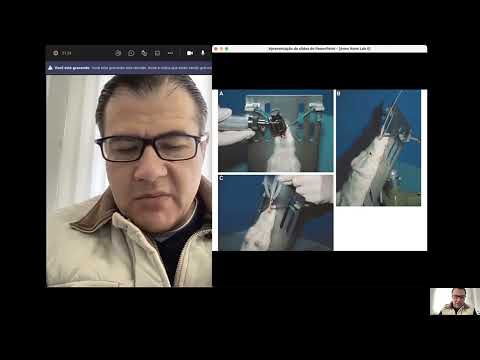
Márcia Shimada explains why isoflurane and sevoflurane are preferred inhaled anesthetics for laboratory animals, contrasting their rapid control and recovery with the hazards of ether, chloroform, and halothane. She demonstrates delivery and airway-management options for rodents and rabbits, then covers monitoring, recovery, analgesia, and research evidence showing that anesthetic choice can affect experimental outcomes.
Key takeaways
- Isoflurane and sevoflurane provide rapid control of anesthetic depth and recovery, while ether, chloroform, and halothane present avoidable airway, fire, cardiac, or liver risks.
- Small-animal airway management has multiple workable options, including syringe masks, catheter-based tubes, otoscope-guided placement, and rabbit-specific V-gel devices.
- Capnometry provides a stronger confirmation of endotracheal placement than tactile checks, which can mistake esophageal placement for a correctly positioned tube.
- Rodents and rabbits can lose heat quickly under anesthesia, especially with the high gas flows used in non-rebreathing circuits, so temperature support and close recovery monitoring are essential.
- Anesthetic protocols can alter experimental measurements and outcomes: effects reported include strain-dependent changes in mouse intraocular pressure and improved survival with ketamine in a sepsis model.
- Choosing analgesia requires balancing experimental confounds against untreated pain, since NSAIDs may affect wound healing and some opioids may affect immune function.
Chapters
- Isoflurane and sevoflurane are presented as appropriate inhaled anesthetics for laboratory animals, unlike ether, chloroform, and halothane.
- Ether irritates airways, can ignite or explode, and chronic exposure may affect the hypothalamus and liver; halothane carries arrhythmia and hepatotoxicity risks.
- Inhaled agents allow rapid adjustment of anesthetic depth and recovery; isoflurane has very low hepatic metabolism, while sevoflurane is less irritating and faster acting.
- Sevoflurane can deepen anesthesia quickly enough to cause apnea if not closely observed; halogenated agents may also suppress immune activity, a potential confound in immune-focused experiments.
- Delivery options include induction chambers, facial masks, and miniature non-rebreathing circuits supplied with oxygen and a vaporizer.
- A homemade mask can be fashioned from a syringe, while IV catheters sized roughly 18 to 24 can serve as endotracheal tubes for rodents.
- Rat intubation methods include direct visualization, an otoscope, endoscopy, transillumination, and blind guide-assisted placement.
- For blind placement, keep the airway straight and the animal deeply anesthetized; palpating one tube in the neck suggests tracheal placement, while two may indicate esophageal misplacement.
- Rabbit intubation can use direct visualization with a long laryngoscope, an otoscope, or a blind technique; retrograde placement via a tracheal catheter and guidewire is possible but less practical.
- For blind intubation, deep anesthesia and a straight airway are essential; gentle rotation can help guide the tube past the glottis.
- Capnometry is identified as the most reliable confirmation that a tube is in the airway, with neck palpation serving only as a rough check.
- The rabbit-specific V-gel supraglottic airway sits over the glottis and can support ventilation; its approximate cost is R$500 to R$600 or more.
- Suitable equipment can monitor capnography, pulse oximetry, ECG and heart rate, and even arterial pressure in animals weighing around 300 g.
- During recovery, check for hypothermia and respiratory depression, keep the airway straight, and clear secretions; rapid heat loss can be fatal.
- Postoperative options include NSAIDs and opioids, with choices such as buprenorphine, butorphanol, and tramadol when experimental concerns affect drug selection.
- NSAIDs may delay wound healing, and some opioids may suppress immune function, but pain itself can also confound experiments and should be weighed against those risks.
- Examples include propofol combined with medetomidine and fentanyl, and protocols using medetomidine, midazolam, and butorphanol; combinations can provide longer surgical anesthesia than some single agents.
- Ketamine-xylazine duration depends on dose, while barbiturates may require potentially lethal doses to provide sufficient surgical anesthesia because their analgesia is limited.
- In mouse strains, ketamine-xylazine-acepromazine lowered intraocular pressure in C57BL/6 mice but not CD1 mice, and the injectable protocol was associated with higher mortality than isoflurane.
- In a sepsis model, ketamine anesthesia was associated with improved survival compared with inhaled anesthesia, possibly through modulation of inflammatory mediators such as TNF-alpha and interferon.
Transcript excerpt
0:00 bom anestésicos inalatórios nós temos vários eh o que se usa mais o que se usou durante muito tempo né o éter foi usado de seu seu primeiro uso público famoso né em 1846 foi usado direto Até 1950 1950 e poucos hoje não é mais utilizado e o alutan que substituiu o éter tem mais de 10 anos que a gente tampouco utiliza mais então o que nós temos para uso tanto experimental que é indicado que é apropriado que é adequado é o isofluorano Ou sevoflurano nem éter nem aloto nem clorofórmio eles são é uma técnica boa quando a gente vai fazer anestesia em grupo ou anestesia sequencial de vários animais a gente precisa um pouco mais de
0:49 conhecimento técnico porque você precisa verificar o plano se tá adequado ou não eh os problemas para isso é a dificuldade na intubação Por isso às vezes se prefere usar máscara facial anestesia por máscara facial pode haver nessa tentativa de intubação traumas né o tecid farin A traqueia né etc pode inclusive haver ruptura de traqueia o que vai ser e observado com um enfisema subcutâneo o bicho fica uma bola assim tudo inchado eh o custo dos equipamentos é uma questão relativa né porque veja hoje o o o aparelho eu falei ah ele custa 0.000 12.000 mas é pra vida toda que você vai usar para sempre né E aí então se você fizer um infusão contínua de propofol não vai entubar o animal não vai fornecer oxigênio então assim um é relativo né o custo de
1:37 equipamento realmente existe mas ele é um um custo que vai sendo diluído ao longo do tempo a poluição do ambiente cirúrgico realmente uma preocupação há umas questões aí com poluição ambiental com eh saúde ocupacional a exposição da
This is the start of the transcript. Save this video free for the whole transcript, searchable and time-coded.
Related notes
Summary, takeaways, and chapters were generated by AI from the video's transcript and may contain errors. The video belongs to its creator, Márcia Shimada.