2a parte de manipulação animal
Overview
Márcia Shimada explains common injection and oral-administration routes used in laboratory animals, connecting needle choice, anatomy, restraint, technique, and dose limits to safer procedures. She emphasizes using a new needle for each animal, practicing on animals already scheduled for euthanasia when approved by the ethics committee, consulting species-specific literature, and monitoring animals after every procedure.
Key takeaways
- A new needle for each animal preserves the bevel and reduces tissue damage, pain, and stress caused by repeated use.
- Needle choice must match the species, administration route, vessel size, and formulation viscosity; the same needle is not suitable for every procedure.
- Species-specific anatomical knowledge and dose guidance are essential: the adult-animal limits cited in a reference should not automatically be applied to smaller animals.
- Intravenous administration requires strict attention to air bubbles, while warming the mouse tail briefly can make tail-vessel access easier.
- Oral gavage is a high-risk technique when performed without practice; incorrect placement into the trachea can lead to aspiration and death.
- Animal welfare includes scheduling enough time to monitor animals after procedures and obtaining ethics committee approval for training or refinement practices.
Chapters
- Needle sizes are identified by length and gauge in both English and metric systems, such as 40 × 16 and 30 × 12.
- Choose gauge according to species, route, vessel size, and substance viscosity; thicker substances may require a wider needle.
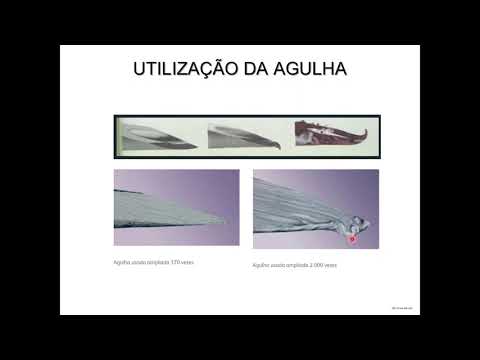
- Use a fresh needle for each animal because repeated use damages the bevel and can increase tissue injury and pain.
- Move the syringe plunger up and down before use to reduce resistance and avoid forcing a dose rapidly into a vessel or cavity.
- The lecture gives approximate angles of 90° for intramuscular, 45° for subcutaneous, 25° for intravenous, and 10° to 15° for intradermal administration.
- Learn species-specific anatomy before locating vessels, muscles, or organs; guessing can prolong restraint and alter animal physiology.
- When approved by the animal ethics committee, practice injection routes on animals already scheduled for euthanasia as a refinement measure.
- Use current literature to verify procedure details, since the cited Fiocruz manual is described as old and species-specific guidance can change.
- For mice, the cited reference identifies subcutaneous sites including the nape, dorsal region, and tail base, and intramuscular sites including the quadriceps and posterior thigh.
- Route and site depend on dose volume and formulation; the lecture contrasts aqueous solutions for intravenous use with unsuitable oily substances.
- The listed limits are for adult animals, so smaller animals require adjusted values from the literature; split doses across sites when needed.
- Use solutions at room temperature when the protocol permits, and reserve enough time to observe each animal after administration.
- Subcutaneous administration uses lifted skin, with the needle bevel facing upward and care taken not to pass through the skin or leak the dose.
- For mouse intramuscular injections, palpate the posterior thigh muscle, insert only a short distance, and use adequate restraint, often with a second handler.
- The lecture demonstrates intraperitoneal injection in the lower-right abdominal quadrant, positioning the mouse head-down and inserting at roughly 30° to 45°.
- For tail-vein access, warm the tail briefly with 42°C to 45°C water or another controlled heat source; avoid overheating, and prevent air from entering the vein.
- Rat procedures use the same broad subcutaneous, intramuscular, intraperitoneal, intravenous, and oral routes, with the posterior thigh muscle easier to palpate than in mice.
- For intramuscular injection, check for blood by gently drawing back the plunger; for intravenous access, the lecture describes tail vessels and the saphenous vein.
- The stated gavage guidance is up to 8 cm of apparatus insertion for rats and 1 mL per 100 g body weight, subject to species-specific protocol limits.
- Gavage requires practice and confirmation that the animal swallows; misplacement into the trachea can cause aspiration, respiratory distress, or death.
- In rabbits, subcutaneous and intramuscular administration are described as accessible, while ear vessels are commonly used for intravenous access.
- The lecture advises against intraperitoneal administration in rabbits because of concern about severe reactions and sensitivity to substances.
- Guinea pig examples include subcutaneous injection, lower-right-quadrant intraperitoneal injection, and intramuscular injection in the posterior thigh.
- The Camila restraint method and other restraint apparatus may be used across routes, but each procedure still requires trained handling and post-procedure observation.
Transcript excerpt
0:00 Olá vamos à segunda parte aqui do eh da manipulação animal sobre vias de inoculação então vocês vão ver várias vias de inoculação as mais comuns aqui também eh alguns experimentos podem ter vias diferentes mas essas são as mais comuns que a gente vai comentar aqui por cada espécie animal antes de começar vamos conhecer alguns calibres de agulha né então para quem nunca trabalhou com inoculação é bom conhecer sobre eh os tamanhos de agulha que existem em relação ao comprimento e ao calibre né o diâmetro
0:49 eh da agulha então no mercado existe uma variedade bastante grande de tamanhos e calibre da agulha eles são identificadas dessa forma né então identificação no sistema em inglês que seria esse aqui e no sistema métrico né que seria dessa forma aqui né geralmente ele dá como 40 por 16 30 por 12 que seria né o comprimento e o calibre aqui também é o calibre e o comprimento né mas só para você saber verem que existem essas diferenças e tem que prestar atenção aqui no tamanho da agulha eh porque cada agulha é usado para
1:39 determinadas espécies animais né então calibres maiores que seriam esse aqui ou esse aqui ou esse aqui né esses aqui seriam usados né Para animais de maior porte né cão gato esse aqui no caso para eh cavalos bovinos animais de maior porte então Eh o uso né A Escolha das Agulhas é de acordo com né a espécie animal ah e também com a via de administração onde você vai administrar se é um vaso eh vaso né pequeno ou é grande tipo de substância né então substâncias mais viscosas tem que usar
2:30 um calibre maior que senão ele vai entupir E no caso de coleta também né tem que escolher a agulha correta né
This is the start of the transcript. Save this video free for the whole transcript, searchable and time-coded.
Related notes
Summary, takeaways, and chapters were generated by AI from the video's transcript and may contain errors. The video belongs to its creator, Márcia Shimada.