Anestesia Animais de Laboratorio Parte 2
Overview
Márcia Shimada compares injectable anesthetics used in laboratory animals, including thiopental, pentobarbital, ketamine combinations, and propofol, emphasizing their limitations and cardiorespiratory risks. She explains how administration route, injection volume, and technique affect anesthesia, contrasting intraperitoneal injection in rodents with intravenous access and continuous propofol infusion.
Key takeaways
- Thiopental is prepared at 2.5% for intraperitoneal use because its alkalinity can irritate the peritoneum, and higher concentrations increase the risk of injury.
- Ketamine alone provides inadequate muscle relaxation and can increase secretions, so it is commonly combined with a benzodiazepine or xylazine.
- Repeated intravenous boluses can cause unstable anesthetic depth, while a loading dose followed by continuous infusion can maintain steadier anesthesia and cardiorespiratory conditions.
- The lower-left abdominal quadrant is Márcia Shimada's preferred intraperitoneal injection site in rodents because the cecum is on the right, despite many references recommending the lower-right quadrant.
- Small-animal intravenous access requires careful vessel visualization and air-free syringes, since even a small gas bubble can cause a fatal embolism in a mouse or rat.
- Propofol can support total intravenous anesthesia in laboratory animals, but it does not provide analgesia and its respiratory depression depends on dose and administration speed.
Chapters
- Thiopental is an alkaline barbiturate that can irritate the peritoneum; intraperitoneal solutions are prepared at 2.5%, and lidocaine may be added to reduce irritation.
- High thiopental doses can cause hypothermia, hypoventilation, hypoxia, bradycardia, and cumulative effects that delay recovery.
- Ketamine can be given by several routes but is generally paired with a benzodiazepine or xylazine to improve muscle relaxation; xylazine also adds analgesia.
- Propofol is used intravenously, including in total intravenous anesthesia protocols, but it is not analgesic and can depress respiration.
- Anesthetic effect depends on drug properties, absorption, injection site, route, and volume; acidic ketamine may sting, while large intramuscular volumes can cause tissue necrosis.
- Continuous intravenous infusion can provide steadier anesthetic and cardiorespiratory conditions than repeated boluses, though appropriately calibrated pumps can be difficult to use with very small animals.
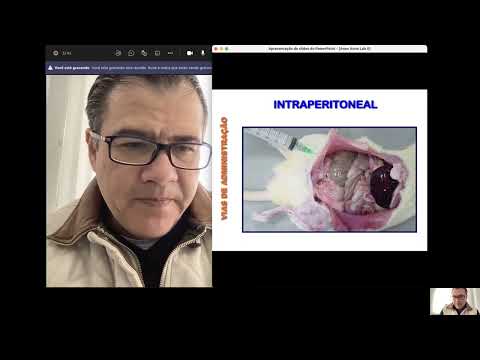
- Intraperitoneal injection is common in rats and mice because the peritoneum offers a large absorption area and venous access can be difficult.
- For rodent intraperitoneal injections, Shimada favors the lower-left abdominal quadrant to reduce the chance of injecting into the cecum, though many references recommend the lower-right quadrant.
- Intramuscular injection can cause pain, lameness, necrosis, and self-mutilation, especially in mice; if necessary, use small divided volumes and dilute irritating solutions.
- Rat and mouse intravenous access includes the lateral tail veins and saphenous vein; warming the tail with warm water can make vessels easier to see.
- Rabbit intravenous access commonly uses the marginal ear veins; the central ear artery can be used for arterial sampling or blood-pressure monitoring.
- Propofol protocols for mice, rats, and rabbits can use a bolus followed by continuous infusion, with higher dose rates than commonly used in larger animals and suitable infusion pumps.
Transcript excerpt
0:00 eh os anest éticos injetáveis então então sou lembrando né Sim pode ser ser feita MP pode ser feito MPA antes de você partir para anestesia geral né para ter todos aqueles efeitos desejáveis que nós falamos dos anestésicos injetáveis nós temos esses daqui né a cloral etorfina carfentanil barbital uretan hidrato de cloral triom etanol alfaxalona ol fadona eh as as a classificação né Eh eles são classifica comésticos Gerais como os barbitúricos os dissociativos os NOB barbitúricos temos os tranquilis Anes sedativos então muita Associação de agonista alfad gasina con cetamina e nos temos os analgésicos então esses fármacos todos são injetáveis utilizados
0:49 no que podem ser utilizados no protocolo de longe o que mais se utiliza e tiopental intraperitoneal ou quetamina xilazina também intraperitoneal raramente a gente vê protocolo colos aqui com com com ajuda dos outros fármacos né então o tiopental é um fármaco que já foi muito utilizado hoje menos ele tá muito caro difícil de de conseguir mas ainda quem use animais de laboratório ele é um barbitúrico ele tem um PH bastante alto bastante alcalino então isso causa aí uma uma irritação do peritônio ele é utilizado por via intravenosa ou intraperitoneal apenas para a gente poder utilizar por intraperitoneal são Preparadas soluções a 2,5 por isso que quer dizer colocar 40 ml de solução Salina ou de água destilada num frasco de 1 g se você
1:38 colocar menos deixar mais concentrado o risco de lesões é maior mesmo a 2,5% Às vezes o pessoal costuma colocar lidocaína para tentar diminuir aí lemb aquele do caía além de ter efeito analgésico ele diminui o PH tentamos dar uma balanceada no no PH eh mas é um fármaco que assim veja que a dose é alta né ratos de 20 40 Camutanga de 20 50 coelhos de 30 50 são doas bem
This is the start of the transcript. Save this video free for the whole transcript, searchable and time-coded.
Related notes
Summary, takeaways, and chapters were generated by AI from the video's transcript and may contain errors. The video belongs to its creator, Márcia Shimada.