Anestesia Animais de Laboratório Parte 4
Overview
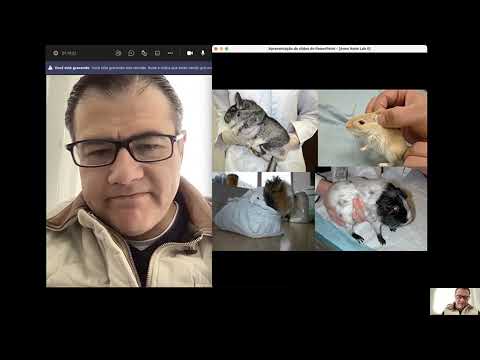
Márcia Shimada explains anesthesia and safe handling of wild rodents and nontraditional pets, including mice, rats, guinea pigs, chinchillas, and capybaras. She connects their high oxygen demand, rapid heat loss, small airways, and limited blood-volume reserves to practical choices in restraint, anesthetic drugs, airway management, monitoring, recovery, and species-specific protocols.
Key takeaways
- Small rodents have high oxygen demand and rapid anesthetic uptake, so brief respiratory interruption can be dangerous and mask induction can deepen anesthesia quickly.
- Avoid pulling mice and rats by the tail; scruff restraint with appropriate support reduces tail-skin injury and biting risk, while excessive grip pressure can compromise breathing.
- Capnography is the most reliable confirmation of rodent tracheal intubation; tube condensation, reservoir-bag movement, and airflow indicators are less definitive.
- Veterinary monitors are needed because rodents may have heart rates of 300 to 400 beats per minute, exceeding the range of many human monitors.
- Small rodents lose heat and glucose rapidly, so warming, short procedures, and recovery checks for hypothermia and hypoglycemia are central parts of anesthetic care.
- In chinchillas, dexmedetomidine-ketamine can substantially depress cardiac output and disrupt food intake and fecal production for several days, supporting careful monitoring and consideration of inhalant or regional alternatives.
Chapters
- Rodents range from small laboratory species to capybaras averaging about 50 kg, with some reaching 65 to 70 kg.
- Small mammals have high oxygen consumption and respiratory rates, so anesthetic uptake and elimination are rapid and even brief hypoxia can be dangerous.
- Small body mass increases risks of hypoglycemia, hypothermia, airway obstruction, and clinically significant blood loss.
- Rats, capybaras, and beavers can carry zoonotic risks; capybara ticks may transmit Brazilian spotted fever, so handlers should guard against bites, scratches, and ticks.
- For mice, avoid lifting by the tail; support the animal on a surface, grip the loose skin at the scruff, and control the tail with the remaining fingers.
- Rat restraint can use a two-handed scruff-and-tail hold or the T-rex grip, with enough control to prevent biting but not enough pressure to impair breathing.
- Rodents are obligate nasal breathers, so check nasal patency, oral secretions, and dental abnormalities before anesthesia.
- Midazolam is favored for sedation because it is potent and water-soluble; alpha-2 agonists can provide sedation and analgesia but may depress cardiovascular and respiratory function.
- Ultrasound-guided transversus abdominis plane blocks and peripheral nerve blocks can provide regional analgesia, provided local-anesthetic doses are calculated carefully for small body weights.
- Subcutaneous, intravenous, intraperitoneal, intraosseous, and intramuscular routes are discussed, with attention to small injection volumes and avoiding extreme-pH solutions.
- Ketamine and xylazine combinations are widely used but can cause inadequate analgesia, movement, bradycardia, hypotension, and respiratory depression.
- Propofol can be used for induction or maintenance when vascular access is available; slow, dose-effect administration reduces apnea risk.
- Isoflurane or sevoflurane enables rapid induction, adjustment of anesthetic depth, and recovery, but requires separate analgesia because inhalants are not analgesics.
- A face mask or induction chamber can reduce handling stress; induction chambers use more anesthetic and increase staff exposure, so exposure should be minimized.
- Guinea pigs, hamsters, and chinchillas have small oral openings and difficult glottic access; keeping the head and neck extended helps maintain a patent airway.
- Intubation may use direct visualization, an otoscope, or a small endoscope; angled Hopkins-style optics can make the glottis easier to see in small species.
- Small uncuffed Murphy tubes, commonly around 1.5 to 3 mm, or carefully adapted tubing can be selected according to the animal's size.
- Capnography is the gold standard for confirming tracheal placement: a waveform should appear immediately after connecting the tube to the monitor.
- Assess anesthetic depth using multiple signs, including jaw relaxation, response to surgical stimulation, pupil position, and measured vaporizer or gas-analyzer concentrations.
- Veterinary monitors are important because rodent heart rates can reach 300 to 400 beats per minute, beyond the reading range of many human monitors.
- Dorsal positioning, a full stomach, obesity, aerophagia, or pressure on the chest can impair ventilation; prolonged anesthesia also increases hypothermia and hypoglycemia risks.
- Prevent heat loss with warmed surfaces and protected paws, avoid unsafe electric pads, and check delayed recovery for hypothermia, hypoglycemia, hypovolemia, or repeated anesthetic dosing.
- Capybaras can inflict serious bite injuries and may jump into water when threatened, creating a drowning risk after darted anesthesia.
- Baited cage traps and remote darts can facilitate capture while reducing close-contact restraint.
- Avoid chemical restraint on hot days because capybaras can develop severe hyperthermia; use cooler conditions or have active cooling available.
- Balanced protocols may combine ketamine, an alpha-2 agonist, and an opioid such as methadone, with the understanding that higher alpha-2 doses increase cardiorespiratory depression.
- A laryngeal mask airway can provide inhalant anesthesia in capybaras and was reported as comparable to intubation for spontaneous ventilation, though leakage can cause aerophagia.
- Dexmedetomidine-ketamine protocols in chinchillas can reduce heart rate by more than 30% and cardiac output by about 40%, making oxygen supplementation and monitoring important.
- Compared with isoflurane, dexmedetomidine-ketamine was associated with reduced food and water intake and fecal output for up to three days, suggesting a prolonged gastrointestinal motility effect.
- Shimada closes by directing learners to protocol and dose references for chinchillas, including analgesics and anti-inflammatory drugs.
Transcript excerpt
0:01 Vamos então passar a falar agora dos roedores selvagens e de petes não convencionais então não sei se vocês sabem mas a ordem de mamíferos mais numerosa é dos roedores né tem aí mais de 2277 espécies eles podem ser muito pequenos a gente tem uma ideia né ah o redor é pequeno mas não tem espécies grandes também você tem a capivara que pesa aí de 50 kg em média chega de 65 70 kil o Castor aí com 16 kg o porco espinho eh de filme né o o o Africa austrálias o híd Africa austrálias pode pesar até 15 Kg também tem uma lebre lá no sul da América da no sul do do Chile né e da Argentina que é a lebre da
0:48 Patagônia o lebre Patagônia que pode chegar até 16 kg e tem um rato do banhado que pode chegar até 10 kg nós temos a paca também no Brasil que pode pesar até at 10 kg Então tem redores que são maiores sim no geral a gente está acostumado pelo menos na rotina que não trabalha com selvagens haver e petes não convencionais que são ou chinchilas ou são hamsters ou são porquinhos da índia e muito mais raramente os gerbos eh lembrem-se que são mamíferos pequenos então o consumo metabólico de oxigênio é muito alto tá eles requerem oxigênio de forma intensa de forma constante então episódios de hipoxemia ou de hipóxia São graves né eles não aguentam não toleram
1:36 bem esses episódios de hipoxemia de hipóxia isso pode acontecer aí isquemia cerebral se houver um uma hipoxemia aí de 30 segundos eh de parada respiratória pode haver consequências nefastas aí pro pro animal né então muito cuidado com ah essa situação eles não toleram muito bem uma parada uma hipóxia grave a
This is the start of the transcript. Save this video free for the whole transcript, searchable and time-coded.
Related notes
Summary, takeaways, and chapters were generated by AI from the video's transcript and may contain errors. The video belongs to its creator, Márcia Shimada.