Linear algebra lecture14
 Watch on YouTube →
Overview
Sevak Mkrtchyan develops the finite-dimensional double-dual correspondence and the transpose of a linear map, showing that the matrix of the transpose is the transpose of the original matrix when dual bases are used. He then introduces multilinear functions on matrix rows and defines an alternating, normalized n-linear function as a determinant function, postponing the proof of existence and uniqueness.
Key takeaways
- For any vector space V, the evaluation map V → V** sends v to the functional f ↦ f(v) and is injective; when V is finite-dimensional, equal dimensions make it an isomorphism.
- A linear map T: V → W induces T*: W* → V* by T*(f) = f ∘ T, reversing the direction of the original map.
- If A is the matrix of T in bases B and C, then Aᵀ is the matrix of T* in the corresponding dual bases B* and C*.
- Multilinearity is separate linearity in each input: v1w1 + v2w2 is bilinear in two F² vectors even though it is not linear as a function of all four coordinates at once.
- The determinant is characterized by three conditions on an n-by-n matrix function: n-linearity in the rows, alternation under repeated or swapped rows, and value 1 on the identity matrix.
Chapters
- The dual space V* consists of all linear functionals from V to the field F.
- Given a basis v1 through vn of V, its dual basis contains functionals that return 1 on one matching basis vector and 0 on the others.
- Dual-basis functionals make it straightforward to recover coefficients of vectors and linear functionals.
- Applying the dual-space construction to V* gives V**, whose elements are linear functionals from V* to F.
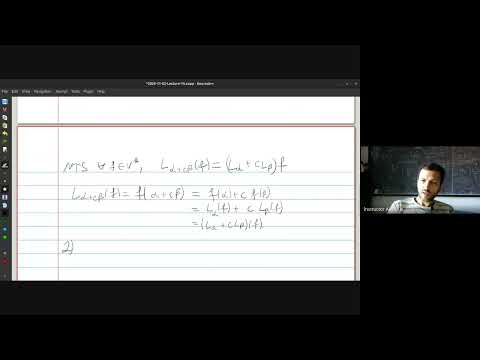
- For each v in V, define an evaluation functional L_v on V* by L_v(f) = f(v).
- The construction gives a natural map from V into V**, without requiring a choice of basis.
- The evaluation map v ↦ L_v is linear because evaluating f on a linear combination of vectors preserves addition and scalar multiplication.
- To verify equality of elements of V**, compare their values on every f in V*.
- The proof uses the defining property L_v(f) = f(v).
- Suppose a linear combination of evaluation functionals is zero; it corresponds to L_v = 0 for the same linear combination v in V.
- If v is nonzero, extend v to a basis and define a functional f that maps v to 1.
- That functional gives L_v(f) = 1, contradicting L_v = 0, so the evaluation map is injective.
- For finite-dimensional V, the dimensions of V, V*, and V** are equal.
- The injective evaluation map V → V** is therefore also surjective, hence an isomorphism.
- Every linear functional on V* is evaluation at a unique vector of V; in infinite dimensions, the evaluation map remains injective but need not be onto.
- For a linear map T: V → W, define its transpose T*: W* → V* by T*(f) = f ∘ T.
- A functional on W becomes a functional on V by first applying T and then evaluating f.
- The direction reverses: T maps V to W, while T* maps W* to V*.
- For f in W* and v in V, the defining equation is T*(f)(v) = f(T(v)).
- The transpose is linear because it is defined by composition with the linear map T.
- This pullback construction is a general way to turn a map between spaces into a map between their functionals.
- A linear map's matrix depends on the chosen basis in its domain and codomain.
- Matrices of T and T* cannot be expected to have a simple relationship if their bases are selected independently.
- The useful choice is to pair each basis with its dual basis in the corresponding dual space.
- Let B = (v1, …, vn) be a basis of V and C = (w1, …, wm) a basis of W.
- Use the dual bases B* in V* and C* in W* to represent T and T*.
- The theorem to establish is that if A represents T, then the matrix representing T* in the dual bases is Aᵀ.
- The jth column of A is the coordinate vector of T(vj) in the basis C.
- The (i, j) entry of A is the coefficient of wi in T(vj), equivalently the value of the ith dual functional on T(vj).
- Applying T* to a dual-basis functional and evaluating it on vj produces the corresponding entry with its indices reversed.
- The dual-basis calculation shows that the matrix of T*: W* → V* is Aᵀ when T has matrix A.
- An m-by-n matrix A becomes an n-by-m matrix Aᵀ, with entries transposed across the main diagonal.
- The matrix relationship depends on choosing the dual bases, not arbitrary bases for V* and W*.
- A function of two vector arguments is bilinear if it is linear in each argument when the other is fixed.
- More generally, an n-linear function takes one vector from each of n spaces and is linear separately in every coordinate.
- This definition shifts the lecture from linear maps of one vector to functions of several vectors.
- For vectors (v1, v2) and (w1, w2) in F², the expression v1w1 + v2w2 is bilinear.
- Fixing (w1, w2) makes the expression linear in (v1, v2), and fixing (v1, v2) makes it linear in (w1, w2).
- Viewed instead as a function on the combined four coordinates, the same expression is not linear because scaling both vector inputs scales the output quadratically.
- An n-by-n matrix can be viewed as an ordered list of n row vectors, each belonging to Fⁿ.
- A function of matrices is n-linear in the rows when it is linear in each row with the other n−1 rows fixed.
- For a 2-by-2 matrix, the expression ad − bc is linear in each row separately, although it is not linear in all four entries together.
- Products that select one entry from each row, such as the product of diagonal entries, are n-linear in the rows.
- A permutation σ of the column indices gives a row-multilinear product selecting entries a1,σ(1) through an,σ(n).
- Linear combinations of row-multilinear functions remain row-multilinear; in the 2-by-2 case, subtracting bc from ad preserves bilinearity.
- An alternating n-linear function on matrix rows is zero whenever two rows are equal.
- Swapping two rows changes the function's sign; the lecture notes that the relationship between these conditions can depend on the field.
- A determinant function is defined as an alternating n-linear function whose value on the identity matrix is 1.
- Existence and uniqueness of such a function are left for later lectures.
Transcript excerpt
0:07 եկեք սկսենք: Ուրեմն անցած անգամ սկսեցինք քննարկել վեկտորային տարածության երկակի տարածությունը: Եկեք վերհիշենք: Եթե ունենք մի վեկտորային տարածություն Կարող ենք դիտարկել տարած երկակի տարածությունը սա V-ից ուրեմն V-ից դեպի մեր դաշտը բոլոր գծային ֆունկցիաների տարածությունն
1:00 Ըհ-ից դաշտ: Ըս տարածությունը մենք էլի էինք հանդիպել, ըհն այն ժամանակ անունը դրել էինք LVF, այսինքն V-ից F գծային ֆունկցիաների տարածություն: Էստեղ մի բան քննարկեցինք այս տարածության հետ կապված: Մի Մի երկու բան քննարկեցինք, բայց մասնավորապես ըըը տեսանք, որ եթե ունենք մի բազիս մեր սկզբնական տարածության համար, մենք սահմանեցինք էս բազիսի երկակի բազիսը երկակի տարածության համար
1:55 ու՞ կապ կար էս երկու բազիսների մեջ, եթե մենք ունենք ինչ-որ վեկտորային տարածության համար բազիս ու ուզում ենք սահմանել է այս վեկտորային տարածության վրա ինչ-որ մի գծային ձևափոխություն, այդ գծային ձևափոխությունը սահմանելու համար կարող ենք ընտրել, այսինքն եթե ուզում ենք V-ից W գծային ձևափոխություն սահման սահմանել, կարող ենք ընտրել կամայական վեկտորներ W1ից WNW w-ից ու գոյություն ունի միակ գծային ձևափոխություն, որ V-ին կարտապատկերի W-ի վրա: Ըը սա ընդհանուր բան էր կոնկրետ մեր
2:43 իրավիճակում եթե վերցնենք էս W-ի փոխարեն F-ը ու այստեղ վերցնենք զրոներ բոլոր կետերում բացի երրորդ դիրքից։ Սա մեզ կտա գոյություն կունենա միակ գծային ձևափոխություն, որը վ-երը կարտապատկերի այ էս թվերի վրա այս կերպ դրա անունը դրեցինք Fի։ Այսինքն F-ի անում էր հենց սա։ V1-ը կարտապատկերի 0-ի, V2-ը 0-ի և այլն, Vn-ը զրոյի, բացի V-ից, որը կարտապատկերվի մեկի վրա: Ու անցած անգամ ցույց տվեցինք, որ սա կլինի այս երկակի տարածության համար կլինի բազիս:
3:34 Ահ ու նաև տեսանք, որ այս բազիսը շատ հարմար բազիս է ինչ-որ առումով: Եթե ունենք ինչ-որ վեկտոր ու ունենք այս պազիսը, կարողանում ենք այդ վեկտորը հեշտությամբ գրել էս մեր բազիսային վեկտորների գծային կոմբինացիայի տեսքով գործակիցները հեշտ են հաշվել հա՛մ էս տարածության մեջ համես տարածության մեջ այսօր եկեք քննարկենք կրկնակի այ երկակի տարածությունը այսինքն եթե ունենք մի վեկտորային տարածություն արդեն սա սահմանել ենք այս տարածությունը։
4:24 Հիմա եկեք սահմանենք։
This is the start of the transcript. Save this video free for the whole transcript, searchable and time-coded.
Related notes
Summary, takeaways, and chapters were generated by AI from the video's transcript and may contain errors. The video belongs to its creator, Sevak Mkrtchyan.