Life Before Birth - In the Womb
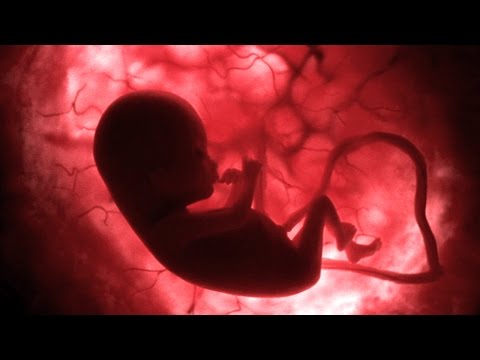 Watch on YouTube →
Overview
The account follows human development from fertilization through birth, using 4D ultrasound to show fetal growth, movement, sensory responses, memory, sleep, and preparation for life outside the womb. It explains milestones including the blastocyst’s first cell specializations, placental support, the 24-week threshold discussed for survival outside the womb, and labor, drawing on obstetrician Stuart Campbell’s ultrasound work and detailing how birth shifts oxygen supply from placenta to lungs.
Key takeaways
- A blastocyst forms within about four or five days of fertilization, separating into an outer cell layer that develops into the placenta and an inner group that forms the embryo.
- The placenta exchanges oxygen, nutrients, water, and waste while keeping maternal and fetal blood supplies separate; alcohol and nicotine can cross this interface.
- 4D ultrasound lets obstetricians observe fetal behavior in real time, including early stepping movements, later yawning, and responses to touch and sound.
- Fetal sensory and learning development begins before birth: flavors from maternal food enter amniotic fluid, and repeated speech or music can produce measurable responses.
- Fetal lungs do not supply oxygen before birth; the placenta does, while breathing movements exercise the chest and diaphragm in preparation for the first breath.
- The transition at birth is physiological as well as environmental: lung air sacs expand, independent oxygen uptake begins, and the umbilical cord and placenta become unnecessary.
Chapters
- The opening frames development as a nine-month journey from a single cell to a newborn.
- 4D ultrasound combines three-dimensional imaging with real-time movement to reveal fetal behavior.
- The introduction previews grasping, facial expressions, recognition of a mother's voice, and possible dreaming before birth.
- The account says ejaculation can deposit up to 500 million sperm in the vagina.
- Sperm carry copies of the father's genetic code and travel through the fallopian tube toward the egg.
- An egg is released roughly monthly and has been present in the mother's ovaries since she was a fetus.
- The fertilized egg receives 23 chromosomes from each parent.
- Each chromosome contains tightly coiled DNA, whose genes provide instructions for cell growth and development.
- The father's sperm contributes either an X or Y chromosome, determining genetic sex in the account's explanation.
- About a day after fertilization, the egg begins dividing as it travels along the fallopian tube.
- After four or five days, the roughly 100-cell blastocyst has an outer cell layer that will form the placenta and an inner group that will form the embryo.
- The inner cells are described as stem cells capable of developing into more than 200 cell types.
- Around day seven, the blastocyst reaches the uterus, where it will develop during pregnancy.
- In the third week, the embryo folds into a tube whose upper end develops into the head and whose length forms the body trunk.
- The account places early nerve-cell formation in the brain and spinal column at about day 15, before those structures are protected by skin or bone.
- Pregnancy can increase maternal blood volume by as much as 50 percent to support greater oxygen demand.
- At about day 22, a spontaneous contraction in one heart cell triggers neighboring cells, starting the embryonic heartbeat.
- The account estimates that a heart beating for 75 years would complete about 2.75 billion beats.
- At four weeks, the embryo is described as about the size of a kidney bean and growing roughly one millimeter per day.
- The heart circulates nutrients as early eye structures and arm and leg buds appear.
- The embryo briefly has features such as a tail and rudimentary structures behind the ears, which disappear as development continues.
- By eight weeks, the embryo is called a fetus and the placenta is mature enough to assume its central support role.
- The yolk sac supplies nutrients and blood cells early on, then shrivels as placental support takes over.
- Maternal and fetal blood remain separate while placental blood vessels exchange oxygen, water, nutrients, and waste.
- The placenta filters some harmful agents, but substances such as alcohol and nicotine can pass through.
- The first ultrasound commonly occurs between 10 and 14 weeks and can help estimate a due date from fetal size.
- Stuart Campbell of London's Create Health clinic demonstrates scans and explains that nuchal translucency can indicate Down syndrome risk but is not conclusive.
- 4D scans let clinicians observe movements and reactions, including yawning at 30 weeks and nose-touching at 32 weeks.
- Non-identical twins arise from two eggs and generally have separate placentas; identical twins arise when one egg splits and may share a placenta and amniotic sac.
- At 10 to 11 weeks, fetuses show a stepping reflex when their feet contact the uterine wall.
- The account describes a rapid transformation from weeks 6 to 11, with more than 200 cell types arranged and organs including the liver, kidneys, and stomach developing.
- At 12 weeks, external genital structures are still similar; the account says clearer visible differences emerge in later weeks.
- It states that only about 50 percent of fertilized eggs survive through pregnancy and that miscarriage risk falls after early development.
- From about 16 weeks, developing brain connections accompany more intricate movements and increasingly distinct fingers and toes.
- Proprioception, the body's sense of its position in space, develops through sensory feedback and repeated movement.
- Many mothers first feel movement just after four months, while someone who has been pregnant before may notice it as early as 15 weeks.
- Although fetal eyes are generally thought to remain closed until around 24 weeks, 4D scans show some opening as early as 18 weeks.
- Eye opening at that stage is described as a blinking reflex, not functional vision; the womb is mostly dark.
- At six months, survival outside the womb may be possible, but premature infants face substantial risks, particularly because their lungs are immature.
- The account cites 24 weeks as the then-current abortion limit in Britain, linking it to the possibility of survival outside the womb.
- From about 24 weeks, sensory systems including taste buds and smell-related pathways mature.
- Flavors from the mother's diet can pass through the placenta into amniotic fluid, exposing the fetus to tastes before birth.
- Familiarity with flavors in amniotic fluid may help a newborn recognize tastes in breast milk and begin breastfeeding.
- Bright light may produce a faint glow, but the uterus is usually dark; eye pigmentation can continue changing after birth.
- Sound travels through fluid about four times faster than through air, giving the fetus exposure to internal bodily sounds.
- Conversations and music also reach the womb, though the mother's abdomen muffles higher pitches more than low notes.
- The fetus hears the melody of speech more clearly than consonants, which are generally higher in pitch.
- The account suggests that hearing a parent's voice and language rhythms contributes to early familiarity and bonding.
- By this stage, the fetus has spent weeks exploring the uterine walls through touch.
- The account describes fetal reactions to being prodded through the mother's abdomen during a scan.
- Stuart Campbell reports observing grimacing and frowning during ultrasound manipulation, presented as evidence of a developing pain response.
- The fetus practices innate responses needed after birth, including sucking, swallowing, and breathing movements.
- A sudden sound or touch can trigger the startle reflex, with the arms flinging outward.
- During the third trimester, the fetus may swallow up to half a liter of amniotic fluid daily, exercising the swallowing system.
- The sucking reflex is triggered when a nipple-like object approaches the mouth.
- At 26 weeks, the fetus is described as about 25 centimeters from head to bottom, with substantial growth still ahead.
- A fetal heartbeat can sometimes be heard by placing an ear against the mother's abdomen, and it beats about twice as fast as hers.
- Maternal stress can alter heart rate and blood pressure, with physiological changes passing through the placenta and affecting the fetus.
- The account links prolonged maternal stress with increased risks of premature birth, low birth weight, and later health or developmental effects.
- Fetal hiccups result from diaphragm contractions, while breathing movements exercise chest muscles before the lungs take in air at birth.
- By 28 weeks, the fetus is gaining fat and the nervous system is approaching newborn-level development.
- A repeated nursery rhyme in the final month of pregnancy is described as slowing fetal heart rate, unlike an unfamiliar rhyme, suggesting prenatal memory.
- The account says music can affect fetal arousal, with fast music stimulating and slower choral or classical music calming.
- At 33 weeks, a fetus may recognize a particular piece of music and respond with movement.
- The account notes that a 32-week fetal brain is not very different from a newborn's in broad developmental terms.
- Fetuses spend about 90 percent of late pregnancy asleep, and 4D scans reveal rapid eye movements behind closed eyelids.
- By eight months, the brain is described as having more than 100 billion neurons and 100 trillion connections.
- Only about 5 percent of babies arrive on their exact due date; most are born within two weeks either side.
- The account proposes that mature fetal lungs release a protein into amniotic fluid, influencing placental hormones and contributing to labor onset.
- A shift involving reduced progesterone and increased oxytocin triggers uterine contractions.
- During the first stage of labor, the cervix must dilate to about 10 centimeters to allow the baby's head through.
- During the second stage, uterine contractions and maternal pushing move the baby through the birth canal.
- The account describes labor stress and cord compression as challenges for the fetus, with adrenaline helping maintain the heartbeat and prepare the lungs.
- After delivery, fluid drains from the lungs and air expands the air sacs, allowing oxygen uptake to begin.
- Once the baby is breathing independently, the umbilical cord is cut and the placenta is delivered; the newborn must begin regulating its own body.
- Birth exposes the baby to light, noise, cold, and hunger after nine months in the womb.
- The account connects the difficulty of human childbirth to large brain and head size relative to the mother's pelvis.
- It contrasts human newborns with many other mammals, whose smaller-headed offspring can be more capable immediately after birth.
- The closing reflection presents birth as the start of life outside the womb after an extensive period of fetal development.
Transcript excerpt
0:03 [Music] [Music] congratulations against all odds you were conceived from a single cell to a fully grown baby in just nine months amazing you are a miracle and so am i what you are about to see was my journey it was also yours
0:52 [Music] this baby is about to be forced from his calm and comforting cocoon and thrust into a noisy bright and terrifying new world [Music] [Music] a new generation of 4d ultrasound scans has opened up a window on the womb allowing us to see the development of
1:39 the fetus as never before [Music] during his odyssey in the womb the fetus has learned to grasp with his fingers to smile and frown he can recognize his mother's voice and even dream all before even being born [Music] so
2:52 during ejaculation a mature healthy man expels up to 500 million sperm inside a woman's vagina and the journey begins each sperm carries its own copy of the father's genetic code [Music] with a basic sense of smell the sperm
3:39 the smallest cell in the human body sniff their way up the fallopian tube towards the egg the largest cell in the body [Music] each month a woman's ovaries release one egg containing her own genetic code she made these aids while she was still a fetus herself they've been kept in storage ever since through childhood and adolescence and on into adulthood [Music] it may take up to 10 hours before the actual moment of conception and the mother may be completely unaware
4:28 of the secret events inside her belly [Music] and so begins my journey through space a micro cosmos planets asteroids molecules chromosomes constellations swirling a genetic whirlpool worlds within worlds a russian doll of universes bursting at each seam
5:18 [Music] this is not my voice
This is the start of the transcript. Save this video free for the whole transcript, searchable and time-coded.
Related notes
Summary, takeaways, and chapters were generated by AI from the video's transcript and may contain errors. The video belongs to its creator, Naked Science.