Crise da reprodutibilidade na experimentação animal
Overview
Bruno Martynhak explains how inconsistent animal-care conditions, inadequate training, weak experimental design, and incomplete reporting contribute to the reproducibility crisis. He presents ARRIVE 2.0 and PREPARE as practical guides, then details the CEUA application process and its updated 2023 forms, including documentation, researcher training, animal welfare, humane endpoints, and the 3Rs.
Key takeaways
- Standardized housing, daily care, and enrichment reduce stress-related variation, which can improve data consistency and lower the number of animals needed for reliable results.
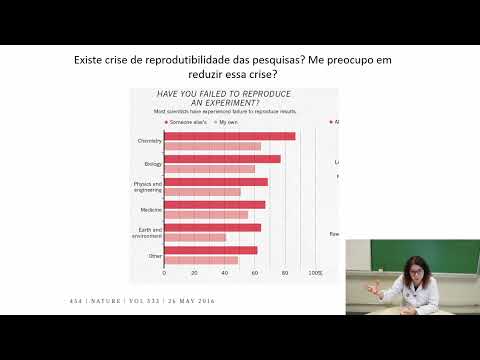
- A 2016 survey cited by Bruno Martynhak found that 52% of researchers perceived a serious reproducibility crisis and about 60% had failed to reproduce findings from their own laboratories.
- ARRIVE 2.0 improves transparency by requiring details such as group-specific sample sizes, sample-size calculations, exclusion rules, randomization, blinding, and statistical methods.
- PREPARE is most useful before experimentation because it structures planning, justification of animal use, and consideration of alternatives and the 3Rs.
- The updated 2023 CEUA forms require evidence of scientific merit, ethics and practical training, and training in the specific procedures; the recommended ethics and practical course is at least 30 hours.
- Animal welfare monitoring needs actionable thresholds: the described scoring system treats 6 to 10 as no apparent compromise, 11 to 14 as requiring closer observation, and scores above 15 as serious concern requiring a humane response.
Chapters
- Standardize daily care, species-appropriate environmental enrichment, cage changes, noise, and ammonia exposure to reduce stress-related variation.
- Researchers new to animal studies need practical supervision in procedures such as handling, injections, and surgery, as well as training in relevant regulations including CONCEA guidance.
- Poor handling and stressful housing can alter behavior and measurements, increase errors, and require more animals to obtain reliable results.
- A 2016 researcher survey found that 52% perceived a serious reproducibility crisis, 38% a mild one, 3% no crisis, and 7% were unsure.
- More than 70% of respondents reported difficulty reproducing other researchers’ findings, while about 60% had trouble reproducing results from their own laboratories.
- The reported difficulty extended across fields including biology, medicine, physics, engineering, and environmental research.
- Poor experimental design, unavailable raw data, and missing method details can prevent replication, including specifics such as administration route, drug supplier, and timing of behavioral tests.
- Researchers should report sample sizes and procedures clearly and provide supplementary materials or data where possible, allowing other groups to reproduce the work.
- Small samples and weak statistical analyses reduce statistical power and make conclusions less dependable.
- Unreliable preclinical findings can fail to translate into clinical studies, wasting research funds and animals and undermining the 3Rs: replacement, reduction, and refinement.
- ARRIVE 2.0 asks researchers to report experimental design, experimental units, sample size for each group, and how sample size was calculated.
- The methods should disclose inclusion and exclusion criteria, randomization, blinding, outcome measures, statistical tests, and post hoc analyses.
- Results should identify measures of central tendency and dispersion and provide relevant statistical values so readers can evaluate the findings.
- The guidance also covers ethical approval, animal housing and monitoring, scientific interpretation, data access, and conflicts of interest; Martynhak describes supplying a completed checklist as supplementary material for a journal submission.
- PREPARE complements ARRIVE with guidance for planning animal experiments and procedures, including decisions that should be made before a study begins.
- Researchers should justify why animal use is necessary, explain the study’s originality, and weigh expected benefits against animal suffering.
- After scientific and ethical review, research teams should monitor compliance, apply replacement, reduction, and refinement, and stop work if animal welfare or regulatory compliance is compromised.
- The CEUA forms discussed were updated in July 2023 to reflect current CONCEA rules and recommendations.
- An application requires a cover letter, the unified CEUA form, and evidence of scientific merit review, such as approval by a department, graduate program, or funding body.
- Depending on the species and source, applicants may need authorization from agencies such as IBAMA, as well as documentation for commercial animal suppliers or planned sequential use.
- Researchers must document ethics and practical animal-research training, with a recommended minimum of 30 hours, and demonstrate training in the specific techniques proposed.
- For new trainees, the application should identify the trainer and describe the training period and content; prior professional experience or documented publications may support a competence claim.
- The application records project aims, justification, species, age, weight, sex, total animal numbers, provenance, and whether the model is genetically modified.
- Researchers must explain alternatives to animal use and how sample size was calculated to demonstrate that reduction was considered.
- The form asks for housing, feeding, environmental enrichment, experiment location, and daily-care arrangements; any departure from daily care or standard enrichment needs justification.
- The project plan must state the procedure’s invasiveness and whether intentional pain or stress is expected, with an explanation of duration and type.
- The CEUA form requires plans for pain relief, intervention or removal from a study when welfare declines, and humane euthanasia, with a named person responsible for daily monitoring.
- A welfare-scoring annex evaluates indicators such as spontaneous behavior, posture, breathing, coat, eyes, and body condition; scores of 6 to 10 indicate no apparent compromise, 11 to 14 call for closer observation, and scores above 15 indicate serious concern.
- Applications must specify anesthetics, analgesics, immobilization, surgical procedures, postoperative recovery, and the dose, substance, and frequency of any administration or biological sampling.
- Sequential use of animals requires CEUA approval and consideration of cumulative pain, stress, long-term effects, and total time in research; reuse must not create additional suffering merely to reduce animal numbers.
Transcript excerpt
0:00 Olá a todos hoje nós vamos discutir sobre a crise da reprodutibilidade na experimentação animal sobre formulários importantes que são recomendados pelo conceito que é o tripé e por fim a gente vai comentar e falar sobre os formulários da ceua do nosso setor de ciências biológicos aqui da nossa universidade que tem um documento Nato não sei né essa crise de reprodutibilidade de dados experimentais não é algo tão novo assim porém nos últimos anos isso ganhou uma notoriedade e uma discussão por várias por parte de vários cientistas no mundo
0:48 né que começaram a se preocupar porque que os dados não reproduzem no grupo que está por exemplo na Inglaterra do outro que está nos Estados Unidos e do brasileiro do indiano dos chineses japoneses ou seja então nós temos aí né uma gama mundial de excelentes pesquisadores e muitas vezes os dados não se reproduzem e hoje a gente consegue entender um pouco do porque isso vem acontecendo e a movimentação é para que isso diminua cada vez mais e quando a gente pensa em diminuir essa irredutibilidade de dados O que que significa isso significa normatizar de maneira Mundial
1:37 padronizar Mundial situações muito básicas envolvidas na experimentação animal uma delas é algo muito básico cultura do Cuidado cuidado diário enriquecimento padrão desse ambiente para cada Espécie a troca das Caixas reduzir sons o cheiro de amônia deixar o animal Então se todos fizerem isso a gente vai diminuir grande parte dos estresses de muitos animais quando são submetidos a experimentação animal uma outra maneira importante de reduzir a irreprodutibilidade é que todos os pesquisadores iniciantes na área de experimentação animal que eles sejam treinados por um profissional habilitado
2:26 e capacitado Então tem que ter um acompanhamento e todo o assessoramento para entendimento das resoluções normativas da diretriz da rn55 então
This is the start of the transcript. Save this video free for the whole transcript, searchable and time-coded.
Related notes
Summary, takeaways, and chapters were generated by AI from the video's transcript and may contain errors. The video belongs to its creator, Bruno Martynhak.