Enriquecimento Ambiental e Pontos Finais Humanitários
Overview
Bruno Martynhak explains that Brazil’s CONCEA Normative Resolution 55 requires animal research programs to provide environmental enrichment or justify why it cannot be applied, while distinguishing baseline welfare housing from intensive enrichment used experimentally. He connects daily care and the 3Rs to reliable research, humane endpoints, and species-specific euthanasia guidance in Normative Resolution 37, with examples including mouse nesting materials, rat tunnels, refined tail-vein blood sampling, and restrictions on euthanasia methods.
Key takeaways
- CONCEA Normative Resolution 55 requires animal research programs to plan environmental enrichment, and researchers must justify any inability to provide it.
- Baseline welfare enrichment is not the same as intensive experimental enrichment: the former provides suitable housing, nesting materials, and low-stress conditions, while the latter can alter brain function and behavior.
- Noise, ammonia, and excessive cage density are preventable stressors that can undermine both animal welfare and experimental results.
- Daily observation and predefined humane endpoints, such as weight loss or failure to eat, help prevent unexpected suffering and guide timely treatment or study removal.
- The 3Rs require researchers to consider alternatives, justify animal numbers, and refine procedures, with a dorsal tail-vein incision or catheter offered as alternatives to cutting the tail tip for blood sampling.
- CONCEA Normative Resolution 37 categorizes euthanasia methods by species and restriction; for example, cervical dislocation is restricted for rats weighing under 150 grams, and CO2 must follow the directive’s conditions.
Chapters
- CONCEA Normative Resolution 55 says animal welfare must reflect species-specific biological and behavioral needs during breeding, housing, and research.
- Teaching and research activities must plan an environmental enrichment program; inability to apply enrichment must be justified.
- Institutions must provide resources for compliant housing, environmental standards, animal management, and enrichment.
- Housing proposals should account for cage space, movement, light-dark cycles, privacy, social contact, and species-specific behavior.
- Research cited includes a 2022 meta-analysis reporting that enrichment benefits for rodent learning and memory can be greater under stress.
- Reviews describe changes in neuronal and synaptic physiology, neurogenesis, brain structure, and behaviors associated with anxiety and depression.
- Enrichment can combine sensory, motor, social, cognitive, and affective stimuli, such as varied textures, activity, tunnels, and interaction.
- Changing enrichment over time maintains novelty; these effects mean experimental enrichment can influence measured outcomes.
- Legal baseline enrichment is distinguished from intensive experimental enrichment: it aims for a suitable, non-stressful environment rather than constant stimulation.
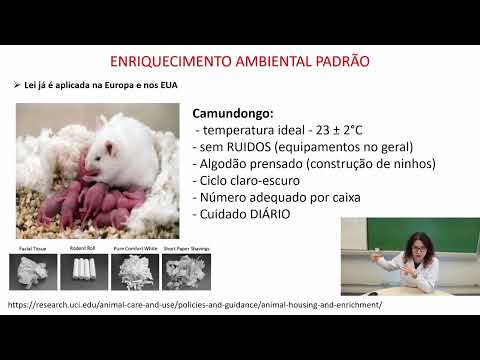
- For mice, examples include pressed cotton or paper nesting materials, adequate cage space, appropriate group sizes, daily checks, and a stable light-dark cycle.
- Rats benefit from tunnels made of suitable materials, including washable PVC; paper products must be considered against hygiene and sanitation needs.
- Noise, ammonia buildup, and overcrowding can stress animals; ventilation and appropriate stocking density help maintain welfare and reduce confounding.
- Before submitting an animal study, researchers should plan for cage type, noise, photoperiod, temperature, humidity, ventilation, density, and enrichment.
- A culture of care means treating animals with compassion and respect, with staff taking individual responsibility and responding promptly to problems.
- Daily observation can identify unexpected pain, distress, or changes in condition early, supporting both animal welfare and more reproducible data.
- Care also includes professional conduct, empathy, and planning for replacement, reduction, and refinement rather than treating regulatory compliance as a checklist.
- The 3Rs are replacement of animals where possible, reduction of animal numbers, and refinement of procedures to minimize pain and distress.
- A cut at the tip of the tail is described as a stressful method that may require local anesthesia; a small incision over the dorsal tail vein is presented as a refinement.
- For repeated short-interval blood sampling, a tail-vein catheter may be more appropriate than repeated incisions.
- Refinement also covers post-procedure care, euthanasia timing, and documenting whether animals were euthanized at study endpoints, removed early, found dead, or rehomed.
- A humane endpoint ends or modifies a procedure before pain, discomfort, or distress becomes excessive, including treatment, stopping a painful procedure, or removing an animal from a study.
- Endpoint criteria should be objective and evidence-based, limit unanticipated suffering, and reflect the procedure’s severity.
- Researchers should define exclusion criteria in advance, such as marked weight loss or failure to eat, and monitor animals for these signs.
- If an experiment ends but an animal remains in avoidable suffering, the protocol should not defer euthanasia for a week without a welfare-based plan.
- Brazilian CONCEA Normative Resolution 37 organizes euthanasia methods by taxonomic group and distinguishes recommended, restricted, and unacceptable methods.
- For rodents and small mammals, examples of recommended approaches include barbiturates or anesthetic overdose by appropriate routes, and inhaled anesthetics.
- CO2 is accepted with restrictions; cervical dislocation has weight-related limits, including rats under 150 grams, and decapitation requires purpose-built commercial equipment.
- The guidance rejects methods such as argon or unspecified techniques, and Bruno Martynhak urges researchers to consult Resolutions 37, 51, and 49 on animal care and training.
Transcript excerpt
0:00 Olá a todos hoje o tema da aula emoções básicas de enriquecimento ambiental pontos finais humanitários a gente vai falar um pouco o que que significa pontos finais a cultura do Cuidado então a primeira pergunta né E que já gerou muitas questões se é obrigatório por lei manter os animais é um ambiente enriquecido essa é uma pergunta a segunda é se o enriquecimento ambiental na experimentação animal não vai interferir nos meus resultados Então vamos tentar esclarecer um pouco mais esse ponto né Bom primeiramente a resposta né sobre essa questão se é obrigatório por lei e manter os animais em ambiente
0:47 enriquecidos eu já vou me adiantar e dizer que sim tá então quando a gente lê a resolução normativa do Cosseno é número 55 que é diretriz brasileira para o cuidado e utilização de animais a gente vê no item três de princípios gerais o que eles comentam né que tá lá na lei que o bem-estar dos animais deve considerar a provisão de cuidados os quais devem ser baseadas em suas necessidades comportamentais e biológicos específicas em todas as etapas referentes a sua criação manutenção e utilização todas as atividades de ensino de pesquisa científica devem prever o programa de enriquecimento ambiental a ser aplicado
1:38 a impossibilidade de aplicação de enriquecimento ambiental deve ser justificado também no item 4 pontos de responsabilidades das instituições é de responsabilidade comprometimento com um bom funcionamento da ceua é também de responsabilidade da instituição o conhecimento das determinações da ceua sobre os assuntos que possam afetar o bem-estar dos animais utilizados em atividades de ensino pesquisa incluindo a construção ou a modificação das edificações onde os animais são produzidos mantidos ou utilizados e disponibilizando recursos a fim de obedecer ao disposto nas normativas
2:27 vigentes sobre estrutura padrões ambientais manejo e enriquecimento
This is the start of the transcript. Save this video free for the whole transcript, searchable and time-coded.
Related notes
Summary, takeaways, and chapters were generated by AI from the video's transcript and may contain errors. The video belongs to its creator, Bruno Martynhak.