Contenção selvagem 2020 - Rogério Lange
Overview
Veterinarian Rogério Ribas Lange explains how wildlife restraint must be planned around each species' behavior, physiology, research purpose, legal permissions, and risk to both animals and handlers. He connects restraint to stress responses and capture myopathy, then illustrates species-specific approaches including bird vision occlusion, mechanical restraint, remote drug delivery, and conditioning for sampling and diagnostic research.
Key takeaways
- Wildlife restraint requires advance planning around purpose, personnel, method, timing, and location, as well as legal authorization through SISBio for Brazilian research involving wild animals.
- Stress is cumulative: acute catecholamine release can produce rapid cardiovascular changes, while chronic cortisol exposure can impair muscle, healing, and immune function.
- Restraint techniques do not transfer reliably between similar species: a domestic guinea pig may tolerate handling that causes severe stress in a wild preá.
- Visual occlusion can reduce stress in many birds, but restraint must also account for their lack of a diaphragm and the risk that body pressure will compromise breathing.
- Capture myopathy can result from intense exertion, repeated capture, or prolonged abnormal positioning, so minimizing restraint duration and muscular struggle protects animal survival.
- Species-specific behavior can improve both safety and data quality, as shown by marmoset conditioning, towel-wrapped agouti ECG assessment, and the use of endodontic paper points to measure turtle tear production.
Chapters
- Rogério Ribas Lange introduces his veterinary work at the Federal University of Paraná and experience restraining different animal species.
- A guide dog requires specialized training and equipment, while elephant blood collection can require daily conditioning and dedicated staff.
- Venom collection from a venomous snake requires appropriate protective equipment, a suitable setting, and a species-specific technique.
- Fish, snakes, and crocodilians have different blood-sampling access points; ectotherms also need temperature stabilization to avoid compromised samples.
- Researchers working with wild animals must obtain authorization through SISBio, Brazil's online system for research and biological sample collection.
- Applications specify the research project, responsible researcher, target species or group, location, and number of individuals.
- Fieldwork requires a corresponding guide that identifies authorized personnel and can be presented during inspection.
- IBAMA Normative Instruction 154/2007 covers capture, collection, marking, transport, and temporary captivity, with added considerations for conservation units and caves.
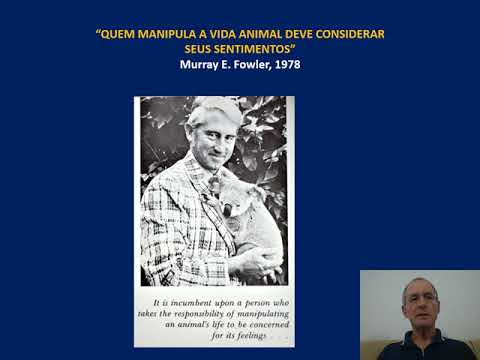
- Lange cites wildlife veterinarian Murray Fowler as a major influence on zoological medicine and wildlife restraint.
- Fowler's 1978 book on animal restraint emphasized reconsidering how people feel about handling wild animals.
- Lange frames empathy, species conservation, and minimizing pain or injury as obligations when handling vertebrates or invertebrates.
- Restraint stress accumulates through sensory stimulation, immobilization, drugs, pain, temperature, and blocked escape.
- The sympathetic nervous system and adrenal catecholamines produce acute effects such as tachycardia, pupil dilation, elevated blood glucose, and altered blood flow.
- Longer-term cortisol responses can reduce muscle mass, bone mineralization, growth, and immunity while increasing thirst and urination.
- A wild preá may develop severe stress or die during restraint, unlike the closely related domestic guinea pig, whose domestication reduced its stress response.
- Altricial young, such as mice and rats, are born poorly developed and depend on maternal care for warmth and feeding.
- Precocial guinea pigs are born furred, with open eyes and functional mobility, reflecting greater maternal investment before birth.
- Rabbit kits are altricial and depend on a fur-lined nest, while hare leverets are precocial and more independent.
- Carrying by the loose skin over the shoulders can work for ferrets and some other species, but is inappropriate for guinea pigs.
- Lange recommends Murray Fowler's restraint text, a wildlife pharmacology reference, Brazil's Tratado de Animais Selvagens, and a book on exotic-animal behavior.
- The first edition of Tratado de Animais Selvagens appeared in 2006; its 2014 second edition expanded to two volumes and 134 chapters.
- Before restraint, establish why it is needed, who will perform it, how it will be done, when it should occur, and where it will take place.
- The method should match the research objective, whether that is collecting a sample, observing behavior, or performing a diagnostic procedure.
- Kangaroo restraint and capture with a mist net both demand trained handling; animals left in nets can suffer injury, predation, or death.
- For many birds, covering the eyes with a simple material such as paper or tape can reduce visual stimulation and stress responses.
- A domestic chicken can be physically secured on an X-ray plate without anesthesia when the procedure and restraint are properly controlled.
- Birds can be restrained for blood collection from sites including the jugular, radial, and tarsal veins.
- A bird of prey can grip a paper ball while its talons are wrapped with removable tape, reducing the immediate risk of injury during handling.
- A paper tube secured with tape can help restrain a small bird for procedures such as blood collection or nail trimming.
- Birds lack a diaphragm, so excessive body pressure during restraint can interfere with breathing.
- Some birds show tonic immobility, while rabbits can enter a similar thanatosis-like state when placed on their backs; Lange's rabbit recordings showed a marked slowing of heart rate.
- The general adaptation response can progress from acute catecholamine release to chronic cortisol effects, adaptation, shock, or death.
- Capture myopathy can follow intense exertion, repeated capture, prolonged muscle tension, or restraint in an abnormal position.
- Handlers must anticipate each species' defensive behavior: deer can suffer capture-related fatalities, wolves may bite, and cats can scratch or bite.
- Rattlesnakes detect heat with facial pit organs, while Brazilian wandering spiders can lunge; knowing these defenses is essential to safe handling.
- Capture myopathy is a serious muscle disorder associated with stress during physical or chemical restraint, transport, and handling.
- Fear, anxiety, and extreme muscular exertion can cause lactic acid buildup and severe muscle damage.
- Chronic cortisol exposure can cause muscle weakness, tremors, asymmetric hair loss, weight and muscle loss, high blood pressure, and delayed wound healing.
- Stress-related immune suppression can increase infection risk; Lange also describes stress-associated neutrophilia in blood profiles.
- A black-tufted marmoset was manually restrained for research on blink frequency; repeated handling helped the animals become accustomed to brief procedures.
- Leather gloves can protect a handler restraining a marmoset, but gloves can reduce sensitivity and increase risk when handling a bird.
- For a red-eared slider turtle, Lange used a paper point from endodontic dentistry to measure tear production because standard tear-test strips were too wide.
- Turtles can bite and hold on; returning one to water may prompt it to release, while rats and mice also require different restraint methods despite both being laboratory animals.
- A captive lion received medication through a pole applicator and was later examined with ultrasound, combining pharmacological and mechanical restraint.
- A squeeze cage can press a lion safely enough for certain procedures, including subcutaneous fluid administration, without anesthesia for every intervention.
- Measuring intraocular pressure in a capuchin monkey requires trusted handlers to control its head, limbs, and tail while another person takes measurements.
- Capuchin monkeys can use their hands, feet, and tail to bring an object toward the mouth, making secure restraint essential.
- Remote drug-delivery equipment can use compressed air rather than gunpowder, allowing drug darts to be used without the same firearm requirements.
- Lange describes a custom dart made from a disposable syringe and propelled with gas from a butane canister.
- Primates are evolutionarily closer to humans than rodents, although legal and ethical barriers affect their use as research models.
- A marmoset accustomed to handling was conditioned for pregnancy monitoring with ultrasound, including a food reward before the procedure.
- The nocturnal primate genus Aotus has a slow metabolism and can become hypoglycemic and hypothermic during restraint.
- A small amount of condensed milk helped maintain blood glucose during Aotus handling and measurement.
- An agouti was wrapped in a towel for an electrocardiogram, with vision obscured and the team instructed to remain quiet and move slowly.
- A corneal esthesiometer measures sensitivity with a nylon filament; anesthesia would invalidate the response being assessed.
- Lange recounts German firefighters rescuing a rat trapped in a sewer after a child sought help, an act that also prompted local rat-control measures.
- Public empathy toward individual animals can influence how communities interpret wildlife and research activities.
- He cautions field researchers to account for public perceptions and explain procedures clearly, especially when animal research may be seen as harmful.
- Lange closes by returning to empathy and responsible handling as central principles of wildlife medicine.
Transcript excerpt
0:00 o olá pessoal vamos dar início a nossa conversa sobre contenção de animais meu nome é rogério ribas lanche eu sou médico veterinário sobre o show da universidade federal do paraná trabalho no hospital veterinário e a gente já acumulou ao longo dos anos de atuação uma uma experiência na contenção de diferentes espécies é a primeira vez que ele vai apresentar essa nossa conversa no curso da professora márcia chamada à distância então eu peço a paciência de vocês nesse início de conversa eu sempre gostava de fazer uma tomada de com a plateia com vocês todos trabalhando com diferentes pesquisas eu sempre gostava
0:48 de saber o que cada um de vocês estava desenvolvendo o país espécies e particularmente se haviam espécies silvestres nativas brasileiras os contemplados por esse projeto de pesquisa de aproveita também para vocês que todo tipo de pesquisa é importante é mais algumas pesquisas voltadas a enorme diversidade de animais que nós temos no brasil são de especial relevância porque muito precisamos avançar quanto ao conhecimento destas espécies e é sempre uma lástima onde acontecem as pesquisas nos programas de pós-graduação nos projetos de pesquisa acadêmicos essas espécies não não serem contempladas
1:37 então chama atenção de vocês para para essa situação meu e-mail tá aí anotado nesse primeiro slide rr elang arroba ufpr.br então nessa situação de comunicação à distância eu peço para vocês que disponha um desse e-mail para qualquer conversa aqui possamos ter adiante a convidar eu fico à disposição tá começando a nossa temática de potência alguém mais qualquer procedimento que nós venhamos a fazer com animais é fundamental que a gente estabeleça que tipo de contenção a gente vai botar para essa espécie desde essa imagem que vocês estão vendo aí no caso de um cão usado como apoio para pessoas
This is the start of the transcript. Save this video free for the whole transcript, searchable and time-coded.
Related notes
Summary, takeaways, and chapters were generated by AI from the video's transcript and may contain errors. The video belongs to its creator, Bruno Martynhak.