Aula 2 - Prática do Curso de Manipulação Animal
Overview
The lesson covers common laboratory species, including mice, Wistar rats, guinea pigs, rabbits, and Syrian hamsters, then explains their defensive behaviors and species-appropriate restraint. It also surveys identification methods, injection routes, blood collection, anesthesia, and euthanasia, emphasizing brief, secure handling, animal welfare, and CONCEA guidance.
Key takeaways
- Mouse genetics and rapid reproduction make mice especially useful in biomedical research, with a 19 to 21 day gestation and common strains including BALB/c, Swiss, and C57BL/6.
- Restraint must match the animal: support the hindquarters of rats and guinea pigs, keep mouse restraint brief, and never lift rabbits by their ears.
- A cloth wrap can reduce stress in mice, rats, and guinea pigs while allowing one handler to carry out procedures.
- The lesson distinguishes injection sites by species and route, including rodent tail veins for intravenous administration and rabbit marginal ear veins.
- Air in a syringe is a critical hazard during intravenous administration because it can cause an embolism.
- Anesthesia monitoring and euthanasia should follow animal-welfare standards, with CONCEA guidance cited and any exception to anesthetic use justified for project approval.
Chapters
- Mice are widely used in biomedical research because of their small size, short 19 to 21 day gestation, and well-characterized genetics; BALB/c, Swiss, and C57BL/6 are named strains.
- Wistar rats have a 19 to 22 day gestation, average about 8 pups per litter, and reach sexual maturity at roughly 50 to 60 days.
- Guinea pigs are herbivores that require an exogenous source of vitamin C and are used in nutrition, pharmacology, and immunology research.
- Rabbits are described as docile and weighing 4 to 6 kg; Syrian hamsters have an approximately 16-day gestation and can reach puberty at about 28 days.
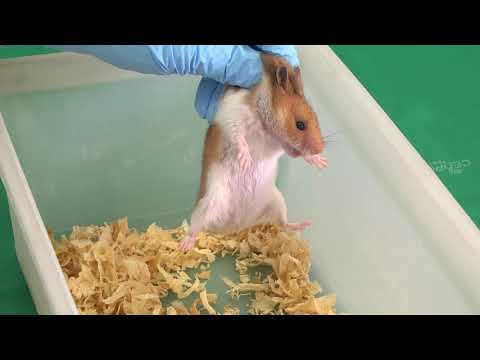
- Mice and rats may urinate, defecate, or bite when frightened; guinea pigs may vocalize and bite, while hamsters can vocalize, rear up, and bite.
- Mice are commonly restrained by the loose skin at the neck, with the tail supported; restraint should be brief because prolonged pressure can cause asphyxia.
- Rats over 300 g should be lifted around the thorax with the rear supported, while guinea pigs are held around the thorax and hindquarters because they lack a supporting tail.
- A cloth wrap, called the Camila method in the lesson, can calm rats, mice, and guinea pigs and allow one handler to perform procedures; rabbits must not be lifted by their ears.
- Identification options include picric acid for light-colored animals, marker on the tails of mice and rats, ear tags, fur clipping, and subcutaneous microchips.
- Subcutaneous injections are presented for all conventional laboratory species; intramuscular injections in rodents and guinea pigs use the quadriceps region.
- For intraperitoneal injections, the lesson identifies the lower-right abdominal quadrant and an inclined body position to reduce the chance of striking internal organs.
- Rodent intravenous injections use lateral tail veins; rabbits commonly use marginal ear veins, and air must be removed from syringes to avoid potentially fatal embolism.
- Small-volume mouse blood collection may use the tail, while cardiac puncture is described as a terminal method for collecting a larger blood volume; rats follow similar approaches.
- Rabbit blood collection can use the marginal ear vessels, which are also presented as accessible sites for intravenous administration.
- Anesthesia may be administered intravenously or intraperitoneally, with anesthetic depth assessed by loss of palpebral and vibrissae-related reflexes.
- The lesson frames euthanasia as minimizing pain and distress, cites CONCEA guidelines, and says anesthetic use is essential unless a justified experimental conflict is approved.
Transcript excerpt
0:00 e conhecendo os animais convencionais de laboratório camundongo sua origem é europeia e asiática seu uso como animal de laboratório se deve ao fato de ser pequeno muito porífero tem período de gestação Curto ser de fácil de notificação e manutenção seu período de gestação é de 19 à 21 dias em termos numéricos é o animal mais utilizado em pesquisa biomédica tem sua genética amplamente conhecida sendo a espécie de escolha para a produção de animais transgênicos para pesquisa científica outras linhagens são linhagem balb-c Swiss c-57 Black 6 e s192 ratos sua origem é asiática EA praticamente
0:53 encontrado em todas as latitudes acredita-se que tenha sido a primeira espécie domesticada para Face Ah pois desde o início do século 20 já era utilizado para estudos nutricionais o tempo de gestação é de 19 a 22 dias e a média de filhotes é de 8 para o rato Twister mas podemos encontrar ninhadas de até 16 filhotes a puberdade se dá em torno de 30 dias e a maturidade sexual entre 50 a 60 dias de vida as fêmeas com nove meses de idade podem pesar de 300 a 400 gramas e os machos de 500 A 600 gramas a linhagem mais utilizada nas esperimenta ções é a linhagem wistar
1:42 cobaias de origem Latina também conhecido como cobaia a linhagem da in article é a mais utilizada para experimentação animal são muito utilizadas para estudos de nutrição farmacologia e imunologia animal dócil e sem cauda e são muito tímidos assustam-se facilmente e são muito suscetíveis a estímulos estressantes sobretudo alterações ambientais são fundamentalmente herbívoros e comem a maioria dos grãos verduras e passos assim como os primatas não humanos e o próprio homem são dependente de fontes exógenas de ácido ascórbico coelhos origem da península ibérica e norte da
This is the start of the transcript. Save this video free for the whole transcript, searchable and time-coded.
Related notes
Summary, takeaways, and chapters were generated by AI from the video's transcript and may contain errors. The video belongs to its creator, Bruno Martynhak.