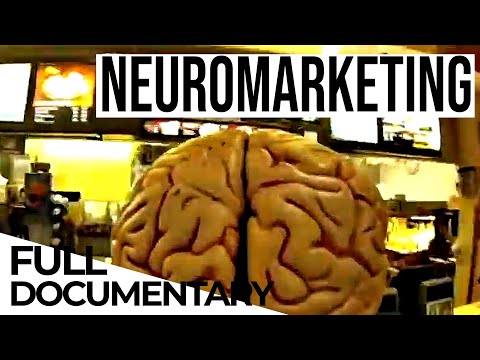
Neuromarketing: How Companies are Studying your Brain for Profit | ENDEVR Documentary
 Watch on YouTube →
Overview
The investigation examines how brands use eye tracking, facial electromyography and fMRI to test packaging, advertising, scents and websites, arguing that these methods can exploit learned associations and emotional responses without consumers noticing. It traces McDonald’s marketing to children and its scent research, including Samuel McClure’s Coke–Pepsi experiment and McDonald’s later admission that it tested scents with mothers in MRI scanners, while also documenting neuromarketing training for sales teams and legal and ethical objections in France.
Key takeaways
- Eye tracking and facial electromyography measure attention and physiological reactions, while fMRI measures changes in brain activity; none of these tools alone proves that a consumer was manipulated or reveals a complete explanation for a purchase.
- McClure’s 2004 Coke–Pepsi study showed that brand information can change reported preference: participants tended to prefer Pepsi in blind tasting, while three-quarters chose Coke when the brands were identified.
- McDonald’s used toys and characters to build early brand familiarity; the documentary cites a franchisee document saying 95% of visiting families were prompted by their children and a 60-child test in which McDonald’s-labelled fries were rated better despite being identical.
- McDonald’s executive Pierre Woreczek confirmed that mothers participated in MRI tests pairing scents with McDonald’s imagery, although he said the restaurant scent initiative was not successful and that he would not repeat it.
- SalesBrain’s Patrick Renvoisé applied a “reptilian brain” sales framework to financial products, and Crédit Mutuel subsidiary employees reported learning to identify customer pain points and influence decisions—a practice trainees themselves described as potentially manipulative.
- The documentary says French law restricts brain-imaging techniques to medical or forensic purposes; SNCF acknowledged limited neuromarketing tests but characterized them as marginal rather than routine.
Chapters
0:00
Neuromarketing’s Pitch: Measuring Unconscious Consumer Responses
- The opening follows Marie’s choices of skin cream, fast food, travel and credit, then frames scent, imagery and slogans as deliberately designed to influence emotions and desires.
- The documentary defines neuromarketing as applying neuroscience tools, including MRI and electroencephalography, to marketing decisions.
- Its central question is whether these methods merely measure preferences or manipulate consumers without their awareness.
2:15
BVA’s Experimental Supermarket and €20,000 Eye-Tracking Glasses
- BVA researcher Éric Singler demonstrates a mock supermarket in Paris where volunteers simulate shopping for tests of packaging and shelf placement.
- Eye-tracking glasses, valued in the report at €20,000, record gaze direction to the millisecond and show which products or display features attract attention.
- Eye tracking reveals what shoppers look at, but by itself does not show what is happening inside the brain or prove why a purchase is made.
5:15
Facial EMG Tests Subtle Reactions to McDonald’s Advertising
- Neuroscience researcher Olivier Droulers presents BVA’s facial electromyography device, which uses electrodes to track facial and finger responses during advertising.
- The system monitors the zygomaticus, associated with smiling, and the corrugator, which can activate during negative emotion.
- In a McDonald’s burger-ad test, the measured response peaked at a moment that surprised the participant, illustrating how sensor readings can differ from a viewer’s stated explanation.
7:48
Happy Meal Toys Build McDonald’s Brand Familiarity in Children
- A classroom exercise shows five-year-olds readily recognizing McDonald’s branding, while parents describe children choosing the restaurant for Happy Meal toys.
- A confidential franchisee-association document cited in the report says 95% of families visiting McDonald’s do so because of their children.
- Former McDonald’s marketing executive Roy Bergold says Ray Kroc believed winning customers at ages four to six could create habits that persist into adulthood and the next generation.
- Parent Monet Parham challenges toy-linked meals, arguing that branding can normalize food high in fat, sugar and salt; San Francisco had banned toys with Happy Meals.
16:55
Brand Labels Change Taste: McClure’s Coke–Pepsi fMRI Experiment
- Pediatrician Tom Robinson’s test with 60 children found that many rated identical fries as better when they believed they came from McDonald’s.
- In Samuel McClure’s 2004 fMRI experiment, participants tended to prefer Pepsi in blind tasting, but three-quarters preferred Coke when told which brand they were drinking.
- McClure reports that brand information recruited the prefrontal cortex and altered activity associated with taste, showing how learned brand expectations can shape reported experience.
20:27
McDonald’s Scent Research and the Brain’s Reward Circuit
- An anonymous source says McDonald’s explored artificial restaurant fragrances using brain scans and reported a 7% increase in a brand-perception index in some locations.
- The report says a proposed scent was considered for cleaning products so it could be diffused subtly; consultant Martin Lindstrom argues that smell reaches emotional brain pathways strongly.
- Neuroscience consultancy Neurosense’s Gemma Calvert describes the nucleus accumbens and dopamine-related reward responses as a target of commercial brain research.
- McDonald’s initially denied conducting neuromarketing studies, despite Neurosense listing the company among its clients.
24:50
McDonald’s Executives Confirm MRI Tests of Scents and Brand Images
- Oxford researcher Charles Spence describes a burger-chain project that compared fragrances paired with McDonald’s imagery while researchers scanned participants’ brain responses.
- McDonald’s Europe brand-strategy executive Pierre Woreczek later confirms that mothers were placed in MRI scanners with scents and brand images to test whether they matched.
- Woreczek says three odours were tested in restaurants and that a plan to put fragrance into cleaning products proved impractical; he says he would not use the method again.
- Consumer advocate Jeffrey Chester argues that covert brain-response testing raises questions about consumers’ ability to make independent choices.
35:40
NeuroFocus and the Industry’s Secrecy Around Client Work
- A neuroscience research company approached with a hidden camera confirms that it tests subconscious responses to stimuli and names Hewlett-Packard, Google and Microsoft among approved clients.
- The report highlights NeuroFocus’s association with Nobel laureate Eric Kandel while noting that firms often restrict discussion of clients and projects.
- The documentary links companies’ reluctance to speak publicly with concerns about the ethics and reputation of using brain data to increase sales.
38:20
SalesBrain’s “Reptilian Brain” Method Applied to Financial Sales
- SalesBrain founder Patrick Renvoisé teaches business owners to identify customers’ pain points and frame a product as a way to remove them.
- His training describes a “reptilian brain” as the decision trigger and urges sellers to appeal to fears and basic instincts; this is presented as a sales framework, not established neuroscience.
- Bank employees at a Crédit Mutuel subsidiary say the session taught them to anticipate what customers want without their knowing, including when selling insurance and other financial products.
- Some trainees describe the approach as manipulative, while one argues that consumers also have a responsibility to understand sales techniques.
46:40
French Legal Limits and Arnaud Pétré’s SNCF Research
- Philosopher critics warn that using neuroscience for commercial purposes can turn measurable immediate reactions into tools for manipulating consumers.
- The report cites Article 16-14 of the French Civil Code, which limits brain-imaging techniques to medical or forensic purposes, and says MRI marketing studies are banned in France.
- Neuromarketing consultant Arnaud Pétré names SNCF among his clients; an intermediary describes tests of SNCF’s online ticket pages using MRI and reward-circuit responses.
- Researchers reportedly compared website designs, including a pine-tree background, and examined whether imagery and seasonal associations could make travel offers feel more appealing.
54:52
SNCF Acknowledges Limited Testing Before the Documentary’s Closing Warning
- A SNCF travel-agency executive acknowledges that the company used some neuromarketing research to test customers’ spontaneous reactions, but denies using MRI routinely on its main site.
- Confronted with documents about tests in Belgium, the executive says experiments may have occurred but describes the practice as marginal and says SNCF chose not to generalize it.
- The closing satire imagines brands using neuroscience to promise happier children, reassured bank customers and more desirable beauty products, while consumers simply open their wallets.
Summary, takeaways, and chapters were generated by AI from the video's transcript and may contain errors. The video belongs to its creator, ENDEVR.