the messy rise and fall of Victoria's Secret
 Watch on YouTube →
Overview
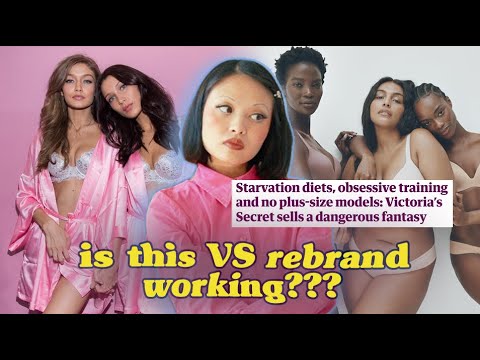
Mina Le traces Victoria’s Secret from Roy Raymond’s 1977 lingerie boutique to Les Wexner’s global retail brand, whose Angels and annual fashion show helped drive nearly $7 billion in sales. She argues that its narrow beauty ideals, harassment and trafficking scandals, limited sizing, and weak labor and environmental standards undermined its appeal, while its later inclusivity efforts struggled to match the perceived authenticity of Savage X Fenty.
Key takeaways
- Victoria’s Secret’s original upscale positioning came from Les Wexner’s 1982 $4 million acquisition and a deliberate shift from Roy Raymond’s men-focused gift-shopping concept toward selling women a romantic, premium experience.
- The Angels and fashion show made Victoria’s Secret a global spectacle, but the body ideal became increasingly narrow: model measurements declined while the average American woman’s size increased.
- Victoria’s Secret’s diversity pivot followed measurable decline: U.S. market share dropped from 33% to 24% between 2016 and 2018, and the 2018 show’s television ratings fell 30%.
- The brand’s controversies extended beyond advertising to allegations involving Jeffrey Epstein and Ed Razek, alongside reported garment-worker exploitation and weak supply-chain transparency.
- Victoria’s Secret’s later inclusion campaigns were undermined by limited product sizing: its swimwear and sportswear stopped at XXL, while competitors cited by Le offered sizes up to 4X.
- Mina Le’s comparison suggests that inclusive branding depends on more than diverse imagery: product availability, transparent labor practices, and environmental standards also shape whether customers see a campaign as credible.
Chapters
0:00
Lingerie’s History: Modesty, Function, Fashion, and Social Expectations
- Mina Le defines lingerie as a fancy subset of underwear, while using underwear as an umbrella term for bras, briefs, corsets, and related garments.
- Historical undergarments served modesty, function, and fashion: washable linen shifts protected outerwear, while corsets and farthingales shaped fashionable silhouettes.
- Le discusses how lingerie marketing often centered male approval, citing Playtex’s 1994 WonderBra ad with Eva Herzigova and the slogan “Hello boys.”
- Using Michel Foucault’s panopticon concept, Le considers whether women’s private enjoyment of lingerie can still reflect internalized social expectations, while acknowledging her own enthusiasm for it.
9:47
Roy Raymond’s Store Becomes Les Wexner’s European Glamour Brand
- Roy Raymond opened Victoria’s Secret’s first store in a Palo Alto mall in 1977, aiming to make lingerie shopping comfortable for men buying gifts.
- Les Wexner bought the six-store chain for $4 million in 1982 and shifted the business toward women customers and an upscale, romantic shopping experience.
- Victoria’s Secret cultivated faux British prestige: catalogs claimed London headquarters despite the company being based in Ohio, and phone messages used a seductive English accent.
- The brand moved from restrained socialite imagery toward heavily made-up Angels as 1990s and early-2000s fashion embraced a more overt, kitschy sexuality.
12:33
The Angels and Fashion Show Turn Victoria’s Secret into a Spectacle
- The Angel label grew from a 1997 campaign featuring Stephanie Seymour and Tyra Banks; Wexner and marketing chief Ed Razek launched the annual fashion show in 1995.
- A 1999 Super Bowl ad promoted the show’s livestream, drawing so many viewers that Victoria’s Secret’s website crashed.
- The broadcast show expanded to more than 100 countries and helped drive almost $7 billion in annual sales, with celebrity performers including Lady Gaga and the Weeknd.
- The spectacle featured campy, non-retail costumes and expensive fantasy bras, including Gisele Bündchen’s $15 million diamond-and-ruby bra in 2000.
15:43
Body Ideals, Dieting Pressure, and Ed Razek’s Diversity Backlash
- A study of Victoria’s Secret models found average measurements shrank from 32.9-24.7-34.9 inches in the 1990s to 32-23.6-34.4 inches in 2015-2018, even as the average American woman’s size increased.
- Adriana Lima said she stopped eating solid food for days and avoided water for 12 hours before a show, while Ed Razek praised her three-hour jump-rope workouts.
- In a 2018 Vogue interview, Razek rejected casting transgender and plus-size models, describing the show as a fantasy; Victoria’s Secret’s size range then ran from 30A to 40DDD.
- The 2014 “The Perfect Body” campaign showed ten similarly thin, light-skinned models; after petitions and criticism, the slogan changed to “A Body For Everybody,” but the imagery remained.
21:56
Epstein Allegations, Razek Harassment Claims, and Supply-Chain Abuses
- Jeffrey Epstein allegedly used his friendship with Les Wexner to pose as a Victoria’s Secret modeling scout and lure young women, including Alicia Arden, who said he assaulted her in 1997.
- Maria Farmer told The New Yorker that young girls, some still in school uniforms, came to Epstein’s mansion for supposed Victoria’s Secret auditions; Wexner reportedly gave Epstein his New York mansion in 1998.
- Models accused Ed Razek of unwanted kissing, groping, and career retaliation; Andi Muise said his advances preceded her exclusion from the 2008 fashion show after four years of casting.
- The brand’s labor concerns included sweatshops in Bangladesh, Sri Lanka, and Jordan, 1990s prison labor, low Fashion Transparency Index scores, and Greenpeace scrutiny over phthalates.
26:46
Falling Sales, the End of the Runway Show, and the VS Collective
- Victoria’s Secret’s U.S. market share fell from 33% in 2016 to 24% in 2018 as competitors such as Aerie, ThirdLove, and LIVELY gained customers.
- The 2018 fashion show’s television ratings dropped 30%, and customers criticized the brand’s limited bra sizing: seven cup sizes and six band sizes, according to bra specialist Courtney Killpack.
- After activist shareholder Barrington Capital criticized the brand as outdated, Victoria’s Secret added board members and transgender model Valentina Sampaio; Ed Razek resigned in 2019 and the runway show was canceled.
- In 2021, the brand replaced Angels-focused messaging with the VS Collective, including Megan Rapinoe, Eileen Gu, Paloma Elsesser, and Priyanka Chopra Jonas, and separated from L Brands.
32:11
Savage X Fenty’s Inclusive Image and the Limits of Brand Repositioning
- Savage X Fenty’s Amazon Prime runway show emphasized performance and a diverse cast, including Slick Woods, Isis King, Laverne Cox, and Paloma Elsesser, contrasting with Victoria’s Secret’s traditional catwalk format.
- Le argues that Rihanna’s public engagement with social issues made Savage X Fenty’s inclusivity feel more authentic, while Victoria’s Secret’s changes read as a public-relations response.
- Savage X Fenty also has criticisms: its $50 monthly VIP membership drew complaints about confusing sign-up design, and Good On You rated the brand “We avoid” for lack of transparency and synthetic fabrics.
- Le recommends Knickey for basic underwear and suggests organic cotton, especially in the gusset; she concludes that fast-fashion empowerment messaging conflicts with low-paid garment work and environmental harm.
Summary, takeaways, and chapters were generated by AI from the video's transcript and may contain errors. The video belongs to its creator, Mina Le.