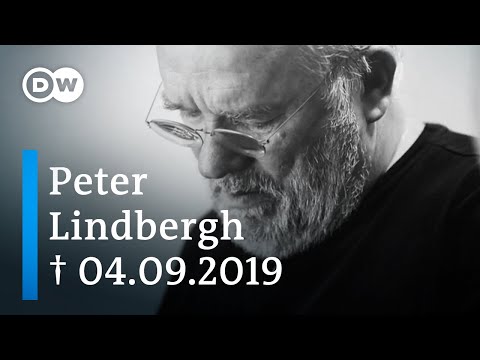
Peter Lindbergh: the supermodel photographer | DW Documentary
 Watch on YouTube →
Overview
Peter Lindbergh built a distinctive fashion-photography style around black-and-white portraits, movement, emotional candor, and close collaboration with his subjects, helping turn models such as Linda Evangelista into stars of the supermodel era. His work extended beyond fashion, from cinematic location shoots to Testament, a project in which people on death row filmed themselves looking into a mirror for 40 minutes.
Key takeaways
- Lindbergh helped redefine fashion models as independent personalities, with his portraits contributing to the rise of supermodels such as Linda Evangelista and Naomi Campbell.
- His preference for black-and-white photography and minimal makeup served an artistic goal: to make viewers attend to faces, emotional complexity, and character rather than surface styling.
- Lindbergh’s photographs depended on collaboration and trust; he regarded the image as an expression of the feelings shared by photographer and subject.
- Movement and cinematic storytelling shaped his method from his early work, influenced by German Expressionist films such as Fritz Lang’s Metropolis.
- Testament applied Lindbergh’s interest in unguarded presence to people on death row, recording each subject looking at their own reflection for 40 minutes without showing the crimes they had committed.
- Despite commercial success, including large prints valued at about 75,000 euros, Lindbergh argued that artists must evaluate their work by their own intentions rather than relying on external praise.
Chapters
0:00
Peter Lindbergh’s Signature: Emotion, Authenticity, and Storytelling
- Lindbergh became one of fashion photography’s most sought-after names, recognized for a signature that remains visible in both black-and-white and color images.
- His photographs often feel like a fleeting moment between film scenes, with the atmosphere and mystery of a larger story.
- Lindbergh works like a film director seeking a single fraction-of-a-second image that carries a scene’s emotion.
- He builds closeness with his subjects and says trust allows the women he photographs to take risks and contribute more openly.
4:15
Linda Evangelista and the Rise of the Supermodel
- Lindbergh is widely credited with helping create the supermodel era by portraying models as personalities and stars, not simply as clothing displays.
- His early-1990s fashion images helped bring models such as Linda Evangelista and Naomi Campbell into the spotlight.
- Evangelista followed Lindbergh’s suggestion to cut her hair short, a change she said took her career to a new level.
- His willingness to blur conventional gender boundaries and emphasize strong, individual faces challenged conservative fashion editors.
8:08
A Paris Fashion Shoot Built as a Photographic Love Story
- For a shoot in the Tuileries Garden, Lindbergh planned a story about a romantically involved couple and their dogs, treating the animals as essential to the narrative.
- When the crew discovered dogs were prohibited in the park, Lindbergh persuaded the guard to let the shoot proceed; missing shoes caused another delay.
- He directed the images frame by frame like a fotonovela, with scenes including a café rendezvous and a bouquet of roses.
- Lindbergh preferred black and white because he felt it revealed emotional depth, and he often had makeup removed to avoid disguising a subject’s natural face.
13:40
From Duisburg and Van Gogh to Photography Through Movement
- Lindbergh grew up in Germany’s industrial Ruhr region, left school at 14, and was drawn to the artistic work of window dressing.
- At 18, he hitchhiked to the south of France to follow Vincent van Gogh’s path, staying with farmers in exchange for work.
- Photographer Hans Lux gave Lindbergh an assistant job, where he discovered photography as a way to express himself.
- His early style favored spontaneous movement over a tripod, with inspiration from German Expressionist silent cinema, including Fritz Lang’s Metropolis.
18:30
Paris, Global Assignments, and Lindbergh’s Artistic Influences
- After fashion editors noticed a 14-page series he made for a German magazine, Lindbergh received opportunities from French publications and moved his family from Düsseldorf to Paris.
- He adopted the name Peter Lindbergh and built a career around observing and photographing people in Paris, a city he continued to value for its poetic atmosphere.
- His work took him from Paris to locations including China, where he became the first Western photographer to have a major exhibition there as part of his project The Unknown.
- Lindbergh drew on an extensive art-book library and admired figures including Max Ernst, Picasso, and playwright Antonin Artaud.
25:50
Long Workdays, Melancholy, and the Shared Feelings Behind a Portrait
- A typical Lindbergh workday could last 15 hours, and he sometimes worked through the night, saying ideas developed during hours alone.
- He was drawn to melancholy and avoided laughter in portraits because he believed it obscured the many layers visible in a face.
- At a public event, Lindbergh’s large-scale photographs were said to sell for around 75,000 euros.
- He described a portrait as the result of the feelings shared by photographer and subject, rather than simply a record of a person’s appearance.
32:35
Location Portraits, Gender Expression, and the Testament Project
- In a deserted Paris neighborhood, Lindbergh photographed a model with an Olympic-athlete background, using the apartment blocks and eerie setting to create a mysterious story.
- His images presented femininity as compatible with strength and masculinity, a quality that collaborators associated with his distinctive portraits.
- For Testament, Lindbergh filmed people on death row in the United States looking into a mirror for 40 minutes, without seeing the camera.
- The project showed subjects without explaining their crimes, leaving viewers to confront the person in the image and the experience of sustained self-reflection.
38:45
Commercial Shoots, Artistic Judgment, and Lindbergh’s Continuing Practice
- Lindbergh balanced personal projects with commercial work, including a Japanese assignment that brought 12 people from Tokyo for two photographs of one model.
- He said praise such as “wonderful” was not enough to judge an image; photographers must trace the choices in a picture back to their own intentions.
- Lindbergh emphasized staying grounded in personal roots and trusting one’s own assessment rather than accepting every compliment.
- He saw no reason to stop photographing while he could continue engaging with people and applying what he had learned.
Summary, takeaways, and chapters were generated by AI from the video's transcript and may contain errors. The video belongs to its creator, DW Documentary.