Laurel & Hardy: Seeing Double (Documentary)
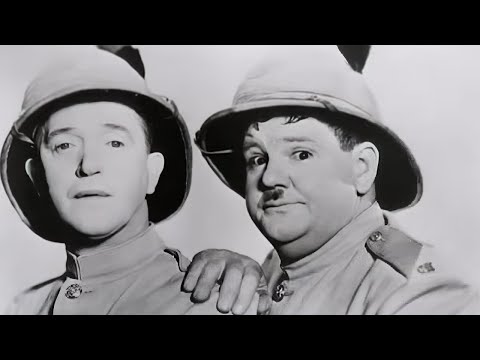 Watch on YouTube →
Overview
Laurel and Hardy’s screen partnership grew from distinct paths: Stan Laurel, born Arthur Stanley Jefferson in Lancashire, developed his comedy onstage, while Georgia-born Oliver Hardy learned filmmaking through early movie work. The documentary traces how Hal Roach, Leo McCarey, their contrasting screen personas, and carefully built comic situations made them an enduring duo, while their marriages, studio disputes, changing film formats, and declining health shaped their careers and later lives.
Key takeaways
- Stan Laurel developed his comic skills on the music-hall stage, while Oliver Hardy built his career through early film work, giving the eventual partnership complementary performance instincts.
- Leo McCarey helped shape the Laurel and Hardy pairing, whose screen chemistry relied on a sharp physical contrast and escalating mishaps involving two apparently respectable men.
- Sound strengthened rather than disrupted the act: Oliver’s deep Georgia voice and Stan’s higher-pitched English voice reinforced their contrasting characters.
- Stan’s pursuit of better pay and greater control repeatedly influenced his studio choices, including his departure from Hal Roach and his push to retain ownership of the Laurel and Hardy name.
- Their comedy often portrayed Stan and Oliver as childlike men under the authority of stern wives, a pattern the documentary relates to their strict maternal upbringings.
- Twentieth Century Fox limited the duo’s creative input, and the documentary argues that their later feature films lost some of the precision of their short-film routines even as audiences continued to watch.
Chapters
0:00
Laurel and Hardy’s Comic Legacy and the Roots of Clowning
- Arthur Stanley Jefferson and Norvell Hardy became internationally known as Stan Laurel and Oliver Hardy.
- The documentary places their physical and verbal comedy in a long tradition of clowns, from ancient Greek and Roman performers to court jesters.
- Stan cited English music-hall comedian Dan Leno as an influence, while Leno’s partnership with Herbert Campbell offers an earlier echo of the Laurel and Hardy double act.
4:00
Lancashire and Georgia: The Pair’s Births and Family Backgrounds
- Stan was born Arthur Stanley Jefferson on June 16, 1890, at Argyle Street in Ulverston, Lancashire, into a theatrical family.
- His father, A. J. Jefferson, worked as a producer, actor, and playwright; Stan’s mother was actress Madge Metcalfe.
- Oliver Hardy was born Norvell Hardy in Harlem, Georgia, on January 18, 1892, and later used Oliver in tribute to his father.
- Both fathers experienced financial reversals and shifted into managing theaters or hotels, a parallel the documentary links to the boys’ early circumstances.
8:00
Childhood, Early Performance, and the Making of Their Comic Personas
- Stan moved with his family to Glasgow in 1905 and began performing onstage in 1906, encouraged by his father after an amateur comedy appearance.
- Oliver attended Georgia Military College in 1906 and 1907, where classmates teased him about his size; singing and jokes helped him win their attention.
- Stan’s strict Methodist grandparents and Oliver’s demanding mother offered models for the scolding authority figures that often appear in their films.
- Stan’s mother died in 1908, and both men lost a parent young, a biographical detail the documentary connects to their later search for affection and approval.
12:00
Fred Karno, Charlie Chaplin, and Their First Routes to America
- Stan sailed to the United States in 1910 with the Fred Karno troupe and understudied Charlie Chaplin in the show A Night in an English Music Hall.
- Chaplin attracted early critical attention, while Stan returned to England and struggled to establish his own comedy troupe.
- Oliver opened a movie theater in Milledgeville, Georgia, in 1910, then left it in 1913 to seek work in Jacksonville, Florida.
- Watching early Keystone comedies, including performances by Roscoe “Fatty” Arbuckle, convinced Oliver that he could succeed in film comedy.
16:00
Oliver Hardy’s Early Films and Stan Laurel’s Struggling Years
- Oliver began making films for the Lubin Manufacturing Company in 1913 and became known as “Babe Hardy,” a nickname that stayed with him.
- By 1917, Oliver had appeared in more than 100 comedies for a range of small film companies, building his craft in front of the camera.
- Stan left the Karno troupe in 1913, then toured with his own acts in the United States, often facing poor financial prospects.
- In 1917, Stan began performing with Mae Dahlberg and adopted the surname Laurel; he also made his first film, Nuts in May, which is now lost.
22:00
Marriage Strains, Screen Credits, and the Hal Roach Years Begin
- Oliver’s first marriage, to pianist Madelyn Saloshin, ended in divorce; he married Myrtle Reeves in 1921.
- Stan’s relationship with Mae Dahlberg ended after producer Joe Rock paid her to leave Stan’s film work, and Stan married Lois Nelson in 1926.
- Stan and Oliver both joined Hal Roach’s studio in 1925, though Stan initially wrote and directed while Oliver continued acting.
- Stan’s recurring concern about pay influenced his studio decisions and later insistence on retaining control over the Laurel and Hardy name.
28:00
Duck Soup, Leo McCarey, and the Laurel and Hardy Partnership
- Stan and Oliver’s 1926 film Duck Soup marked an early formal pairing, with director Leo McCarey often credited with helping develop their partnership.
- Their contrasting builds and performances became the foundation of the act: Oliver projected pompous authority, while Stan played a more fragile, easily confused companion.
- Derby hats and respectable clothing presented them as ordinary men caught in escalating misfortune rather than as conventional clowns.
- The arrival of synchronized sound around 1929 suited their distinct voices, including Oliver’s deep Georgia drawl and Stan’s higher-pitched English accent.
34:00
The Music Box, Family Troubles, and Domestic Comedy
- The Music Box won the 1932 Academy Award for Best Short Subject, recognizing the duo’s physical comedy.
- Stan and Lois had a daughter, Lois, in 1927; their son Stanley Robert Jefferson died nine days after his birth in 1930.
- Oliver’s marriage to Myrtle faced severe strain amid her alcoholism, and both men had relationships outside marriage.
- Films often turned domestic conflict into comedy, casting wives as stern authority figures while Stan and Oliver behaved like children in adult bodies.
40:00
British Fame, Divorce Disputes, and the Move to Feature Films
- A 1932 publicity tour of Britain showed Stan and Oliver how strongly audiences abroad responded to their films.
- Stan and Oliver faced repeated marital disputes and financial claims; Stan’s insistence on fair pay and control remained a constant career concern.
- Sons of the Desert, released in 1933, turned the pair’s attempt to escape their wives into a comic plot.
- As they moved toward features such as Way Out West, the documentary argues that extending their tightly escalating short-film routines sometimes weakened their comic structure.
46:00
Studio Changes, The Flying Deuces, and Oliver Hardy’s New Marriage
- Stan left Hal Roach’s studio after disagreements over money and the terms of his partnership, while Oliver completed his contract.
- Oliver’s feature Zenobia paired him with Harry Langdon, but audiences preferred the established Laurel and Hardy team.
- The 1939 film The Flying Deuces includes a scene about the pair’s dependence on one another, with Stan revising the script.
- Oliver married continuity assistant Lucille Jones on March 7, 1940; she remained his partner for the rest of his life.
51:00
Twentieth Century Fox, Wartime Audiences, and the Last Film
- After leaving Hal Roach in 1940, Stan and Oliver signed with Twentieth Century Fox, where they had little creative input and their characters became broader and less nuanced.
- Wartime audiences continued to attend their films despite declining critical quality, providing income amid alimony and other financial obligations.
- Stan married Ida Kitaeva Raphael in 1946, and the documentary presents this as the stable final marriage of his life.
- The duo’s last feature, Atoll K, was made in 1950 and released in the United States as Utopia; illness and production problems contributed to its uneven result.
56:00
Farewell Tours, Final Years, and the Enduring Childlike Duo
- Their 1947 British tour drew enthusiastic crowds, and a later tour brought them to Cobh, Ireland, in 1953, where a large welcome deeply moved them.
- Oliver suffered a heart attack during the 1953 tour; after a drastic weight loss in 1956, he had a major stroke and died in 1957.
- Stan suffered a stroke while preparing television scripts and died of a heart attack in 1965, after seeing the pair’s renewed popularity and receiving an honorary Academy Award.
- The documentary’s closing interpretation is that their screen appeal came from a timeless friendship: two naive, quarrelsome characters whose childlike behavior survived as their real lives grew more complicated.
Summary, takeaways, and chapters were generated by AI from the video's transcript and may contain errors. The video belongs to its creator, Cult Cinema Classics.