Justice: What's The Right Thing To Do? Episode 01 "THE MORAL SIDE OF MURDER"
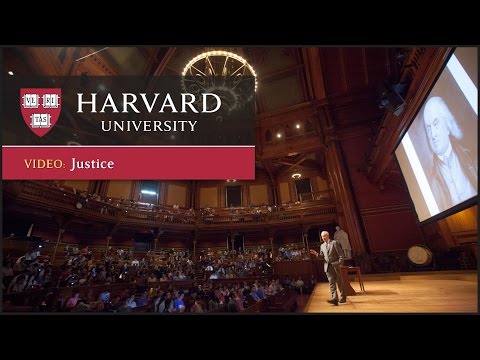 Watch on YouTube →
Overview
A Harvard justice course tests whether morality depends on consequences or on duties and rights, using trolley problems, medical choices, and the 1884 shipwreck case of R v Dudley and Stephens. It introduces Jeremy Bentham’s utilitarian principle of maximizing overall happiness, then examines how necessity, fair procedures, consent, and the categorical wrongness of murder challenge simple calculations of lives saved.
Key takeaways
- Most students accept diverting a trolley to kill one worker rather than five, but reject pushing a bystander onto the track, suggesting that outcomes alone do not explain moral judgment.
- Bentham’s utilitarianism evaluates actions and laws by whether they maximize total happiness, understood as pleasure over pain and suffering.
- The transplant-surgeon case reveals a limit of simple numerical reasoning: many people reject killing one healthy patient even to save five patients who need organs.
- In the Mignonette case, Dudley killed 17-year-old Richard Parker after the crew faced starvation, making necessity, intentional murder, and unequal power central to the moral dispute.
- Consent and a fair lottery make the shipwreck killing more acceptable to some students, but raise further questions about coercion, withdrawal, and whether procedure can justify taking a life.
- The lecture frames rights, consent, and procedural fairness as challenges that utilitarianism must answer when its calculation of overall welfare appears to permit killing an innocent person.
Chapters
0:00
The Trolley Problem: Sacrificing One to Save Five
- A trolley with failed brakes is headed toward five track workers; diverting it kills one worker on a side track.
- Most students would turn the trolley, reasoning that one death is preferable to five.
- A student objects that sacrificing one person for a larger group resembles the logic used to justify genocide.
4:14
The Footbridge, Doctor, and Transplant Variations
- On a bridge, pushing a large bystander onto the track would stop the trolley and save five, but most students reject this choice.
- Students distinguish diverting an existing threat from directly using an uninvolved person as a means.
- A doctor choosing between treating five moderately injured crash victims and one critically injured patient resembles the trolley case, while killing a healthy patient for five transplant recipients is widely rejected.
13:06
Consequentialist Outcomes Versus Categorical Duties
- Consequentialist reasoning judges an act by its results, such as saving five lives at the cost of one.
- Categorical reasoning holds that some acts, including killing an innocent person, may be wrong regardless of their consequences.
- Jeremy Bentham is introduced as a key consequentialist thinker, and Immanuel Kant as a major philosopher of categorical moral reasoning.
17:15
Why Studying Political Philosophy Can Be Unsettling
- The course connects Aristotle, John Locke, Immanuel Kant, and John Stuart Mill to contemporary disputes over equality, affirmative action, hate speech, same-sex marriage, and conscription.
- Philosophy makes familiar assumptions strange, prompting self-knowledge that cannot simply be undone.
- Socrates’ interlocutor Callicles warns that extended philosophizing can undermine practical life, while skepticism is presented as an evasion rather than a lasting answer.
24:15
Jeremy Bentham’s Principle of Utility
- The class reviews how judgments about particular cases and general principles can be revised in light of each other.
- Bentham defines utility as the balance of pleasure over pain, or happiness over suffering.
- Utilitarianism says individual decisions and public laws should maximize overall welfare, often summarized as the greatest good for the greatest number.
29:26
The Mignonette Shipwreck and Richard Parker
- In 1884, the yacht Mignonette sank in the South Atlantic, leaving Captain Dudley, first mate Stephens, sailor Brooks, and 17-year-old cabin boy Richard Parker in a lifeboat.
- After scarce food ran out and Parker became gravely ill from drinking seawater, Dudley killed him; the three survivors ate his body for four days before rescue.
- Dudley and Stephens defended the killing as necessary to save three lives, while prosecutors argued that murder remained murder.
34:34
Necessity, Survival, and the Case Against Murder
- Some students argue extreme hunger can excuse the survivors, while others say no one has authority to decide that another person must die.
- The discussion distinguishes moral permissibility from legal accountability and considers whether desperation alters judgment.
- The case tests whether saving multiple lives can justify intentionally killing an innocent person.
38:26
Consent, Coercion, and the Lottery Proposal
- Students ask whether Parker’s consent could make his killing permissible, while noting that consent under pressure may be coerced.
- A fair lottery is proposed as an alternative to Dudley choosing Parker, with some students arguing that an agreed procedure treats all four crew members equally.
- The discussion asks whether a lottery loser could withdraw consent and whether consent changes the moral status of killing.
46:13
Why Murder May Remain Wrong Even With Consent
- Some students maintain that murder is categorically wrong even if a lottery or consent could save the others.
- The class weighs wider utility, including the families and dependents of the three sailors, against Parker’s lack of family and the value of his life.
- A student argues that the same motive of providing for one’s family does not make murder acceptable in other circumstances.
51:12
Three Unresolved Questions for Utilitarianism
- The lecture identifies three questions: whether fundamental rights can outweigh overall utility, why a fair procedure can justify its outcome, and what moral force consent provides.
- The next readings are Jeremy Bentham and John Stuart Mill, whose utilitarian arguments will be examined against these challenges.
- The closing announcement directs viewers to online discussion, quizzes, and missed lectures at justiceharvard.org.
Summary, takeaways, and chapters were generated by AI from the video's transcript and may contain errors. The video belongs to its creator, Harvard University.