1972: BOBBY FISCHER - This Little Thing with Me and Spassky | Classic BBC Documentary | BBC Archive
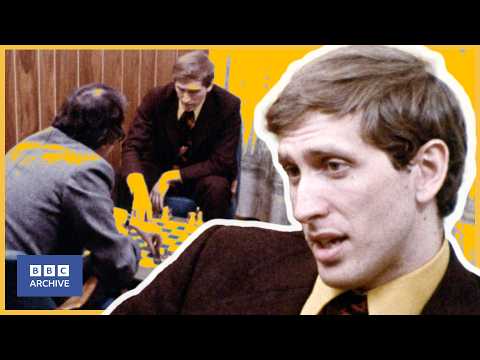 Watch on YouTube →
Overview
Bobby Fischer’s 1972 challenge to Boris Spassky in Reykjavik is framed as a Cold War contest, with Fischer seeking to end 35 years of Soviet world-champion dominance. Fischer explains how early specialization, a 20-game winning streak, disputes over Soviet tournament practices, and demands for better playing conditions shaped his career; the account also contrasts his uncompromising approach with Spassky’s composed style and outlines the 24-game match.
Key takeaways
- Fischer’s 1972 title challenge carried symbolic weight because a victory over Boris Spassky could end a 35-year run of Soviet world champions.
- Fischer tied his hostility toward Soviet chess to both personal history and tournament structure: he cited the four losses to Mikhail Tal in 1959 and alleged coordinated quick draws at Curaçao in 1962.
- Fischer’s career depended on intensive specialization: he practised alone as a child, left school at 16, and described chess as demanding a near-hermit’s routine.
- Fischer treated tournament conditions and player compensation as competitive issues, campaigning against intrusive spectators and photography while arguing that stronger Western funding would develop more top players.
- Fischer’s stated chess ideal was to choose the objectively strongest move, not a move selected to exploit an opponent’s individual style.
- The Reykjavik match format combined extreme duration with high stakes: 24 games, up to five hours per game, and a £30,000 winner’s prize.
Chapters
0:00
Reykjavik Becomes the Stage for Fischer–Spassky
- Bobby Fischer describes his match with Boris Spassky as a political microcosm, with chess replacing a direct superpower confrontation.
- The documentary introduces Reykjavik, Iceland, as the remote setting for the 1972 World Chess Championship.
- Fischer is presented as both a possible all-time great and a famously arrogant, unpredictable competitor.
- After a run of 19 victories, Fischer reached 20 consecutive wins by beating Tigran Petrosian in Argentina.
4:00
Fischer’s Grievances with Soviet Chess and the 1959 Candidates
- Fischer says Soviet publications praised his chess as a teenager but attacked his character, which he viewed as propaganda.
- The match was also a chance to break the Soviet run of world champions, which the documentary says had lasted 35 years.
- In the 1959 Candidates tournament in Yugoslavia, Mikhail Tal beat Fischer in all four games; Fischer later felt he had squandered winning positions.
- Fischer accused Soviet players at Curaçao in 1962 of making quick draws among themselves and possibly throwing games to conserve energy against him.
11:00
How Fischer Chose Chess and Built a Single-Minded Career
- Fischer says he gravitated to chess because he had heard it was the hardest board game, then practised by playing both sides against himself.
- His mother found him local opponents and chess clubs, and Fischer credits a teacher he saw about once a week for several years.
- He began competing against adults young, left high school at 16 to pursue chess, and became the youngest grandmaster at the time, aged 15.
- Fischer describes a narrow social life centered on chess friends, books, and study; the documentary depicts his routine as late-night chess work while living in hotels.
17:00
Chess Funding, Player Conditions, and Fischer’s 1968 Walkout
- Fischer argues that Western players could rival Soviet grandmasters if prize money and sustained opportunities let them focus on chess full-time.
- A strong British tournament featured nine grandmasters among 16 players, but its £7,000 cost depended partly on a £4,000 local council contribution and private donations.
- Fischer demanded basic playing conditions, objecting to flash photography, spectators crowding boards, and even an opponent whispering a move in his ear.
- After a dispute over spectators and photographers at the 1968 Lugano Chess Olympiad, Fischer withdrew from the US team and stayed away from competition for about a year and a half.
25:30
The Reykjavik Negotiations, Spassky’s Composure, and Fischer’s Analysis
- Fischer accepted Reykjavik only shortly before the deadline set by chess authorities, after months of negotiations over venue and prize money.
- Grandmaster Svetozar Gligorić describes Spassky’s poker face as a skill he developed after struggling emotionally with defeats when younger.
- Fischer says he tries to find the objectively best move rather than tailor his play to an opponent’s personality.
- Using a game between Russian champion Vladimir Savon and Walter Browne, Fischer explains how an aggressive sequence won material and forced White to resign.
31:30
The 24-Game Title Match and Fischer’s Life Beyond the Crown
- The Reykjavik championship was scheduled for 24 games, with games lasting up to five hours and each player required to make 40 moves in that period.
- The stated prize fund was £30,000 for the winner and £20,000 for the loser; Fischer says the title mattered more to him than the money.
- Fischer expects winning the crown to give him more control over his work and reduce the daily hassles surrounding his career.
- He acknowledges that specializing so completely in chess risks leaving him out of touch with ordinary life, but says he cannot imagine what else he would do.
Summary, takeaways, and chapters were generated by AI from the video's transcript and may contain errors. The video belongs to its creator, BBC Archive.