Doping Exposed: The Hidden Network Fuelling the Olympics | Java Documentary
 Watch on YouTube →
Overview
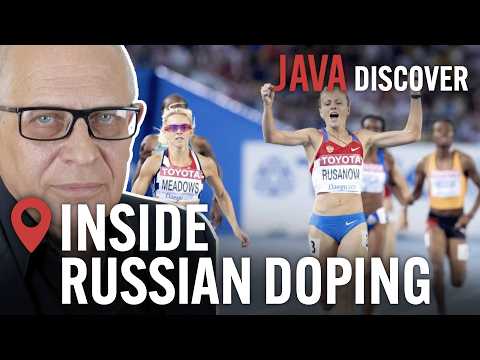
Yulia Stepanova's account of Russian athletics doping anchors an investigation into a global system involving athletes, coaches, doctors, pharmaceutical suppliers, sponsors, and sports federations. The documentary contrasts testing tools such as the biological passport and decade-long sample storage with conflicts of interest and a black market estimated at €30 billion annually, arguing that weak, self-policed oversight lets doping networks persist.
Key takeaways
- The biological passport detects patterns rather than named drugs: repeated blood-marker measurements can flag possible EPO use or transfusions even when a specific substance is not found in a sample.
- A federation that both sells competition rights and polices doping has a structural conflict of interest, especially when testing is concentrated at major events and less frequent out of competition.
- The documentary presents doping as a service network: athletes may pay for medical expertise, training plans, masking products, and treatment for side effects, not merely for drugs.
- Russian whistleblower Yulia Stepanova described test-number reporting and alleged protection by officials, while WADA later reported concealed tests, destroyed samples, and laboratory cover-ups.
- Delayed sample retesting can overturn results years later, so a medal table may remain provisional for as long as the 10-year sample-storage window.
- Independent monitoring can help rebuild trust after a ban: Alex Schwazer’s return included 40 tests in a year, compared with the two to five tests cited as typical for other athletes.
Chapters
0:00
Yulia Stepanova and the Global Economics of Doping
- Russian 800-meter runner Yulia Stepanova says EPO, testosterone, and steroids helped her achieve a 1:56.99 personal best.
- Stepanova says her coach supplied steroids in exchange for 25% of her earnings, presenting doping as an organized system rather than isolated athlete misconduct.
- The documentary estimates the doping black market at €30 billion a year and says elite athletes may spend up to €100,000 annually on advanced treatments.
- Sponsors and sports federations face incentives to protect competition and records that attract audiences and revenue.
4:32
Quentin Bigot’s Doping Path from Injury to the 2014 Positive Test
- French hammer thrower Quentin Bigot tested positive for an anabolic steroid at the 2014 European Championships; his coach, Raphael Pantalé, was indicted for inciting doping.
- Bigot says he began doping after an injury in 2012, when he was three meters short of qualifying for the London Olympics and his coach argued that rivals were using drugs.
- He describes using gonadotropin, testosterone injections, and oral steroids, with a course reportedly adding two or three meters to his throw.
- Bigot identifies his 2011 European junior title as the major medal he believes he won without doping and later says he wants to test his ability clean.
9:08
WADA, IAAF Testing, and the Biological Passport
- The World Anti-Doping Agency (WADA) was created in 1999, while a 2005 UNESCO convention committed 191 states to harmonize anti-doping laws.
- At the 2015 Beijing World Athletics Championships, the IAAF planned more than 500 tests; urine samples were split into A and B bottles and screened for hundreds of substances.
- Blood testing supports the biological passport, which tracks markers over time to flag suspicious changes associated with EPO or blood transfusions.
- The documentary highlights a governance problem: sports federations both organize competitions and enforce anti-doping rules, while stored samples can be retested for up to 10 years.
16:30
Delayed Retests, Jamaican Sprinting, and Sponsor Incentives
- Retesting years later has stripped medals from athletes including Russian steeplechaser Yuliya Zaripova and members of the U.S. relay team; results from the 2016 Rio Olympics could remain unsettled until 2026.
- The documentary raises concerns about gaps in Jamaican testing, including an alleged six-month absence of urine tests before the 2012 London Olympics, when Usain Bolt won three gold medals.
- It contrasts Bolt with Justin Gatlin, who served two doping suspensions and later returned to elite sprinting, while scientists discuss possible long-lasting effects of doping on gene expression.
- Nike continued sponsoring Gatlin after his suspension, illustrating the tension between anti-doping messaging and commercial rewards for successful athletes.
22:02
Yulia and Vitaly Stepanov Expose Russia’s Athletics System
- Yulia Stepanova and her husband Vitaly Stepanov described systematic doping in Russian athletics, alleging involvement by sports and medical officials and protection by the state.
- Yulia says doctor Sergey Portugalov prescribed doping and instructed her to send him her test number; she says she tested positive three times during Russian competitions without being disqualified.
- Vitaly says Russian athletes were screened before international travel, but laboratory directors could share changing detection information to help athletes avoid positive results.
- The couple fled to Berlin and said they feared for their safety; WADA opened an investigation while Yulia tried to rebuild her running career clean.
30:25
Football’s Testing Gaps and a History of Club-Supervised Doping
- The documentary argues doping can matter even in technical sports such as football: reducing fatigue can give one player an advantage late in a match.
- FIFA reported no positive tests at the 2014 World Cup, but the film notes that samples from 1998 were destroyed, no blood samples were taken in 2006, and the 2014 testing lab was more than 12 hours from Rio.
- Former player Rudi Völler questions whether football testing has kept pace with the sport’s increased speed and physical demands.
- Accounts cited in the documentary include amphetamine use by West Germany at the 1986 World Cup, blood transfusions at Juventus, and steroid provision to players at Stuttgart and Freiburg.
37:26
Barcelona’s Platelet Therapy and Anti-Doping Governance Conflicts
- Barcelona doctor Ramon Cugat describes platelet-rich plasma therapy, concentrating platelets by a factor of 2.5 to 3 before reinjecting them to support injury recovery.
- The documentary says cell therapies were prohibited by WADA in 2005, then describes how the method was later accepted after research examining whether growth factors cause muscle hypertrophy.
- It argues that wealthy clubs, including Real Madrid, can influence scientific and regulatory debates because of their financial power.
- The film also points to tennis and golf as sports where circuit organizations oversee their own anti-doping tests, creating potential conflicts of interest.
41:34
The €30 Billion Doping Market and Balkan Pharmaceuticals
- The documentary describes bodybuilding as a major consumer of black-market substances and says criminal organizations help distribute products across Europe and beyond.
- Balkan Pharmaceuticals in Moldova is presented as a legal manufacturer whose products, including clomiphene, liothyronine, and clenbuterol, may be diverted for performance or physique enhancement.
- Online orders for substances such as growth hormone, TB-500, and the highly toxic weight-loss chemical DNP move across borders through payment accounts and mail shipments.
- The film cites FG-4592, then under pharmaceutical investigation for anemia, as an example of an experimental substance sold online for about €400 per gram.
47:08
Michele Ferrari, Alex Schwazer, and Paid Medical Support
- The documentary describes three levels of doping expenditure: basic products at national level, around €30,000 for advanced hormones and medical support, and up to €100,000 for elite-level substances and masking methods.
- Cycling doctor Michele Ferrari, banned by the Italian Cycling Federation in 2002, is described as continuing to work discreetly with athletes.
- Olympic race-walking champion Alex Schwazer says he paid Ferrari €20,000 in cash after sponsor Petro Ferlengo introduced them; Schwazer later tested positive for EPO.
- After serving a four-year suspension, Schwazer returned with coach and anti-doping advocate Sandro Donati and underwent 40 tests in one year, far above the usual two to five.
53:17
WADA’s Russia Findings and the Cost to Whistleblowers
- WADA’s independent commission reported laboratory cover-ups, destruction of samples, and payments to conceal doping tests in Russia, concluding that state authorities knew of or permitted the practices.
- The commission recommended suspending the Russian Athletics Federation, and Russia’s participation in international athletics was suspended pending compliance with anti-doping rules.
- Yulia Stepanova says she was disqualified despite helping expose the system, while she and Vitaly felt international sports institutions had abandoned them.
- The documentary closes on the deterrent effect of punishing whistleblowers: athletes may be less willing to report corruption if they risk losing their own competitive eligibility.
Summary, takeaways, and chapters were generated by AI from the video's transcript and may contain errors. The video belongs to its creator, Java Discover | Free Global Documentaries & Clips.