Dave Chappelle on Why He Wants to Quit Stand-Up Comedy
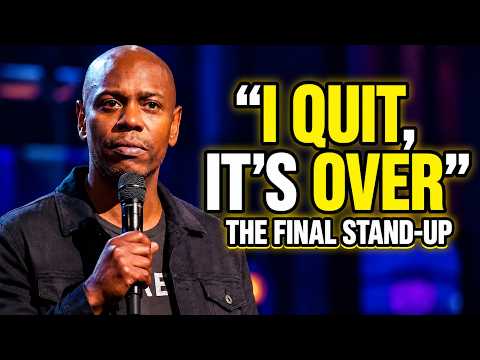 Watch on YouTube →
Overview
Dave Chappelle jokes that he considers quitting stand-up because he is so good at it that performing feels predictable, then says a more serious reason is that audiences have become too sensitive to comedy. He demonstrates his punchline-first writing and uses stories about growing up in Silver Spring, an audience member at a show, his Filipino wife, and Rachel Dolezal to explore the risks and boundaries of jokes about identity.
Key takeaways
- Chappelle describes a punchline-first writing method: he collects standalone endings in a fishbowl and later tries to create setups that make them work.
- His stated reasons for considering retirement are both professional and cultural: he says his performances feel predictable because of his skill, but also that audience sensitivity makes large-stage comedy difficult.
- The Stove Top Stuffing story demonstrates how Chappelle builds a long childhood narrative around a punchline he has already disclosed to the audience.
- A concert anecdote about an Asian woman and her Mexican husband shows how a joke that played well with a crowd led to a later complaint to Chappelle’s promoter.
- Chappelle contrasts transgender identity with Rachel Dolezal’s claim to Black identity, using that distinction to argue for recognizing sincerity while continuing to joke about sensitive subjects.
Chapters
0:00
Dave Chappelle’s Punchline-First Writing and Silver Spring Childhood
- Chappelle jokes that he may quit because he is exceptionally good at stand-up and knows a set will go well.
- He describes writing jokes backward: saving standalone punchlines in a fishbowl and inventing setups later.
- A childhood story set in Silver Spring builds toward a prepared punchline about a friend’s family running short on Stove Top Stuffing.
- Chappelle contrasts his childhood poverty around white families with the communal poverty he associates with the projects.
7:52
Chappelle’s Complaint About Audience Sensitivity and a Show-Crowd Dispute
- Chappelle identifies audience reactions on large stages, not his confidence in his craft, as the more serious reason he considers leaving comedy.
- He recounts a Chappelle’s Show-era concert where he joked about an Asian woman and her Mexican husband, then faced her complaint to his promoter.
- He says the woman called him racist and objected to jokes about her interracial marriage, while noting that his own wife is Filipino.
- The story illustrates his view that a crowd may enjoy a risky joke in the moment even when an individual audience member later objects.
12:50
Transgender Backlash, Rachel Dolezal, and Chappelle’s Boundaries for Identity Jokes
- Chappelle says transgender audiences were particularly angry about his previous Netflix special and presents the backlash as an example of comedy’s changing limits.
- He distinguishes transgender people from Rachel Dolezal, arguing that he believes transgender people are sincere about their identities even when he says he does not understand them.
- He uses Dolezal’s claimed Black identity as the basis for jokes about what would count as proof of belonging, including changing her name to Draymond Green.
- The closing material continues Chappelle’s argument that comedy should address identity and controversy, while deliberately testing the audience’s tolerance.
Summary, takeaways, and chapters were generated by AI from the video's transcript and may contain errors. The video belongs to its creator, Saif Ansari.