BIO 105 CH4 - Introduction to Ecology Lecture
 Watch on YouTube →
Overview
Evolution connects ecological conditions to changes in populations: Darwin's natural selection explains how heritable traits can become more common, while Mendel's work on genes and alleles explains inheritance. Common-garden experiments, the Hardy-Weinberg principle, and examples including swallowtail butterflies, Ural owls, Darwin's finches, genetic drift, artificial selection, and herbicide-resistant weeds show how selection and chance alter genetic variation across generations.
Key takeaways
- Natural selection produces evolutionary change only when trait variation has a heritable component and individuals with different phenotypes leave different numbers of descendants.
- A common-garden experiment separates genetic differentiation from environmental effects by growing organisms from different populations under comparable conditions; Potentilla glandulosa showed both local adaptation and phenotypic plasticity.
- The Hardy-Weinberg principle is a baseline for populations without evolutionary forces, and departures from its assumptions point to mechanisms such as mutation, migration, drift, or selection.
- Genetic drift is chance-driven rather than fitness-driven, and founder effects or population bottlenecks can reduce genetic diversity, making small populations especially vulnerable.
- Ecological resources can favor different trait distributions: intermediate egg sizes in Ural owls illustrate stabilizing selection, while food resources can favor both small and large beaks in Geospiza fortis.
- Herbicide resistance in Johnson grass is evolution by selection: repeated glyphosate exposure increases the population share of resistant individuals because they survive and reproduce.
Chapters
- Darwin connected Thomas Malthus's observation that populations can outgrow resources to competition: individuals with favorable heritable traits may leave more offspring.
- Natural selection requires inherited resemblance, heritable variation, more offspring than resources can support, and differences in reproductive success.
- Fitness means reproductive contribution to future generations, not simply strength; individuals experience selection, but populations evolve.
- Gregor Mendel's pea experiments established discrete inheritance through genes and alternative alleles, complementing Darwin's account of selection.
- Common-garden experiments with Potentilla glandulosa compared plants from low, middle, and high elevations, revealing both genetic differences among populations and phenotypic plasticity.
- The Hardy-Weinberg model predicts stable genotype frequencies when its assumptions hold: random mating, no mutation, a large population, no immigration, and equal genotype fitness.
- Stabilizing selection favors intermediate phenotypes, directional selection favors one extreme, and disruptive selection favors both extremes over intermediates.
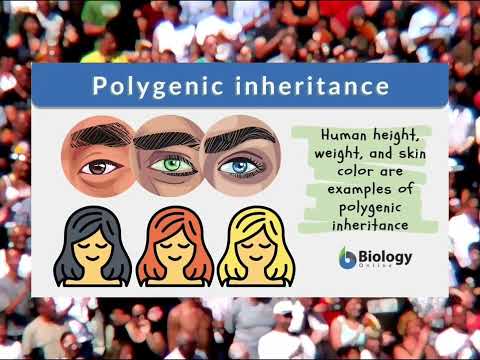
- Continuous traits such as body size and beak depth are often polygenic, so selection can shift trait distributions rather than simply favoring one allele.
- Ural owl research found egg size was heritable and intermediate egg sizes had greater reproductive success than either extreme, consistent with stabilizing selection and investment trade-offs.
- Soapberry bug beak length corresponds to host fruit dimensions: seed depth can favor longer beaks, while shallower seeds can favor shorter ones.
- In Geospiza fortis finches, small and large beaks can be favored when food resources suit both extremes, leaving intermediate beaks less common.
- Genetic drift changes allele frequencies by chance; founder effects begin with a small colonizing group, while bottlenecks sharply reduce an existing population.
- Small Finnish meadow butterfly populations had lower heterozygosity and more inbreeding, associated with smaller larvae, lower juvenile survival, and shorter lifespans.
- Artificial selection uses human-chosen breeding, as in dog breeds such as Chihuahuas and German Shepherds; genetic engineering instead directly adds or deletes genes.
- Crops engineered with bacterial genes for pest resistance raise ecological questions about gene flow into other populations and altered interactions.
- Repeated glyphosate use selects for resistant Johnson grass when resistant weeds survive and reproduce; the herbicide favors existing or newly arising variation rather than making individual weeds adapt on demand.
Transcript excerpt
0:00 In the last few chapters, we've been asking why organisms occur where they do. Now, we're going to ask a deeper question. Why do organisms have the traits they have in the first place? And more importantly, how can those traits change across generations? This is where ecology and evolution become difficult to separate. The environment creates selective pressures. Populations contain genetic variation. And over time, those two things interact. That's the basic connection we'll build throughout this chapter. Think back to the environmental variation we've already discussed. Temperature changes, rainfall changes, food availability changes, competitors and predators change. So if environments vary, we should expect organisms living in those environments to face different selective
0:47 pressures. That's where evolution enters ecology. Evolution is change in the genetic characteristics of populations over time. Darwin's major contribution was proposing a mechanism that could produce that change, natural selection. And notice the scale here. Individuals experience selection, but populations evolve. That distinction is going to matter throughout the chapter. Darwin's thinking developed gradually. His 1835 visit to the Gopagos Islands helped convince him that populations could be modified from ancestral forms. But another important influence came a few years later from Thomas Mouthys. Mouthys argued that populations have the potential to grow faster than available resources. Darwin recognized the
1:34 biological implication. If more individuals are produced than can survive and reproduce, then individuals possessing certain favorable characteristics may leave more offspring. Over generations, those characteristics can become more common. That's the foundation of natural selection. And when we use the phrase survival of the fittest, remember that fitness does not simply mean strength. Ultimately, it refers to reproductive contribution to future generations. Darwin's argument can be reduced to a surprisingly small number of ideas. First, offspring tend to resemble their parents. Second, individuals within a
This is the start of the transcript. Save this video free for the whole transcript, searchable and time-coded.
Related notes
Summary, takeaways, and chapters were generated by AI from the video's transcript and may contain errors. The video belongs to its creator, Dakota Shade.