1. Introduction to the Human Brain
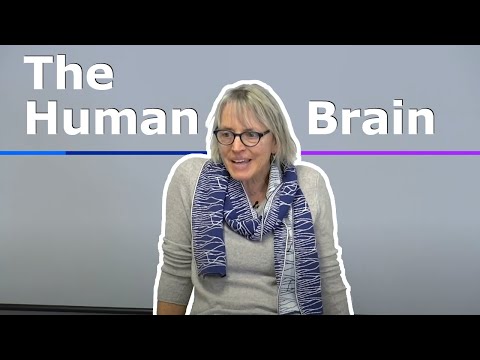 Watch on YouTube →
Overview
Nancy Kanwisher uses the case of her friend “Bob,” whose slowly growing meningioma damaged navigation while leaving many other abilities intact, to show how specialized brain systems can reveal the organization of the mind and why adult recovery from some brain injuries is limited. She outlines human cognitive neuroscience methods and course topics, and compares human abilities with deep-learning systems such as AlexNet, which approached human performance on ImageNet but struggled with atypical images and deeper scene understanding.
Key takeaways
- Bob’s meningioma caused a selective navigation deficit while preserving driving, familiar-place recognition, distance estimation, and immediate spatial orientation, illustrating that mental abilities can depend on separable brain systems.
- Bob’s tumor grew from about grape size to lime size over several years; earlier scans provided evidence of slow growth that helped doctors assess the case.
- After tumor removal, Bob did not regain navigation and relies on iPhone GPS; he can follow memorized turn sequences but cannot flexibly reroute when a familiar path is blocked.
- AlexNet’s 2012 ImageNet breakthrough brought machine object recognition closer to human performance, but later tests found ResNet accuracy dropped from 71% to about 25% on more varied images.
- Functional MRI helped expand brain-function maps from a few recognized regions in 1990 to dozens of regions with identified functions, enabling research across vision, navigation, number, language, and social cognition.
- Kanwisher’s recommended way to read a research paper is to identify its question, result, interpretation, and experimental design, using abstracts, figures, and methods selectively rather than trying to understand every technical detail.
Chapters
- Nancy Kanwisher introduces MIT course 9.13, The Human Brain, and previews a personal story followed by the course’s rationale, methods, topics, and logistics.
- The story will foreshadow brain specialization, the consequences of damage, and recovery, rather than supply material for a test.
- Kanwisher hears a crash at her Cambridge home and finds Bob unconscious on the floor, then calls 911.
- EMTs find no obvious problem, so Kanwisher drives Bob to Mount Auburn Hospital for tests after he wakes up woozy and confused.
- Bob had repeatedly become lost, including giving the wrong turn from his own driveway and failing to find familiar destinations in his hometown.
- Kanwisher had noticed a research poster linking navigation deficits with early Alzheimer’s, but Bob’s high-powered job, humor, and writing had led her to discount the signs.
- She tells the emergency physician to check Bob’s brain, while the physician initially suspects a heart problem.
- Bob calls Kanwisher that evening to say doctors found a lime-sized mass near the center of his brain.
- The mass lies beside the parahippocampal place area, discovered in Kanwisher’s lab, and near the retrosplenial cortex, regions associated with navigation.
- Kanwisher recalls how Russell Epstein’s interest in scene recognition led to an fMRI experiment that identified the parahippocampal place area.
- Kanwisher’s lab finds an earlier scan showing the mass at roughly grape size, indicating slow growth and helping doctors assess its likely severity.
- Doctors diagnose a meningioma, a tumor that is not cancer but can still require removal when large.
- Before surgery, Bob cannot draw coherent floor plans of his own or Kanwisher’s house, but can place the parts of a bicycle and lobster in recognizable relationships.
- Bob undergoes an 11-hour operation to remove a mass wrapped around the vein of Galen; he is speaking coherently shortly after surgery and returns home within two days.
- His navigation impairment remains, although driving, recognizing familiar places, estimating distance, and immediate left-right orientation are preserved.
- Bob relies on iPhone GPS, can follow overlearned routes as sequences of turns, but cannot reliably build alternate routes or navigate unfamiliar buildings.
- Bob’s case shows that brain damage need not lower general intelligence: it can remove a particular ability while leaving many others intact.
- Kanwisher argues that some brain regions perform highly specific functions, while others participate in broader processes.
- Comparing preserved and impaired abilities helps researchers identify separable components of the mind, alongside anatomical scans and functional imaging.
- Children may recover from some brain injuries more readily than adults because developing brains are more plastic.
- Kanwisher frames the brain as central to personal identity: replacing a heart preserves a person, but replacing a brain would not.
- Studying the mind can serve as empirical epistemology, helping researchers examine the limits of human knowledge and what people may be unable to understand.
- Deep learning has changed comparisons between people and machines; AlexNet, trained on more than one million ImageNet images, markedly improved object recognition in a 2012 paper by Alex Krizhevsky and colleagues.
- AlexNet could classify challenging ImageNet examples, but ImageNet photographs represent a restricted sample of visual experience.
- Research by Boris Katz and Andrei Barbu found that ResNet accuracy fell from 71% on ImageNet to about 25% on more varied, atypical images, while people remained comparatively capable.
- Image-captioning systems can label visible objects yet miss social context and implied events, such as the joke in an image involving Barack Obama and a weighing scale.
- Kanwisher argues that deep nets are strong at pattern classification but lack robust models of the world, other people’s beliefs, and the meaning of complex scenes.
- The course asks how the brain gives rise to the mind, beginning with mental functions such as vision, hearing, language, and social cognition.
- For each function, students will examine what the mind computes, whether specialized brain machinery supports it, and what information that machinery represents.
- Methods include psychophysics, perceptual illusions, neuropsychology, fMRI, single-neuron recordings, EEG, MEG, and diffusion tractography.
- Kanwisher clarifies that the course includes substantial cognitive science because brain biology is meaningful in relation to the mental functions it implements.
- By 1990, researchers knew primary sensory and motor areas, language regions associated with Broca and Wernicke, and some areas implicated in face recognition and attention.
- Functional MRI has since helped identify dozens of regions with understood functions in the human brain.
- Course topics include color, shape, motion, faces, places, bodies, words, scenes, navigation, number, speech, music, language, and understanding other minds.
- Recurring questions include how brain systems develop, whether they have counterparts in other species, and how much knowledge comes from genes versus experience.
- The course gives limited coverage to motor control, subcortical function, decision-making, memory, attention, reward systems, and neuron-level explanations of complex human cognition.
- Kanwisher notes that researchers do not yet have wiring-diagram explanations for high-level abilities such as understanding a sentence, though precise circuits are known for simpler cases such as mouse fear conditioning.
- The course is designed as a tier-two offering for students who have taken 9.00 or 9.01, with optional background material for others.
- Learning goals emphasize theoretical questions, how research methods complement one another, knowledge of selected cognitive domains, and the ability to read current research papers.
- The grade includes a midterm worth 25%, a cumulative final worth 25%, regular short responses to research papers, about eight brief quizzes, and a longer experiment-design assignment.
- Students will generally read about two papers each week, with a short written response to one; Kanwisher stresses that understanding even a short scientific paper can take hours.
- Assignments are submitted through Stellar and are generally due at 6:00 PM the night before the related class.
- The course skips a textbook in favor of original research articles, many selected from work published in the previous year or two.
- The opening classes cover basic neuroanatomy and a human brain dissection with neuroscientist Ann Graybiel, followed by lectures on high-level vision and debates about functional specialization.
- Later units examine scene perception, navigation, brain development, blindness, number, and pleasure, pain, and reward.
- The second half focuses on more distinctly human capacities, including speech, music, language, theory of mind, and brain networks.
- Students design an experiment, refine it in groups, and attend guest lectures on brain-machine interfaces and deep networks.
- Kanwisher recommends starting with the title and abstract, then identifying the paper’s research question, findings, and interpretation.
- Readers should inspect figures, methods, and results as needed to reconstruct the experimental design and data analysis rather than reading every section straight through.
- For an fMRI example on the fusiform face area, the relevant questions include whether responses differ for upright versus inverted faces and what that implies about face-specific processing.
- Students can generally skip technical details such as scanner specifications and MRI acquisition procedures, while maintaining basic familiarity with p-values, t-tests, ANOVAs, and correlations.
Transcript excerpt
0:00 [SQUEAKING] [RUSTLING] [CLICKING] NANCY KANWISHER: All right. It's 11:05. I'm going to try to start promptly at 11:05 each time. So welcome. Is everybody psyched? I'm psyched. This is 913, the Human Brain. I'm Nancy Kanwisher. I'm the prof for this class. And lest, you were wondering, I have a brain, and there it is. That's me, with some bits colored in that you will learn about in this class. OK. What I'm going to do today is I'm going to tell you a brief story for around 10 minutes. And then I'm going to talk about the why, how, and what studying the human brain, why it's a cool thing to do, how you do it, and what in particular
0:48 we're going to learn about in here, and then we'll do some mechanics and details of the course, and allocation of grades, and all that. It's on the syllabus anyway. Cool? That's the agenda. All right. So let's start with that story. And for this, I'm going to sit up here. The story isn't that long, but it has a lot of interesting little weird bits. So I have cue cards to remind myself of all the bits I want to remember to say. So you can put away your phones and your computers. And you don't need to take notes. This is just a story. It's going to foreshadow a lot of the themes in the course, but it's not stuff you're going to be tested on. OK. So this is a true story, and I've changed only a few tiny little bits
1:38 to protect the identity of the people involved. But otherwise, it's an absolutely true story. It's a story about a scary medical situation that happened to a friend of mine a few years ago. But at the same time, it's a story
This is the start of the transcript. Save this video free for the whole transcript, searchable and time-coded.
Related notes
Summary, takeaways, and chapters were generated by AI from the video's transcript and may contain errors. The video belongs to its creator, MIT OpenCourseWare.