Acid-Base Rxns, Redox Rxns, and Oxidation States
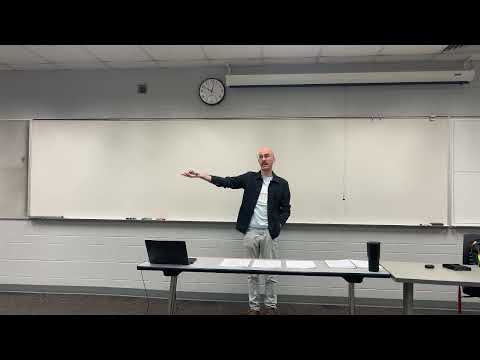 Watch on YouTube →
Overview
John Flood reviews Brønsted-Lowry acids and bases, neutralization, and how to balance acid-base equations by matching proton donors with proton acceptors. He then introduces redox reactions, oxidation and reduction agents, and oxidation-state rules, applying them to magnesium chloride electrolysis and methane combustion.
Key takeaways
- Acid-base equations can often be balanced efficiently by matching proton equivalents: each OH− accepts one H+, while a polyprotic acid or carbonate can supply or accept multiple equivalents.
- A neutralization produces water and a salt formed from the leftover ions; proton-transfer reactions that produce another acid, such as sulfuric acid reacting with acetate, are not neutralizations.
- OIL RIG tracks electron movement, while agent names describe effects on the other reactant: an oxidizing agent is reduced, and a reducing agent is oxidized.
- Oxidation states can expose redox changes in covalent reactions: methane combustion changes carbon from −4 to +4 and oxygen from 0 to −2, while hydrogen stays at +1.
- Oxidation state and formal charge are related but not interchangeable: oxidation state follows electronegativity-based electron control, whereas formal charge uses valence-electron bookkeeping.
Chapters
- An acid donates a proton, H+, or produces H3O+ in water under the Arrhenius definition.
- Most familiar acids, including HCl, HBr, H2SO4, and HNO3, begin with H in their formulas.
- Acetic acid, CH3CO2H, is an exception because its acidic hydrogen appears at the end of the formula.
- The Brønsted-Lowry definition identifies a base as a proton acceptor; the Arrhenius definition focuses on producing OH− in water.
- A hydroxide-containing compound such as NaOH can dissociate to release OH−.
- Other compounds act as bases by accepting a proton from water, leaving hydroxide behind.
- Group 1 hydroxides such as LiOH, NaOH, and KOH are classified as strong bases.
- Many Group 2 hydroxides, including Ca(OH)2, Sr(OH)2, and Ba(OH)2, are also treated as strong bases.
- Other bases are weak because they do not readily produce OH− or accept protons in solution.
- A neutralization combines an acid's H+ with a base's OH− to form covalent H2O.
- The salt consists of the acid's leftover anion and the base's leftover cation.
- HCl reacting with NaOH forms water and sodium chloride, not water made from persistent H+ and OH− ions.
- The carbonate ion, CO3^2−, can accept two protons, while nitric acid donates one proton per molecule.
- The reaction therefore requires two HNO3 for each Na2CO3 to match proton donors with acceptors.
- Balancing the proton equivalents also sets the amount of sodium nitrate salt produced.
- Acetate accepts a proton to become its conjugate acid, acetic acid, CH3CO2H.
- One H2SO4 donates two protons, so the example uses two acetate ions and forms two acetic acid molecules.
- Flood distinguishes this proton-transfer reaction from neutralization because it forms an acid rather than water.
- Phosphoric acid reacts with calcium hydroxide to produce water and calcium phosphate.
- Ca2+ and PO4^3− combine in a 3:2 ratio to give Ca3(PO4)2.
- Determining the salt's ionic formula first is necessary before balancing the complete equation.
- The balanced reaction is 2 H3PO4 + 3 Ca(OH)2 → 6 H2O + Ca3(PO4)2.
- Two molecules of triprotic H3PO4 supply six H+, matched by six OH− from three Ca(OH)2.
- The coefficients express the same 2:3:6:1 ratio whether counting molecules or moles.
- For barium hydroxide and hypochlorous acid, the products are water and barium hypochlorite, Ba(ClO)2.
- For potassium hydroxide and sulfurous acid, the salt is potassium sulfite, K2SO3, requiring two potassium ions per sulfite ion.
- Lithium hydroxide and acetic acid form water and lithium acetate in a 1:1:1:1 equation.
- A diprotic acid such as H2SO3 supplies two protons, while each hydroxide accepts one.
- Two KOH are needed per H2SO3, producing two H2O and one K2SO3.
- Identifying ion charges and polyatomic ions, including ClO− and SO3^2−, is essential for predicting products.
- The mnemonic OIL RIG means oxidation is loss of electrons and reduction is gain of electrons.
- Electrons lost by one species must be accepted by another, so oxidation and reduction occur together.
- Redox processes can be represented as separate half-reactions or combined into one full reaction.
- An oxidizing agent causes another species to lose electrons, and the agent itself gains electrons and is reduced.
- A reducing agent supplies electrons to another species, and the agent itself loses electrons and is oxidized.
- The agent names describe their effects on other reactants, not what happens to the agents themselves.
- In MgCl2 electrolysis, 2 Cl− → Cl2 + 2 e− is the oxidation half-reaction.
- The reduction half-reaction is Mg2+ + 2 e− → Mg.
- Mg2+ is the oxidizing agent and chloride is the reducing agent; the industrial process requires electrical energy.
- Methane reacts with oxygen to form carbon dioxide and water: CH4 + 2 O2 → CO2 + 2 H2O.
- Unlike magnesium chloride electrolysis, methane combustion involves covalent molecules rather than ionic reactants.
- Oxidation states allow electron-transfer changes to be tracked even when electrons are not transferred as free ions.
- Balancing methane combustion proceeds by matching carbon first, hydrogen second, and oxygen last.
- The resulting coefficients are 1 CH4, 2 O2, 1 CO2, and 2 H2O.
- Flood contrasts this with balancing acid-base reactions by proton equivalents and double-displacement reactions by polyatomic ions.
- Oxidation state, also called oxidation number, describes an atom's control over bonding electrons through electronegativity.
- Formal charge measures an electron-count imbalance using valence electrons, nonbonding electrons, and half of bonding electrons.
- The sum of oxidation states in a molecule or ion equals its overall charge, even though oxidation state and formal charge are distinct.
- A bond to a more electronegative atom contributes a positive assignment for the less electronegative atom.
- A bond to a less electronegative atom contributes a negative assignment for the more electronegative atom.
- The bond-based approach relies on electronegativity rather than the valence-electron bookkeeping used for formal charge.
- Uncombined elements have oxidation state zero, including H2, N2, O2, F2, Cl2, Br2, and I2.
- A monatomic ion's oxidation state equals its charge: Ca2+ is +2 and N3− is −3.
- For iron, Fe3+ is more oxidized than Fe2+ because it has lost more electrons; the suffixes -ic and -ous traditionally distinguish higher and lower oxidation.
- Hydrogen is usually +1 when bonded to nonmetals, but it is −1 in metal hydrides such as NaH.
- Oxygen is usually −2, while each oxygen in hydrogen peroxide, H2O2, is −1.
- Halogens are generally −1, but can be positive when bonded to oxygen, which is more electronegative.
- In CH4, each hydrogen is +1 and carbon is −4; in CO2, oxygen is −2 and carbon is +4.
- Carbon's change from −4 to +4 is oxidation, making methane the reducing agent.
- Oxygen changes from 0 in O2 to −2 in the products, so O2 is reduced and is the oxidizing agent; hydrogen remains +1.
- The assigned oxidation-state table requires Lewis structures to count bonds and determine formal charges.
- Students are asked to compare species such as sulfate and sulfite, then identify what is oxidized or reduced.
- The next class is planned to continue oxidation states, begin stoichiometry, and start Unit 7 on gas laws.
Transcript excerpt
0:05 Yesterday we started our our intro into acid base chemistry. So could someone share as a reminder what is an acid? An acid has more hydrogen ions. An acid donates hydrogen ions willing to donate a proton which the definition of a proton is the hydrogen ion H+. So two definitions uh an acid donates protons an acid protonates something else. um or Aranius's definition, an acid produces
0:56 um HL H30 plus in water. Now, I want to point out something about acids that you guys may have seen in real cam, you may have seen other places, or you may have just noticed the pattern. H F H Cl H Br 2SO4 H NO3 H. We could keep going. There's all of the acids seem to start with H. And this is a pattern people will tell you to point out. Acids start with H. That's almost always true. But there is one acid that does not
1:45 generally start with H. We don't usually write its chemical formula starting with an H. And that is acetic acid. Okay, you guys are going to have to help me out here. You said you you are used to writing acetate as C2 H3O2 minus. How are you used to writing acetic acid C2H42? I hope not because that is a weird way of writing it. This is the chemical formula of acetic acid by by its name. You can tell it's an acid, right? Acetic acid, the conjugate acid of acetate. But the H is not coming out front. Another way that people write acetic
2:32 acid, they'll write it as CH3 C or CH3 CO2 H. What's the challenge there? It doesn't start with H. It ends with H. The acidic proton is at the end of the molecule in at the end of the molecular
This is the start of the transcript. Save this video free for the whole transcript, searchable and time-coded.
Related notes
Summary, takeaways, and chapters were generated by AI from the video's transcript and may contain errors. The video belongs to its creator, John Flood Chemistry.