Princeton Intro to Robotics (Fall 2026) | Lecture 7: Stability and PD Control
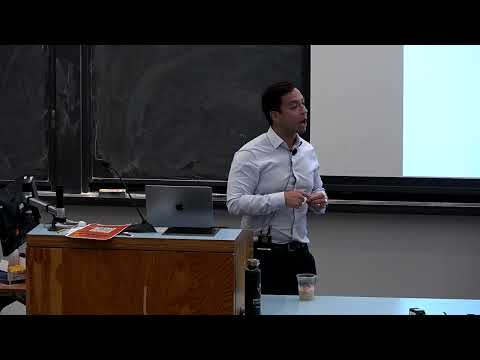 Watch on YouTube →
Overview
Princeton Intro to Robotics Lecture 7 explains why a planned trajectory alone cannot reliably control a drone: numerical integration error and 10% errors in mass or inertia can cause substantial deviations or collisions. It defines fixed points, global and local attractivity, Lyapunov stability, and stabilizability, then derives a proportional-derivative controller for vertical drone hovering, where negative proportional and derivative gains create restoring force and damping.
Key takeaways
- Open-loop trajectory execution is fragile: a 10% mass mismatch caused the planar quadrotor to collide with an obstacle, while a 10% inertia mismatch produced a large near-collision deviation.
- Global attractivity guarantees convergence from every initial state but says nothing about how long convergence takes or how far the system may travel before reaching the goal.
- Lyapunov stability and attractivity serve different purposes: attractivity ensures eventual convergence, while Lyapunov stability prevents sufficiently nearby states from straying beyond a chosen bound.
- For the example system, an uncontrolled state satisfying x₁-dot = x₁ makes global stabilization impossible because every nonzero x₁ grows; changing its dynamics to x₁-dot = −x₁ makes it naturally stable.
- For vertical hovering, proportional position feedback alone creates undamped spring-like oscillation; adding derivative feedback yields a damped system that converges when both gains are negative under the stated convention.
Chapters
- The first course module moves from collision-free geometric planning to dynamics-aware planning and control.
- Differentially flat systems allow some state variables to be controlled directly, while trajectory optimization handles more general dynamics.
- A planar quadrotor trajectory optimization example plans a route from configuration A to a top-right goal while avoiding obstacles and minimizing control effort.
- Applying the planned controls produces a trajectory that initially matches the plan but visibly deviates near the end.
- Even with unchanged dynamics, numerical integration error during simulation is enough to cause visible tracking error.
- The executed trajectory is therefore not guaranteed to match a plan exactly, even when the planned controls are followed.
- Changing the planar drone's inertia by 10% creates substantial deviation and brings it close to an obstacle.
- Changing its mass by 10% causes a collision, illustrating the sensitivity of open-loop execution to model mismatch.
- Relevant uncertainties include imperfect aerodynamic models, estimated physical parameters, battery-dependent thrust, wind, unknown initial state, and imperfect maps.
- A feedback controller maps the robot's current state to a control input, correcting deviations such as being too low or too far to one side.
- For a planar quadrotor, differential motor thrust creates torque to tilt the drone and correct horizontal position; total thrust corrects altitude.
- Receding-horizon control, also called model predictive control (MPC), repeatedly senses state, replans, and executes part of a trajectory, but requires fast optimization.
- A state x₀ is a fixed point if some input u₀ makes the dynamics satisfy f(x₀, u₀) = 0.
- For a planar quadrotor at hover, the input cancels gravity and applies no net torque, leaving the state unchanged.
- Position coordinates can be nonzero at an equilibrium, but nonzero translational or angular velocity means the state is changing.
- A closed-loop system is globally attractive when every initial state approaches a fixed point as time tends to infinity.
- The condition describes asymptotic convergence, not arrival at the goal in finite time.
- Global attractivity is often an unrealistic demand: it covers extreme states and does not limit how far the robot travels or how long convergence takes.
- Local attractivity guarantees convergence only for initial states within a ball of radius r around the fixed point.
- Outside that neighborhood, the definition makes no claim about the system's behavior.
- It still permits trajectories to leave the radius-r region temporarily or take an arbitrarily long time to approach the goal.
- Stability in the sense of Lyapunov uses an epsilon-delta condition: for every epsilon-sized bound, some delta-sized set of initial states remains inside that bound for all time.
- The delta may depend on epsilon and can be much smaller; the definition does not require convergence to the equilibrium.
- This condition prevents nearby states from making arbitrarily large excursions, a behavior that attractivity alone does not exclude.
- Global asymptotic stability means both global attractivity and Lyapunov stability; local asymptotic stability combines local attractivity with Lyapunov stability.
- Global attractivity implies local attractivity, but it does not by itself imply Lyapunov stability.
- For linear systems, local and global asymptotic stability are equivalent; for nonlinear systems, local asymptotic stability need not imply global stability.
- A system is stabilizable under the stated definition if some state-feedback controller makes it globally asymptotically stable.
- The example uses a two-state system with an uncontrolled first-state equation and a controllable second-state equation.
- Whether the uncontrolled state grows or decays determines if feedback can stabilize the full system.
- In the example, x₁-dot = x₁ is independent of the control input, so every nonzero x₁ moves away from zero.
- Changing the first equation to x₁-dot = −x₁ makes that state naturally stable, even though the controller still cannot directly affect it.
- Choosing u = −2x₂ for the second-state dynamics cancels its existing x₂ term and adds negative feedback, making x₂-dot = −x₂.
- The PD example simplifies the planar quadrotor to vertical motion only, with orientation fixed at zero and no sideways movement.
- The vertical dynamics are ÿ = u/m − g, where u is total thrust and m is mass.
- The nominal input u₀ = mg cancels gravity, and the target state is height y₀ with zero vertical speed.
- The first controller guess adds a proportional term, u = mg + kₚ(y − y₀).
- With the height error y-tilde = y − y₀, the resulting second-order dynamics behave like a spring-mass system.
- Position feedback alone supplies no damping, so the drone continues oscillating rather than settling at the target.
- The revised controller adds derivative feedback: u = mg + kₚ(y − y₀) + k_d y-dot.
- The resulting spring-mass-damper dynamics use position error for restoring force and velocity feedback to dissipate motion.
- Under the lecture's sign convention, kₚ and k_d must both be negative; this makes the system globally attractive and globally asymptotically stable.
- The proportional gain kₚ weights deviation from target height, while the derivative gain k_d weights vertical speed.
- A PD controller combines a nominal input with state-error and velocity terms to track a desired state.
- The lecture closes by noting that the next lecture will discuss the broader PD controller structure and LQR feedback control.
Transcript excerpt
0:10 All right, I think we're going to go ahead and get started. Uh, so we've reached the the last part of our first module. So our first module is on motion planning and and control. Uh, so this lecture and the next lecture will be the the last two lectures uh on this on this first module on planning and control. Um and I guess just to to set the scene uh I want to recap a little bit about some of the the techniques that we've discussed in the past few lectures. So we started off with geometric motion planning. So the problem of going from some configuration A to some configuration B without colliding with any obstacles. Uh we then said that our algorithms for geometric motion planning didn't account for the dynamics of the robot. The fact that some trajectories are not physically executable. So we then started discussing uh methods for
0:59 taking into account the robot dynamics. We discussed a particular class of systems known as differentially flat systems for which we could control at least some part of the the robot state kind of arbitrarily. Uh and then in the last lecture we discussed a more general class of methods uh in particular trajectory optimization uh which for linear systems we can solve very efficiently for nonlinear systems we can approximate uh with linear dynamics and kind of iteratively solve uh and yeah I guess this was the the example that I showed the visualization that I showed in the last lecture. So this is a trajectory optimization problem for a planer quadrotor system. The drone starts off in this initial configuration A. It needs to end up on the top right corner over there. And we
1:46 need to find a motion plan for the
This is the start of the transcript. Save this video free for the whole transcript, searchable and time-coded.
Related notes
Summary, takeaways, and chapters were generated by AI from the video's transcript and may contain errors. The video belongs to its creator, Introduction to Robotics @ Princeton.