Northern India: Empire of Senses | WIDE | FULL DOCUMENTARY
 Watch on YouTube →
Overview
Northern India’s history and daily life unfold through Delhi’s Mughal and colonial monuments, Rajasthan’s princely cities and desert communities, and the Ganges corridor from Agra to Kolkata. The journey connects landmarks such as Qutb Minar, Mehrangarh Fort, the Taj Mahal, Khajuraho’s temples, and Varanasi’s cremation ghats with living traditions, including Sikh communal kitchens, Jain nonviolence, Holi, and the rituals of the Ganges.
Key takeaways
- Northern India’s architectural history is layered rather than uniform: Delhi’s Mughal monuments, Jaipur’s Rajput palaces, and Kolkata’s Victorian quarter each preserve a different political era.
- Rajasthan’s desert environment shapes both work and settlement: the documentary reports only 19 percent of land is irrigated and shows traditional water wheels alongside labor-intensive farming and construction.
- Religious practices shape public life across communities, from Sikh temples serving tens of thousands of meals to Jain commitments to nonviolence and Varanasi’s Ganges rituals.
- Rajasthan’s heritage remains economically active: merchant havelis, royal palaces, and forts have become museums, tourist destinations, or hotels, while crafts such as miniature painting and carpet-making continue.
- The Taj Mahal, Fatehpur Sikri, and Khajuraho demonstrate distinct forms of cultural synthesis and expression, including Mughal architectural exchange and temple sculpture spanning Hindu and Jain traditions.
- Kolkata’s historic infrastructure and dense population coexist with modern bridges and transit, while informal street trades and rickshaw work remain important to daily survival.
Chapters
0:00
Delhi: Colonial Rajpath, Mughal Monuments, and Living Faiths
- New Delhi’s broad avenues and administrative buildings, including Parliament, reflect its design as the British Indian capital; India Gate honors Indian soldiers killed in the First World War.
- Old Delhi’s crowded Chandni Chowk contrasts with Connaught Place, where older British-era commerce meets a growing computer industry.
- Qutb Minar, Humayun’s Tomb, the Red Fort, and Jama Masjid trace Delhi’s Islamic and Mughal history, including the 17th-century reign of Shah Jahan.
- Sikh temples welcome visitors and provide communal meals, while the Lotus Temple represents the Bahá’í ideals of unity and oneness.
6:00
Udaipur: Lake Pichola, Palace Life, and Miniature Painting
- Udaipur’s traditions and romantic reputation are shaped by Lake Pichola, the 18th-century Saheliyon-ki-Bari garden, and the City Palace.
- A funeral procession brings ashes from Varanasi to be scattered in the lake, showing how Ganges rituals connect distant communities.
- The City Palace’s courtyards, mirrors, and colored glass mosaics include the peacock-themed Mor Chowk; its historic menageries recall royal tiger hunts.
- Udaipur’s miniature painters use mineral and natural pigments, continuing a Persian-influenced art tradition developed during the Mughal era.
- Jag Mandir, once a refuge for the future Mughal emperor Shah Jahan, and the Lake Palace illustrate how former royal residences became heritage destinations and hotels.
12:00
Rural Rajasthan: Water Scarcity, Manual Labor, and Jain Nonviolence
- Agriculture and craft production rely heavily on manual work, from sari-making and stone masonry to women carrying construction materials and household water.
- The documentary reports that only 19 percent of Rajasthan’s land is irrigated and describes traditional Persian wheels as a way to lift water where rainfall is scarce.
- At Ranakpur, Jain practice emphasizes ahimsa, or nonviolence; visitors remove leather items, and Jain beliefs prohibit killing living beings.
- Mount Abu’s Jain temples sit at about 1,200 meters, while local businesses and honeymoon tourism cluster around the hill station.
18:00
Jodhpur and the Thar: Fortified Cities and Bishnoi Conservation
- Jodhpur’s blue-painted old quarter sits below Mehrangarh Fort, a 15th-century Rajput stronghold that remains associated with the maharaja.
- Sardar Market keeps traditional trade active, with spices used in the many dishes of Indian cuisine.
- The route moves into the Thar Desert, where the Bishnoi community’s 15th-century doctrine protects nature and hunting is forbidden.
- Antelope, wild cattle, peacocks, and dromedaries inhabit a landscape threatened by the expanding desert.
24:00
Jaisalmer, the Rat Temple, and Rajasthan’s Merchant Heritage
- Jaisalmer grew wealthy from caravan trade; its yellow sandstone fort encloses narrow streets and merchants’ goods including indigo, spices, jewelry, textiles, and carpets.
- Ornately carved havelis display the wealth of merchant families, whose residences screened women and valuables from public view.
- At Deshnoke’s Karni Mata Temple, hundreds of rats are protected through beliefs about reincarnation and the temple’s founding mystic.
- Shekhawati’s merchant houses preserve frescoes, while restored palaces and forts in the region, including Khimsar Fort, have been converted into hotels.
30:00
Jaipur, Amber Fort, and Holi’s Festival of Colors
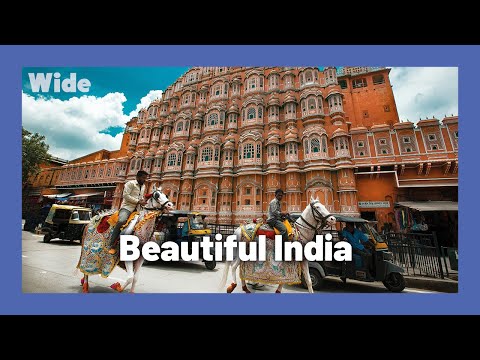
- Jaipur’s rose-colored architecture includes Hawa Mahal, whose screened façade allowed women in the royal household to observe street life unseen.
- The Maharaja’s Jantar Mantar observatory used large instruments for astronomical calculations; Albert Hall now houses a museum.
- Jaipur’s carpet industry draws on Persian methods and designs, while Amber Fort’s mirror mosaics and latticed windows reflect its 16th-century royal architecture.
- Holi, celebrated in March, marks the end of winter and the triumph of good over evil, with colored powders turning streets, cows, and visitors into part of the festivities.
35:00
Gwalior and Agra: Forts, Mughal Architecture, and the Taj Mahal
- Gwalior Fort overlooks the city from a 100-meter height and contains the Man Mandir Palace, known for enamel tiles and animal designs.
- Agra’s Red Fort reflects Mughal power under Akbar, while Jahangir Palace combines intricate carvings with largely Hindu architectural details.
- The Taj Mahal commemorates Mumtaz Mahal, Shah Jahan’s wife, who died giving birth to their fourteenth child.
- At Fatehpur Sikri, Akbar’s former capital, architectural elements associated with Muslim, Buddhist, and Christian traditions appear together, including the distinctive carved central pillar in the private-audience chamber.
39:00
The Ganges Plain: Agriculture, Orchha, and Khajuraho’s Temples
- The documentary describes a rise in life expectancy from about 19 years at the beginning of the 20th century to more than 60, alongside a falling birth rate.
- Despite rudimentary agricultural methods, farming supplies enough food for national self-sufficiency; sugar cane is cited as a major export.
- Orchha’s abandoned 17th-century palace preserves the remains of a former princely capital beside a bend in the Betwa River.
- Khajuraho’s Hindu and Jain temple complex, built between the 9th and 12th centuries, depicts gods, rulers, warriors, and everyday life; erotic carvings account for only about five percent of the sculptures.
42:00
Varanasi: Ganges Purification, Offerings, and Cremation Rites
- At dawn, pilgrims make flower and candle offerings, bathe in the Ganges, and recite the names of loved ones as part of rituals of purification.
- Varanasi, also known as Benares, is described as a city of salvation where some pilgrims hope to return to die.
- Cremations take place on the riverbank ghats, where smoke from the funeral pyres is understood as a final offering and death as a journey.
- Nighttime river ceremonies and small rafts carrying prayers and wishes reveal the Ganges’ spiritual role, distinct from questions about its biological water quality.
45:00
Railways and Kolkata: From the Ganges Corridor to a Modern Megacity
- India’s extensive railway network offers an economical way to travel long distances and encounter everyday life; the route passes through Patna, a former imperial capital on the Ganges.
- Kolkata, once the capital of British India before Delhi, is portrayed as a city of intense traffic, heat, and more than 12 million inhabitants.
- The city’s all-night flower market supplies offerings, while trades and cultural activity spill into public streets and sidewalks.
- Despite the 1997 prohibition of hand-pulled rickshaws, the documentary shows them persisting as a livelihood for the poor; bridges and ferries carry enormous daily flows of people.
Summary, takeaways, and chapters were generated by AI from the video's transcript and may contain errors. The video belongs to its creator, SLICE Travel.