David Friedberg: The US Empire Is Declining And Socialism Is Coming Next!
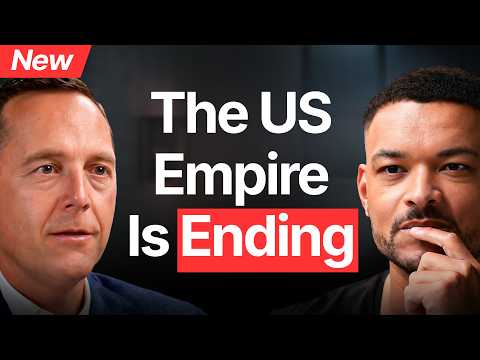 Watch on YouTube →
Overview
David Friedberg argues that the US is in imperial decline due to an unaffordability crisis and wealth inequality, leading to an inevitable rise of socialism. He contends that government intervention, particularly through programs like federal student loans, inflates costs and erodes individual agency. Friedberg advocates for a shift from labor to capital ownership as the true American dream, emphasizing that technological advancements like AI will create new opportunities rather than mass job displacement, provided open-source models democratize access.
Key takeaways
- David Friedberg argues that government intervention, particularly through federal student loans and social programs, inflates costs and erodes individual agency, leading the US towards socialism.
- He believes AI will not cause mass unemployment but will instead enhance productivity, create new job categories, and democratize wealth creation through open-source models.
- The true American dream, according to Friedberg, is the transition from labor to capital ownership, enabling financial security and freedom from the paycheck-to-paycheck cycle.
- Wealth taxes are criticized as asset seizures that violate private property rights and fail to solve fiscal problems, with alternative tax reforms like equalizing capital gains and income taxes proposed.
- The aging process is framed as a disease driven by DNA damage and epigenetic drift, with epigenetic reprogramming offering a new frontier in medicine to reverse aging effects.
- Friedberg predicts Alexandria Ocasio-Cortez (AOC) will win the 2028 presidential election, driven by public demand for government assistance and a desire for candidates who promise to improve lives.
Chapters
0:00
The Inevitability of Socialism and US Imperial Decline
- 63% of Americans live paycheck to paycheck, indicating an affordability crisis.
- Government services, intended to help, have become increasingly expensive.
- The US is in a cycle of decline, mirroring historical empires, with China on the rise.
0:36
AI as a Catalyst for Human Advancement
- AI is ushering in a golden age of human advancement.
- New billionaires will emerge in the next 10 years by leveraging open-source AI.
- Technological revolutions historically increase jobs and incomes, not decrease them.
1:59
David Friedberg's Professional Journey and The Climate Corporation
- Majored in math and physics, then astrophysics, before transitioning to business.
- Founded The Climate Corporation, a software company for farmers, sold for over $1 billion.
- The Climate Corporation's software is now used across 200 million acres globally.
5:33
Early Career in Investment Banking and Google
- Learned business, finance, and M&A through investment banking and tech roles.
- Worked at Google when it had under 1,000 employees.
- Poker skills were leveraged to secure interviews and demonstrate strategic thinking.
8:47
Appointment to President Trump's Council of Advisors on Science and Technology (PCAST)
- PCAST guides science policy for the administration.
- The current PCAST cohort is heavily focused on AI, including figures like Mark Zuckerberg and Sergey Brin.
- Discussions involve industry trends, scientific frontiers, and policy implications.
10:27
The Central Debate: AI Regulation and Open Source Models
- The primary policy question is how to regulate AI's development and deployment.
- Debate exists on allowing Chinese open-source models (e.g., costing $0.50 per million tokens) versus expensive private US models (e.g., $50 from Anthropic).
- Concerns include American AI competitiveness and potential security risks.
14:02
The Unaffordability Crisis and Wealth Inequality
- 63% of Americans live paycheck to paycheck with insufficient savings for emergencies.
- Costs are rising faster than wages, making life less affordable.
- A 'crisis of classism' and 'us versus them' mentality is prevalent.
15:51
The Cycle of Empires and Internal Struggle
- Ray Dalio's theory suggests the US is in decline, with China rising.
- Internal struggles often manifest as external conflicts.
- Economic distress fuels national unhappiness and a propensity for war.
17:10
The Great Lie: Government Intervention Inflates Costs
- The belief that the government will provide essential services is a 'great lie'.
- Government involvement in markets like education and healthcare drives up costs.
- Higher education administrative staff increased from 10% to 60% in 30 years due to federal loan programs.
20:56
Socialism as the De Facto Outcome of Current Policies
- The embrace of government solutions for unaffordability and inequality leads to socialism.
- The goal should be enabling individuals to transition from labor to capital ownership.
- The American dream is financial security through assets, not just homeownership.
21:43
The Labor-to-Capital Transition: The True American Dream
- Transitioning from labor to capital means accumulating assets that generate income.
- This provides freedom from the paycheck-to-paycheck cycle.
- The goal is for 2% of Americans to make this transition annually.
25:15
US Imperial Decline and the Power of the Dollar
- The majority of Americans perceive a decline in the dollar's power and personal prosperity.
- Decline is not inevitable; the US still has potential for centuries of prosperity.
- The US offers unparalleled opportunities for individual advancement without nepotism or handouts.
27:06
The National Debt and Inflationary Spiral
- The national debt is a runaway issue, leading to inflation through dollar printing.
- The Federal Reserve buys government debt, injecting dollars into the banking system.
- This process is unsustainable and contributes to the wave of socialism.
28:46
De Facto Socialism: Government Employment and Economic Control
- Nearly 50% of Americans are employed by or live off government pensions/social security.
- This increasing government reliance leads to the government becoming the entire economy.
- This is de facto socialism, where individual agency is diminished.
30:00
Capital Compounding vs. Labor Taxation
- Capital compounds over time, significantly increasing wealth without immediate taxation.
- Labor income is taxed at every paycheck, hindering wealth accumulation for the average person.
- Tax policy should equalize the tax burden on labor and capital gains.
31:45
Wealth Taxes as Asset Seizures and Private Property Rights
- Wealth taxes are viewed as asset seizures, violating the US principle of private property rights.
- Historically, individual private property rights were a cornerstone of the US founding.
- Taxes should be levied upon transaction (selling assets, realizing gains), not on asset ownership itself.
33:41
Reforming Tax Policy: Taxing Transactions, Not Assets
- Taxing capital gains and high earners upon transaction can capture significant revenue.
- Borrowing against assets without selling them should be a taxable event.
- Wealth taxes are antithetical to private property rights and do not solve fiscal problems efficiently.
35:21
The Unfairness of Borrowing Against Assets Without Taxation
- Wealthy individuals can borrow against stock holdings tax-free, effectively transacting without tax.
- This allows for continuous asset accumulation and acquisition of more assets.
- This practice creates an unfair advantage over labor, which is taxed at every income event.
39:02
The Inevitable Outcome: Majority Rule and Socialism
- 51% of people may eventually demand the assets of the 49%.
- This leads to wealth redistribution from billionaires down to those with $100,000 net worth.
- This process is socialism, where individual property rights are eroded.
41:44
Talent Migration and the Economic Impact of Wealth Taxes
- Billionaires are leaving high-tax jurisdictions like California, impacting state revenue.
- The top 1% of taxpayers in California pay 40-50% of income tax.
- France experienced declining tax revenue after implementing a wealth tax, as wealthy individuals left.
43:33
Fixing the System: Government Spending and Inflation
- Solutions lie in fixing government spending and reducing inflation.
- Focusing on the percentage of Americans transitioning from labor to capital annually is key.
- The 'great lie' is that homeownership alone constitutes the American dream.
45:49
The Illusion of Homeownership as the Sole American Dream
- Homeownership has become unaffordable for many due to inflated asset values.
- Policies have driven up residential real estate prices, benefiting boomers but disadvantaging younger generations.
- This unaffordability fuels the desire for socialism among younger people.
50:12
Prescription for the 63%: Embracing New Income Streams
- The internet has enabled millions of new ways to earn income (podcasting, influencing, online sales).
- Human agency, not government programs, drives individual success.
- Government regulations (e.g., licensing for barber shops) often inhibit agency and progress.
52:34
The Role of Government in Providing Stability and Infrastructure
- Government provides a foundation of stability (healthcare, laws, infrastructure) enabling risk-taking.
- This foundation is crucial but can be a slippery slope towards excessive government employment.
- The government should not be the primary employer, as this diminishes individual agency.
1:00:00
The Privilege of Upbringing and Nature vs. Nurture
- Upbringing and inherent nature (biology) play a role in individual agency and ambition.
- Circumstances like never lacking meals (privilege) allow for greater risk-taking.
- Education should foster individual agency and the value of creating value for others.
1:02:11
The Opposite Extreme: The Pitfalls of Universal Entrepreneurship
- The idea that everyone should start a business or become a creator is also a mistake.
- The objective should be to find a path where one provides value to others, whether as an individual or leader.
- Agency lies in choosing how to create value, not necessarily in entrepreneurship itself.
1:02:33
Inequality as a Byproduct of Progress
- Inequality is an inherent byproduct of progress and free markets.
- China's shift to free markets demonstrates how individual agency drives economic growth.
- New technologies (like AI) initially create disparities before diffusing benefits broadly.
1:05:18
The Challenge of Progress: Limited Access and High Costs
- Cutting-edge medical therapies (e.g., CAR T-cell) are million-dollar doses, limiting access.
- AI technology is not universally accessible, creating a gap between users and non-users.
- This uneven distribution of benefits is a characteristic of technological advancement.
1:06:48
The Four-Year Election Cycle and Government Spending
- Prosperous nations with four-year election cycles incentivize politicians to offer 'free stuff'.
- This short-term focus leads to increased government spending and debt.
- Politicians prioritize constituent demands over long-term fiscal responsibility.
1:07:23
The Career Politician Problem and Term Limits
- Politicians primarily focus on getting re-elected by delivering benefits to constituents.
- The founding fathers envisioned public service as temporary, not a career.
- Term limits are proposed as a solution to prevent career politicians and ensure focus on long-term interests.
1:10:27
Incentive Structures and the Role of Government
- Fixing incentive structures is crucial to attract good people to government service.
- Laws against self-enrichment for public servants are necessary.
- The ideal is a rotation between public and private life, ensuring diverse perspectives.
1:10:33
Comparing Models: Denmark vs. The United States
- Denmark offers high societal trust, work-life balance, and a higher floor of less poverty.
- The US offers greater individual agency, risk-taking incentives, and frontier progress (AI, gene editing).
- The majority might prefer Denmark's comfort, but the US drives innovation through its incentive structure.
1:15:26
The 'Great Lie' of Homeownership as the American Dream
- Homeownership has been pushed as the primary goal, leading to inflated housing prices.
- This makes it unattainable for younger generations, fueling socialist sentiment.
- Investing in assets like the S&P 500 historically offered better returns than homeownership.
1:20:46
Productivity and Spending Problems in the UK
- The UK faces both productivity and spending challenges.
- High tax rates and reduced personal benefit from risk-taking disincentivize productivity.
- Government checks and services can reduce individual incentive to be more productive.
1:21:59
Wayfair Verified: Ensuring Quality in Online Furniture Purchases
- Wayfair Verified offers hand-vetted products by specialists to ensure quality.
- This system aims to eliminate the guesswork and disappointment of online furniture shopping.
- Promotes confidence in finding desired furniture for home refreshes.
1:23:30
WhisperFlow Notetaker: A Productivity Superpower
- WhisperFlow's notetaker captures meeting context, identifies speakers, and tracks action items.
- It provides a comprehensive overview of weekly activities and conversations.
- Described as a 'game changer' for managing numerous meetings and information flow.
1:25:14
AI and the Narrative of Job Displacement
- The narrative that AI will take jobs is prevalent, especially among those already struggling.
- Historical parallels: mainframes (1960s) and desktop computers (1980s) also sparked fears of job loss.
- Empirical data shows technological revolutions historically increase jobs and incomes.
1:28:21
AI Enhances Productivity, Leading to Economic Growth
- New technology makes individuals more productive, allowing them to earn more.
- AI enables tasks like managing multiple robots for painting, increasing output.
- The economy grows as technology provides leverage, leading to new products and services.
1:29:08
Who Benefits from Economic Expansion?
- Historically, economic expansion has created value for the entire workforce.
- Transitions involve periods of adjustment, but ultimately lead to growth and higher incomes.
- New technologies create new types of cognitive and physical work.
1:35:03
The Emergence of New Job Categories
- New jobs like yoga instructors, dog walkers, and podcasters emerged with technological shifts.
- AI and robotics enable individuals to do more, realizing greater potential.
- The fear of robots replacing all humans is a pessimistic view.
1:36:53
AI's Impact on Content Creation and Business Operations
- AI enables one person to create TV shows that previously required a staff of 20.
- AI can automate tasks like document writing, freeing up time for higher-value activities.
- Companies are hiring more people due to AI's ability to create new products and revenue streams.
1:40:30
The Revenue Side of Business: AI-Driven Growth
- AI enables the creation of new products and services previously impossible.
- Material science companies use AI to screen millions of ideas, accelerating discovery.
- Increased productivity from AI leads to higher revenue and potential for more hiring.
1:43:20
Entry-Level Roles and the AI Transition
- AI tooling can perform tasks previously done by entry-level employees.
- This leads to a pause in hiring for certain roles, particularly at the entry level.
- The transition requires upskilling and training for new roles created by AI advancements.
1:45:29
The AI Narrative: Job Loss vs. Economic Transition
- The narrative of AI causing mass job loss is promoted by some AI leaders.
- Empirical data shows economies transition, creating new jobs and increasing overall employment.
- The focus should be on adapting to new roles and leveraging AI for increased productivity.
1:46:50
The Arrogance of Predicting No Future Work
- Predicting that humans will no longer work discounts individual capacity and adaptability.
- Technologists often focus on technology, overlooking human potential and needs.
- Humans are adaptable and can find new roles and create value in any environment.
1:49:00
AI as an Enabler of Human Potential
- AI enables individuals to realize more of their potential by augmenting capabilities.
- The adaptability of humans allows them to thrive in changing technological landscapes.
- Optimism about AI stems from its capacity to unlock new avenues for creativity and productivity.
1:49:05
Incentives of AI Leaders and Shifting Narratives
- AI leaders' statements on job loss may be influenced by cost-cutting narratives for stock prices.
- Early warnings about AI existential threats from figures like Sam Altman and Elon Musk contrast with current optimism.
- The shift in messaging raises questions about trusting these leaders' current reassurances.
1:53:33
Misinterpretations of Layoffs and AI's Role in Business
- The founder of Cler (a company starting with K) stated media misrepresented layoffs related to AI.
- The business grew revenue while reducing headcount by offering enhanced 'white glove' services to high-ticket clients.
- Efficiency gains from AI allow reinvestment in new products and services, potentially leading to hiring.
1:55:38
AI's Impact on Business Investment and Hiring
- Businesses invest more capital when AI enables increased productivity and product creation.
- This leads to hiring more people to scale operations and develop new offerings.
- The transition involves upskilling and training, not necessarily mass unemployment.
1:56:53
The Unstoppable Force of AI Development
- AI development cannot be stopped globally due to its open-source nature and international competition.
- China's strategy of free, ubiquitous models challenges proprietary AI investments.
- US policy decisions should focus on navigating AI's integration, not halting it.
1:58:57
Data Centers, Energy Consumption, and Economic Value
- Data centers require significant energy, but can be designed to generate surplus power.
- Mandating self-sufficient grids for data centers could lower electricity costs for everyone.
- Data centers create jobs in manufacturing, servicing, and related industries.
2:01:47
Open Source AI: Democratizing Access and Innovation
- Open-source AI models (like open-weight models) are free to use, reducing reliance on paid services.
- This mirrors the internet's history, where open-source browsers and servers enabled widespread entrepreneurship.
- Open source lowers barriers to entry, fostering innovation and competition.
Summary, takeaways, and chapters were generated by AI from the video's transcript and may contain errors. The video belongs to its creator, The Diary Of A CEO.