Meta Muse AI Connectors: The Next App Store Moment?
 Watch on YouTube →
Overview
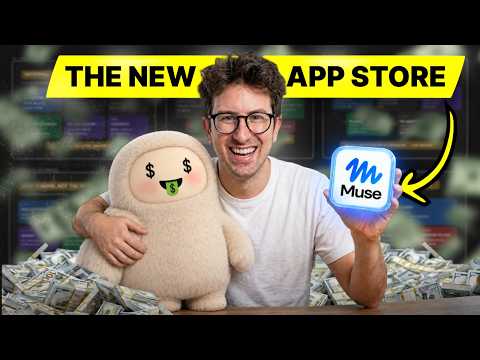
Greg Isenberg argues that Meta’s new Muse connectors could become an AI-era App Store moment because outside businesses can now plug services directly into a personal AI agent when users ask for help. He explains how connectors work through API/MCP integrations, then lays out four startup opportunities (lead gen for local suppliers, home repair dispatch, paddle court matching, and family dinner/grocery planning) while emphasizing that distribution, approval by Meta, and quality execution will determine who wins. He also outlines practical go-to-market paths through creators, product-led sharing, existing marketplaces, and Meta’s directory, plus a simple build process using coding agents like Claude Code and CodeX.
Key takeaways
- Muse connectors create a new distribution layer where businesses can be discovered at the moment a user asks an AI agent to solve a problem.
- The strongest connector businesses will sit inside workflows with money changing hands, such as bookings, repairs, grocery orders, and lead generation.
- Local niche supply beats generic directories because timely signals, like a restaurant opening or an empty court tomorrow, create urgency and conversion.
- Meta’s directory may generate traffic, but founders should not depend on it; creators, marketplaces, and product-led sharing are more reliable acquisition channels.
- A viable first connector can be built by defining one user outcome, wiring a small API service, and using Claude Code or CodeX to implement it quickly.
- Approval quality matters because Meta is likely to reject connectors that fail on edge cases, identity checks, or booking reliability.
Chapters
- Meta opened Muse to developers so services can be submitted as connectors that help Muse complete user requests.
- Greg Isenberg compares the opportunity to Apple’s App Store launch in 2008, citing Apple paying developers $1 billion by June 2010.
- He argues the market size depends on usage, but the opening for developers is immediate.
- A user request like booking a podcast studio for Tuesday afternoon at a $200 budget becomes a structured API query.
- Muse can ask for location, availability, pricing, and then present an offer before the user approves the booking.
- The example shows the connector as a thin service window: the studio must keep calendars accurate, equipment ready, and booking workflows reliable.
- Idea 1: local supplier lead gen, such as a Miami linen service finding restaurants that are about to open and may need tablecloths or napkins.
- Idea 2: home repair dispatch, where Muse matches a broken Samsung dishwasher to a provider that can repair that exact model and come tomorrow.
- Idea 3: local paddle matchmaking and court booking, using nearby clubs with open slots and player-level matching.
- Idea 4: family dinner planning plus grocery integration, turning a 3-night meal plan into a shopping list and shoppable Instacart flow.
- Greg Isenberg says directory placement is useful but too uncertain to be the only growth plan because feature selection may be random.
- He suggests working with creators who already have audiences, such as vegetarian family recipe creators demonstrating the dinner-planning connector.
- He also recommends product-led sharing for multiplayer workflows like paddle courts, where one booking can be shared with three other players.
- Existing marketplaces like Ticketmaster or other industry platforms could provide supply and discovery without building all distribution from scratch.
- Greg Isenberg recommends starting with one clear customer task, then using Claude Code or CodeX plus API documentation to build the smallest useful version.
- A good first build includes availability checks, pricing, quote expiration, and then booking; authentication and hosted access are required.
- Meta’s submission form appears to support custom connectors, APIs, and existing MCP servers, but approval is required before listing.
- He advises testing edge cases like already-booked times, expired quotes, duplicate reservations, and date changes before submitting.
Summary, takeaways, and chapters were generated by AI from the video's transcript and may contain errors. The video belongs to its creator, Greg Isenberg.