University of Utah CS 6465
Professor Burtsev · University of Utah · 15 lectures with notes
Every lecture with its full transcript and chapters, and one search across all 15 lectures.
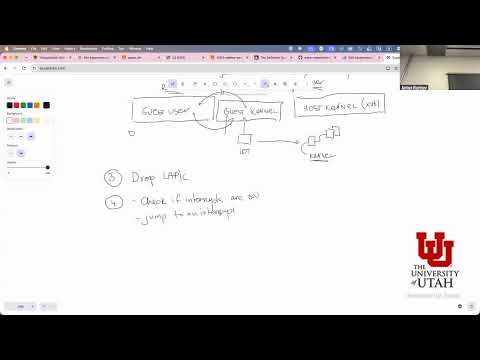
cs6465 Advanced OS - Lecture 11 - Xen: paravirtualization (part 2), HW3 design
Xen’s paravirtualization trades hardware emulation for explicit interfaces, setting up a design exercise to apply the same ideas to xv6.
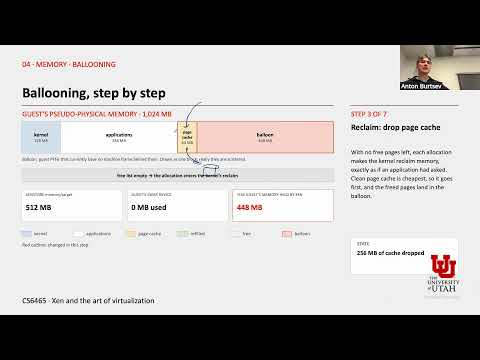
cs6465 Advanced OS - Lecture 11 - Xen: Paravirtualization
Xen trades guest-kernel porting effort for fast virtualization through hypercalls, specialized page-table management, and split device drivers.
cs6465 Advanced OS - Lecture 10 - Bochs: Virtualization without jitting or direct execution
Bochs shows how a carefully optimized interpreter can provide portable virtualization and useful tracing without JIT compilation or hardware support.
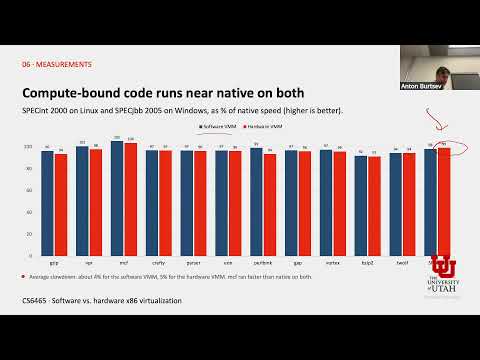
cs6465 Advanced OS - Lecture 09 - Comparison of HW and SW techniques for virtualization
Binary translation made non-virtualizable x86 practical, while EPT later shifted the performance advantage to hardware-assisted virtualization.
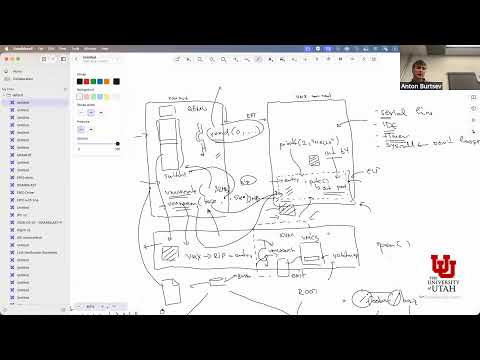
cs6465 Advanced OS - Lecture 08 - HW2 Discussion (xv6 on top of xv6)
A design walkthrough for booting xv6 inside a minimal VMX hypervisor, from ELF loading to device and interrupt emulation.
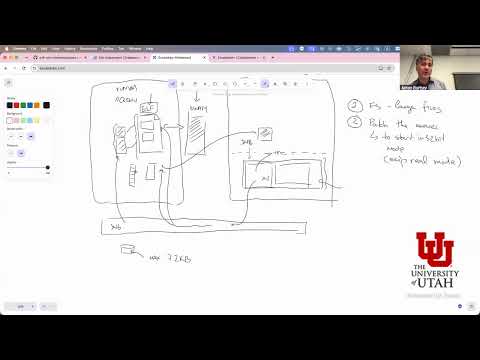
cs6465 Advanced OS - Lecture 07 - Virtual and Physical Devices (part 2)
DMA, Virtio, KVM, and Xen design choices shape device performance and isolation, and guide the plan for booting xv6 as a guest.
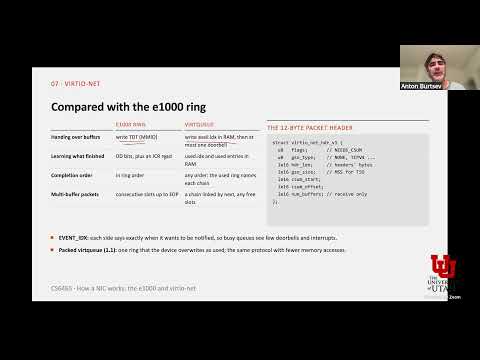
cs6465 Advanced OS - Lecture 07 - Physical and virtual devices
E1000 device rings explain physical I/O, while Virtio’s shared queues make virtualized I/O faster by avoiding frequent VM exits.
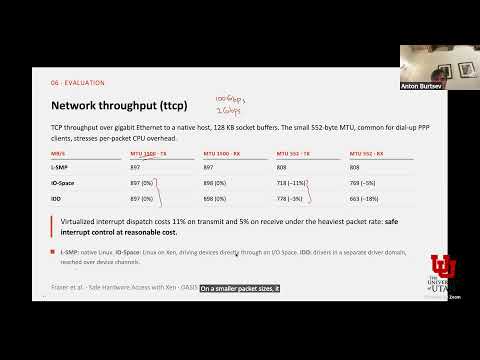
cs6465 Advanced OS - Lecture 05 - Xen Safe Device Access
Xen isolates complex device drivers in separate VMs and uses ring buffers, grant tables, and mediated hardware access to preserve safety.
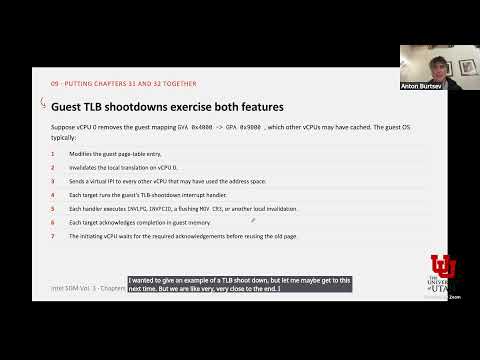
cs6465 Advanced OS - Lecture 05 - Intel VMX (part 3)
EPT and posted interrupts let Intel VMX virtualize memory and device interrupts with fewer VM exits.
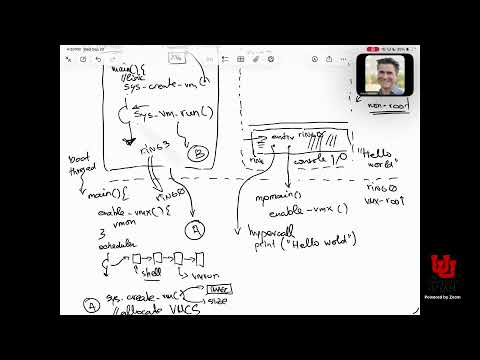
cs6465 Advanced OS - Lecture 05 - Designing an xv6 VMM
A step-by-step design for running a minimal Intel VMX guest from an xv6 process.
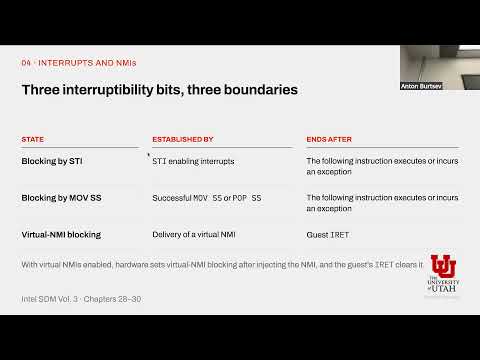
cs6465 Advanced OS - Lecture 03 - Intel VMX (part 2)
Intel VMX lets hypervisors control guest execution through configurable exits and carefully staged interrupt delivery.
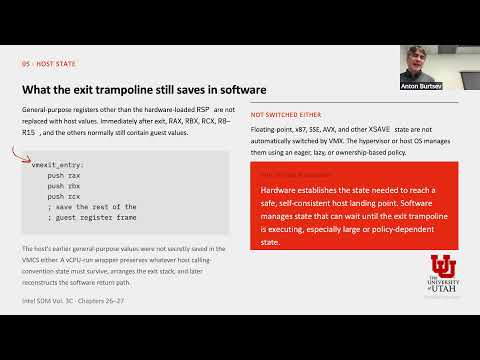
cs6465 Advanced OS - Lecture 03 - Intel VMX
Intel VMX runs guests in non-root mode, but building a hypervisor requires careful VMCS setup and software-managed register state.
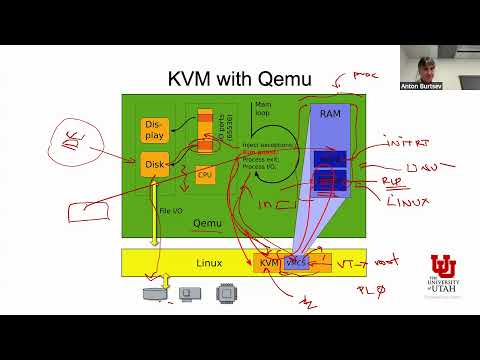
cs6465 Advanced OS - Lecture 02 - Virtualizability of xv6 (part 4)
xv6 has two practical x86 virtualization hazards, while Intel VT-x and KVM provide a path to run a guest with hardware-managed CPU state.
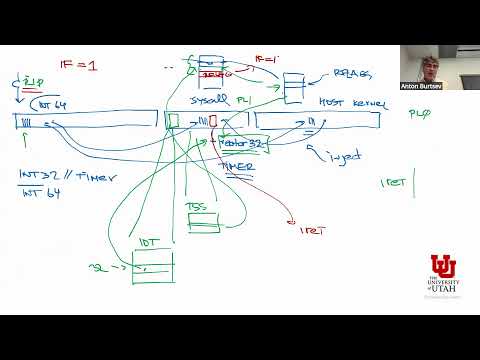
cs6465 Advanced OS - Lecture 02 - Virtualizability of x86 (part 3)
xv6 exposes x86 virtualization failures when sensitive state is read or written without trapping, requiring shadow state and ring compression.
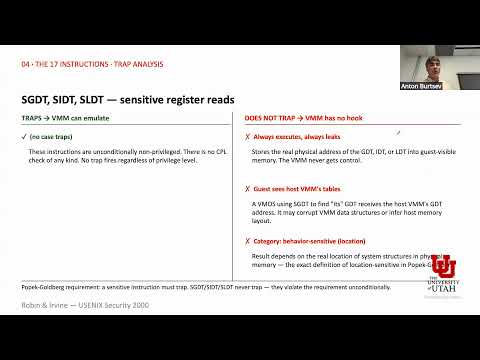
cs6465 Advanced OS - Lecture 02 Virtualizability of x86 (continued)
PUSHF and POPF can defeat x86 virtualization because they expose or silently restrict flag behavior without trapping.