The Man With The Seven Second Memory
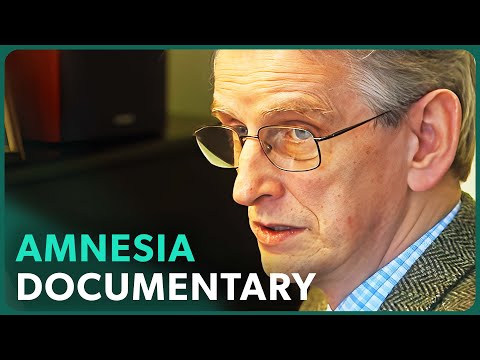 Watch on YouTube →
Overview
Clive Wearing was a renowned London conductor when herpes simplex encephalitis in 1985 destroyed much of his hippocampus, leaving him with profound amnesia and a memory span often described as about seven seconds. His musical abilities, humor, and emotional connection to his wife Deborah remained, while his diaries and family relationships reveal the lasting effects of living without continuous memories.
Key takeaways
- Herpes simplex encephalitis damaged Clive Wearing’s hippocampus in 1985, preventing him from forming lasting memories and leaving him unable to retain visits, conversations, or daily events.
- Clive’s ability to perform and respond to music survived even though he could not consciously remember hearing or playing it, illustrating the separation between musical skill and autobiographical memory.
- Clive’s diaries recorded repeated claims of having just awakened, but he could not remember making the entries, turning the diary into evidence of his memory loss rather than a solution to it.
- Deborah secured Clive a specialist brain injury placement in 1992 after seven years of advocacy, but his need for care meant they could not resume living together.
- Clive retained some older memories, including a childhood car registration and phone number, even as he lost access to most personal experiences and could not remember recent family visits.
Chapters
0:00
Clive Wearing’s Seven-Second Memory and Surviving Musical Ability
- Clive Wearing describes his post-illness experience as an absence of thought, dreams, and any distinction between day and night.
- After encephalitis in 1985, he retained musical skills despite severe amnesia, yet said he had no awareness of having just played music.
- In the later documentary, Clive is 67 and lives under constant supervision in a brain injury unit; his wife Deborah lives 85 miles away.
- Deborah explains that Clive could not safely leave alone, comparing it to a spacewalk after the tether breaks.
5:00
Music, Marriage, and Clive Wearing’s Life Before Encephalitis
- Clive can sing and respond to music because abilities that do not depend on conscious recall survived the brain damage.
- Deborah describes Clive as loving, funny, and apologetic, and says they remain a team despite living apart.
- Clive’s sons recall his warmth and musical career; one describes the loss of the intellectual father who once turned license plates into word games.
- Before becoming ill, Clive conducted and produced early music for BBC Radio 3, reconstructing historical performances from original manuscripts.
9:19
The 1985 Illness: Herpes Encephalitis Destroys Clive’s Memory
- Clive became feverish in March 1985, developed a severe headache, and grew confused enough to forget Deborah’s name.
- After leaving home in a taxi without remembering his address, Clive was traced through his Barclaycard and found at a London police station.
- Doctors initially treated the illness as flu; when Clive became unresponsive and floppy, an emergency call led to his admission to St. Mary’s Hospital.
- Doctors identified herpes simplex encephalitis, a rare infection that crosses the blood-brain barrier; acyclovir saved his life, but the virus had damaged the hippocampus.
13:30
Hospital Trauma and Clive’s Pleas for Deborah
- Clive remained at St. Mary’s Hospital for seven years, cycling through confusion, despair, and intense emotional distress.
- When Deborah asked why he was crying, Clive wrote, “I am completely incapable of thinking,” despite being unable to explain the feeling aloud.
- Answerphone messages recorded just after Deborah left show Clive repeatedly asking her to return and declaring his love.
- His family describes an endless cycle: Clive could recognize facts about people but could not retain visits or recall events from his life.
17:20
Clive’s Diaries Document Repeated Attempts to Wake Up
- For about 20 years, Clive kept diaries in an effort to anchor himself in time, repeatedly recording that he had just become conscious.
- His entries often contradicted and erased one another, as each new moment seemed to him like the first genuine awakening.
- The dense marks and crossed-out entries illustrate how he tried to create continuity despite being unable to remember writing them.
- Clive could recognize his handwriting when shown the diary but had no conscious knowledge of the book or its contents.
22:47
Deborah’s Separation, Return, and Renewed Bond with Clive
- Deborah describes years of repeating the same conversation with Clive and feeling like both a wife and a widow.
- After seven years of campaigning, she secured a place for him in a specialist brain injury unit in 1992, then divorced him and moved to America.
- Deborah says new relationships could not replace Clive; she returned to the UK in 1996 and later found spiritual comfort through Christianity.
- Although separated by distance and Clive’s amnesia, Deborah says her bond with him remained central to her life.
28:10
A Church Visit Reconnects Clive with His Musical Past
- Deborah takes Clive to St Etheldreda’s Church, where he conducted a Lassus Requiem in 1982, but he has no memory of the earlier event.
- Deborah recounts how Clive’s live performance moved audiences listening in five countries, while Clive is amazed by the praise.
- Clive continues making wordplay from passing car number plates and can sometimes infer Deborah’s public-relations job, though he soon forgets the answer.
- Deborah has renewed her marriage vows with Clive, but he does not recognize her home or remember having visited it.
34:27
Clive Returns to Reading for a Rare Family Reunion
- Deborah takes Clive home to Reading for the first time in 13 years; he cannot identify the town or remember where she lives.
- Despite losing most personal memories, Clive recalls childhood details such as his father’s car registration, UN941, and a childhood phone number, 3164.
- Clive’s youngest son Edmund visits after seven years, and the family shares a meal together for the first time in 20 years.
- Deborah explains that Clive will not remember the visit afterward, while Edmund describes his father’s constant disorientation as frightening and painful.
40:52
Clive’s Personality Endures Despite Profound Amnesia
- Clive’s sister Adele recalls earlier aggressive episodes and difficulty visiting, then shares family photographs with him; he remembers neither her visit nor what she wore.
- Clive continues to reason, joke, and analyze his unusual condition, even though he repeatedly forgets reaching the same conclusions.
- Deborah and Clive’s family describe his remaining personality as recognizably himself, with humor, affection, and a calm disposition.
- Clive says he misses being a musician and being in love; the final footage briefly shifts to an explanation of facial expressions and the many muscles involved in smiling.
Summary, takeaways, and chapters were generated by AI from the video's transcript and may contain errors. The video belongs to its creator, Real Stories.